

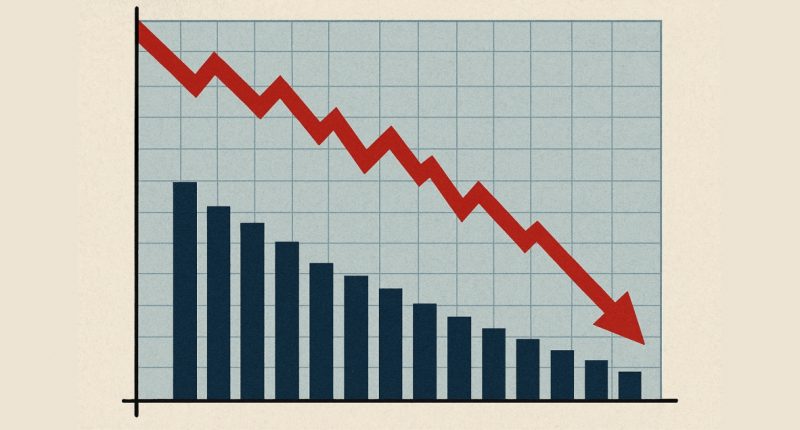
Canada’s main stock index struggled on Thursday, despite early gains in the technology sector, as investors grew more confident that both the US Federal Reserve and the Bank of Canada would stay on course with planned interest rate cuts. Bank of Canada Governor Tiff Macklem noted that Canada’s economic outlook remains weak, partly due to the global ripple effects of former President Trump’s tariff policies. These impacts are now extending beyond trade-sensitive sectors. In Q2, Canada’s economy contracted at an annualized rate of 1.6 per cent mainly because of a sharp decline in exports. However, Macklem expressed optimism, saying growth is expected to resume in the latter half of the year during remarks in Washington.
Meanwhile, US markets moved lower, no thanks to stronger-than-expected earnings from major banks and optimistic revenue projections from leading tech companies. These positive developments helped shift investor attention away from recent tensions in the US-China trade relationship.
| TSX | 30,458.80 | -178.32 |  |
| TSXV | 1,007.36 | -20.25 | |
| CSE | 185.95 | -7.67 | |
| DJIA | 45,952.24 | -301.07 | |
| NASDAQ | 22,562.54 | -107.54 | |
| S&P 500 | 6,629.07 | -41.99 | |

The Canadian dollar traded for 71.17 cents US compared to 71.20 cents US on Wednesday.
US crude futures traded $0.79 lower at US$57.48 a barrel, and the Brent contract lost $0.84 to US$61.06 a barrel.
The price of gold was up US$121.94 to US$4,310.47.
In world markets, the Nikkei was up 605.07 points to ¥48,277.74, the Hang Seng was down 22.09 points to HK$25,888.51, the FTSE was up 11.34 points to ₤9,436.09, and the DAX was up 90.82 points to €24,272.19.
Stockhouse does not provide investment advice or recommendations. All investment decisions should be made based on your own research and consultation with a registered investment professional. The issuer is solely responsible for the accuracy of the information contained herein. For full disclaimer information, please click here.