

OpenAI and the Gigawatt Data Center
As an AI pioneer, OpenAI is at the forefront of this trend and is planning data centers with power requirements in the gigawatt range to train its next generations of models. To put these dimensions into perspective: A single gigawatt is roughly equivalent to the output of a large nuclear power plant and could theoretically supply hundreds of millions of households. A McKinsey report emphasizes that existing power grid capacities are barely designed to handle these loads. OpenAI is therefore increasingly seeking ways to bring the energy supply directly to the vicinity of the supercomputer sites to bypass lengthy approval processes for grid expansion. CEO Sam Altman has repeatedly pointed out that AI scaling will hit its limits without a breakthrough in energy generation. Computational intensity doubles with each new model generation, increasing the pressure on hardware infrastructure.
Amazon: Strategic Investments in SMRs and Conventional Nuclear Power
Amazon has already responded by securing the necessary carbon-free baseload power for its global cloud infrastructure through multi-billion-dollar investments in nuclear power plants and small modular reactors (SMRs). One example is the acquisition of a data center campus in Pennsylvania for USD 650 million, which is directly connected to the Susquehanna nuclear power plant and has a capacity of up to 960 MW. Through this form of vertical integration, Amazon ensures that computing power for AWS customers remains stable and climate-neutral even during periods of high grid load. In addition, the company is making financial investments in the development of new reactor types to make nuclear energy more flexible and rapidly scalable than would be possible with traditional large-scale power plants. This SMR technology is considered key to operating data centers in a decentralized manner, independent of aging state-run power grids. These initiatives demonstrate that major tech corporations are already shaping the future, while small SMRs in Germany are still largely dismissed as a pipe dream. Investors should also take note of this new reality.
American Atomics Closes the HALEU Gap
In this market environment, companies like American Atomics are taking center stage as they search for uranium and thereby secure nuclear supply chains. The company focuses on uranium exploration and mining in the US, particularly in the resource-rich state of Colorado. American Atomics’ goal, however, extends far beyond mere mining. The company aims for full vertical integration, extending to the planned production of HALEU (High-Assay, Low-Enriched Uranium) fuel. This specialized fuel, with an enrichment level of up to 19.75%, is essential for operating the next generation of SMRs, but today it comes almost exclusively from Russia. Without a stable domestic supply of HALEU, the nuclear ambitions of the tech giants risk failing.
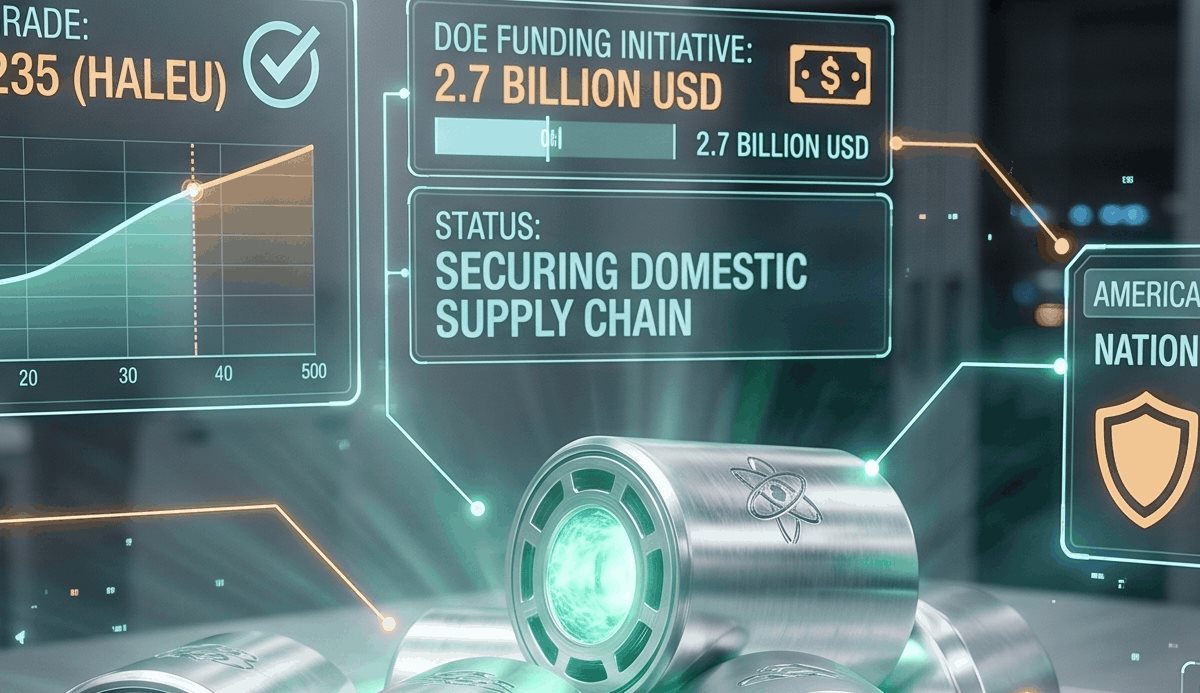
The US Department of Energy (DOE) has recognized the strategic importance of independence from Russian uranium and recently allocated approximately USD 2.7 billion to promote domestic uranium enrichment. With its project portfolio in the US, American Atomics fills precisely this gap in the supply chain, thereby offering a solution for national security and technological sovereignty. American Atomics also excels operationally. The company uses modern geophysical data to identify new resources in historic uranium districts that are particularly suitable for the production of fuel assemblies.
Conclusion: Uranium as the Fuel of the AI Revolution
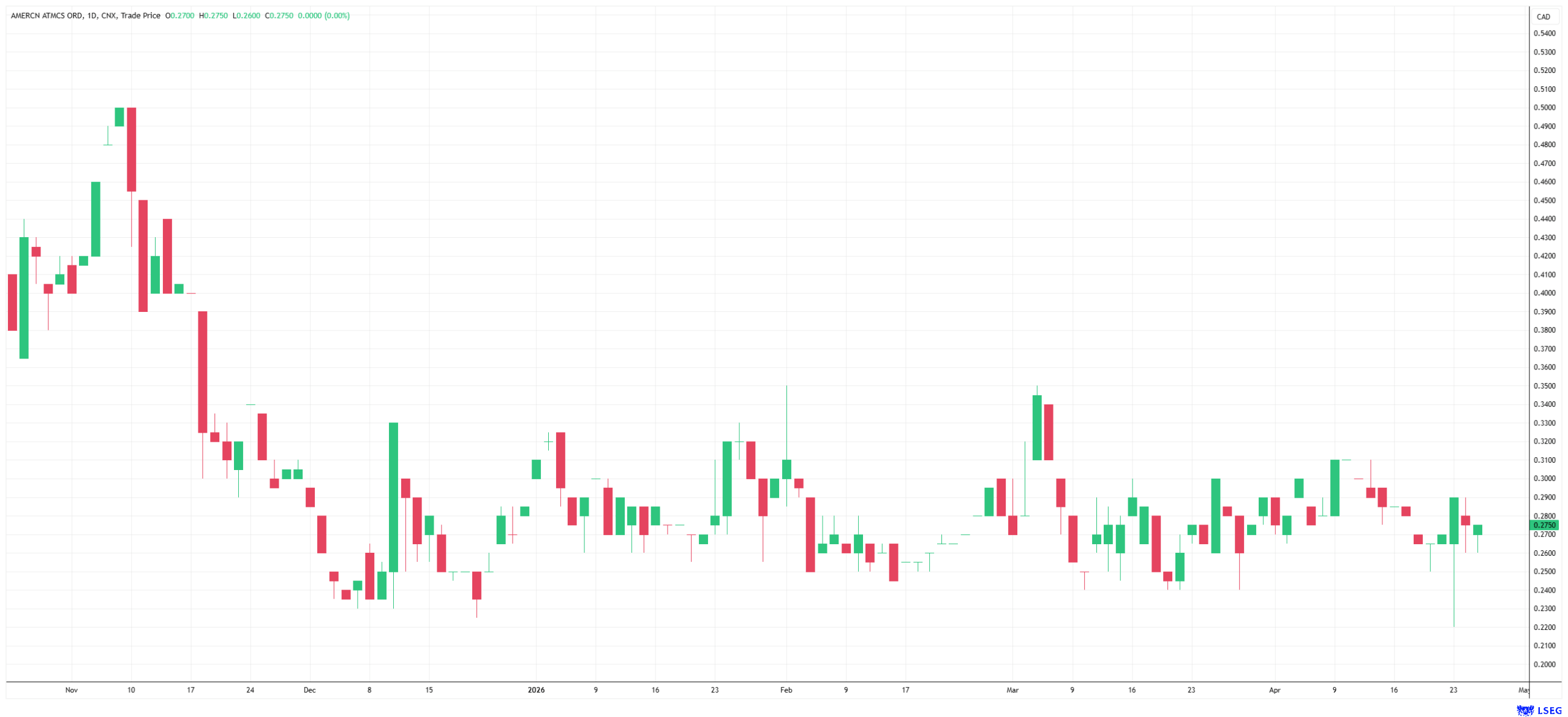
The collaboration between Big Tech and the nuclear industry heralds the beginning of a new industrial era. If Commerzbank’s forecasts for the commodities market prove accurate, secure energy resources in stable jurisdictions will command even higher prices in the future. In an environment where carbon-free energy is becoming Silicon Valley’s hardest currency, American Atomics is striking a chord with its strategy of domestic production—a strategy that is also winning over professional investors. The planned Preliminary Economic Assessment (PEA) this fall will be the next milestone for American Atomics in validating the economic value of vertical integration. Many investors are likely to wait for this release. The bold ones are already positioning themselves. Those who want to control the computing power of the future must first secure the energy supply—and there is (almost) no way around uranium from the US.
Conflict of interest
Pursuant to §85 of the German Securities Trading Act (WpHG), we point out that Apaton Finance GmbH as well as partners, authors or employees of Apaton Finance GmbH (hereinafter referred to as “Relevant Persons”) may hold shares or other financial instruments of the aforementioned companies in the future or may bet on rising or falling prices and thus a conflict of interest may arise in the future. The Relevant Persons reserve the right to buy or sell shares or other financial instruments of the Company at any time (hereinafter each a “Transaction”). Transactions may, under certain circumstances, influence the respective price of the shares or other financial instruments of the Company.
In addition, Apaton Finance GmbH is active in the context of the preparation and publication of the reporting in paid contractual relationships.
For this reason, there is a concrete conflict of interest.
The above information on existing conflicts of interest applies to all types and forms of publication used by Apaton Finance GmbH for publications on companies.
Risk notice
Apaton Finance GmbH offers editors, agencies and companies the opportunity to publish commentaries, interviews, summaries, news and the like on news.financial. These contents are exclusively for the information of the readers and do not represent any call to action or recommendations, neither explicitly nor implicitly they are to be understood as an assurance of possible price developments. The contents do not replace individual expert investment advice and do not constitute an offer to sell the discussed share(s) or other financial instruments, nor an invitation to buy or sell such.
The content is expressly not a financial analysis, but a journalistic or advertising text. Readers or users who make investment decisions or carry out transactions on the basis of the information provided here do so entirely at their own risk. No contractual relationship is established between Apaton Finance GmbH and its readers or the users of its offers, as our information only refers to the company and not to the investment decision of the reader or user.
The acquisition of financial instruments involves high risks, which can lead to the total loss of the invested capital. The information published by Apaton Finance GmbH and its authors is based on careful research. Nevertheless, no liability is assumed for financial losses or a content-related guarantee for the topicality, correctness, appropriateness and completeness of the content provided here. Please also note our Terms of use.
Stockhouse does not provide investment advice or recommendations. All investment decisions should be made based on your own research and consultation with a registered investment professional. The issuer is solely responsible for the accuracy of the information contained herein. For full disclaimer information, please click here.