
Bayer: Operational Excellence and Lingering Legacy Issues
Consolidated revenue rose by 4.1% on a currency-adjusted basis to EUR 13.4 billion, while adjusted earnings per share of EUR 2.71 significantly exceeded expectations. However, free cash flow fell to negative EUR 2.3 billion due to settlement payments totalling billions for glyphosate and PCB. A large portion of the jump in profits is attributable to a licensing agreement contributing EUR 448 million in revenue to the soybean business. Without this effect, core operating growth would have been only moderate. Net financial debt remains above EUR 32 billion.
The soybean business benefited massively from the Corteva license, while the corn business grew solidly but not spectacularly, up 7.1%. Cotton seeds saw significant declines due to the loss of the Dicamba registration. Crop Protection is struggling with generic competition and shifts in demand. In May, the Crop Science unit reached an agreement with Michigan and Rhode Island on PCB payments of at least USD 133 million. Positive developments include the strategic restructuring with cost savings of EUR 1 billion and the pipeline featuring 10 promising products starting in 2027.
The Pharmaceuticals division stagnated on a currency-adjusted basis, as the patent expirations of Xarelto and Eylea are having a significant impact. These blockbusters are declining as expected. At the same time, the new hopefuls Nubeqa and Kerendia are growing at double-digit rates. The latter received an additional indication in the EU for heart failure. The anticoagulant Asundexian is undergoing Priority Review in the US. The acquisition of Perfuse Therapeutics brings a promising ophthalmic drug into Phase II. For investors, the division remains a bet on whether the young pipeline can offset the old revenue losses in time. The stock is currently trading at around EUR 37.99.
MustGrow Biologics: Mustard as a Secret Weapon
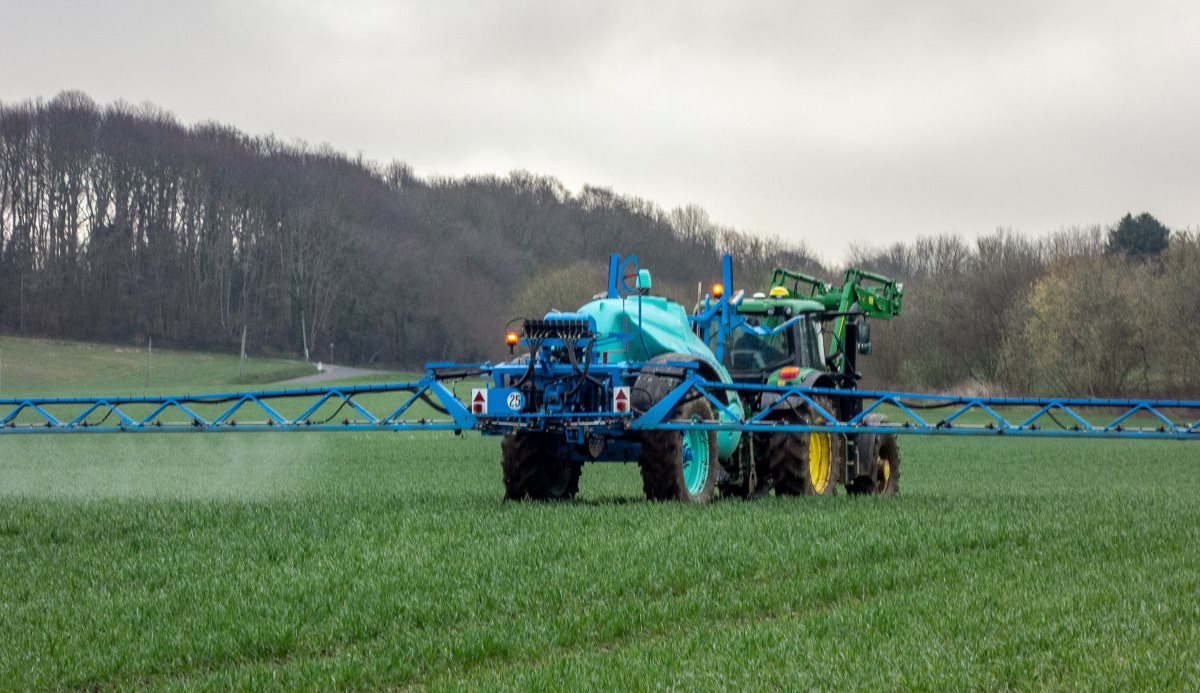
Regulatory authorities worldwide are tightening the screws on synthetic pesticides and fertilizers; over 500 active ingredients are already under scrutiny. Farmers are caught between securing yields and a shrinking chemical toolkit. MustGrow, based in Saskatoon, is instead relying on the natural defensive power of mustard. From mustard seeds, the company extracts two products. TerraSante™ is a certified organic biofertility enhancer with NPK (nitrogen–phosphorus–potassium) levels, while TerraMG™ is a bio-pesticide based on the active AITC (allyl isothiocyanate) molecule. Both products can be applied using standard field equipment, meaning growers do not have to purchase specialized new machinery to adopt the technology. This significantly lowers the barrier to entry.
In the past few weeks alone, MustGrow received approvals in Georgia, Texas, Utah, and Montana. This means TerraSante™ is now available in 10 states, including California and Florida. Demand is growing. Sales surged by around 600% from 2024 to 2025, and repeat purchase rates are strong. Two Asian contract manufacturers can potentially produce 500 tons annually. This corresponds to a revenue potential of approximately USD 10 million with margins of above 20%. The asset-light model keeps costs low. A grower in California can even treat the field multiple times, as the product is not limited on applications per year.
The real trump card is the commercial partnership with Bayer. The agricultural giant is estimated by MustGrow to be investing USD 35–40 million in the registration and marketing of TerraMG™ across Europe, the Middle East, and Africa. MustGrow received an upfront payment and could be receiving potential milestone payments and later royalties. To ensure the company does not run out of TerraSante™ again this year, it is looking to secure CAD 2 million through a LIFE private placement offering at CAD 0.50 per unit, with each unit including a common share purchase warrant exercisable at CAD 0.70. Management, directors and advisors hold approximately 20% of the 63 million outstanding shares. The goal is a positive operating cash flow starting in 2027. With Bayer’s backing and a growing US presence, MustGrow Biologics is more than just a green niche player. The stock is currently trading at around CAD 0.60.
K+S: Strong Start to the Year, but Costs Are Rising
The first three months of 2026 gave K+S an unexpected boost. With EUR 279 million in operating profit (EBITDA), the company far exceeded market expectations and the prior-year figure. Free cash flow tripled to EUR 87 million. Management reacted promptly and raised the annual forecast to EUR 630–730 million. A harsh winter fueled the de-icing salt business, while the agricultural segment impressed with stable volumes of just under 2 million tons and an average price of EUR 336 per ton. A slightly weaker dollar provided additional support. But this tailwind has its downsides.
What at first glance reads like a clear success story is clouded when viewed through the lens of costs. The conflict in the Middle East has been driving up prices for energy, materials, and freight since March. For the current year, K+S has factored in an oil price of around USD 100 per barrel for freight costs and a European gas price of EUR 45 per megawatt-hour for spot volumes. These assumptions are putting a noticeable strain on the margin. Should the geopolitical situation escalate, the lower end of the new forecast range could come into play, for example, if the supply of nitrogen fertilizers is disrupted or farmers reduce their spending. The environment remains fragile.
Beyond quarterly volatility, K+S is driving forward two long-term projects worth billions. In Canada, the Bethune mine is set to become one of the world’s most cost-effective producers through an innovative cooling process. In Germany, the EUR 600 million “Werra 2060” project is transforming processing to dry technology. This saves wastewater, reduces CO₂, and cuts the billions in legacy liabilities on the balance sheet. The company is virtually debt-free, having most recently reported net liquidity of EUR 37.5 million. A substantial dividend is not forthcoming. Whether the bet pays off will become clear in the second half of the year, when it remains to be seen if the high price level holds. The stock is currently trading at around EUR 14.45.
The biological fertilizer revolution is not a sure-fire success, but the three companies illustrate different paths to success. Bayer is weathering the storm through operational strength and grappling with settlement payments stemming from past liabilities. *MustGrow Biologics has opened the door to further growth with mustard-based extracts and a strategic partnership with Bayer. K+S is using a strong start to the year to support billion-dollar investments in the future, but continues to struggle with rising costs.** The hidden profit formula is innovation, scaling, and risk management — but only the coming months will reveal who will ultimately reap the long-term rewards.
Conflict of interest
Pursuant to §85 of the German Securities Trading Act (WpHG), we point out that Apaton Finance GmbH as well as partners, authors or employees of Apaton Finance GmbH (hereinafter referred to as “Relevant Persons”) may hold shares or other financial instruments of the aforementioned companies in the future or may bet on rising or falling prices and thus a conflict of interest may arise in the future. The Relevant Persons reserve the right to buy or sell shares or other financial instruments of the Company at any time (hereinafter each a “Transaction”). Transactions may, under certain circumstances, influence the respective price of the shares or other financial instruments of the Company.
In addition, Apaton Finance GmbH is active in the context of the preparation and publication of the reporting in paid contractual relationships.
For this reason, there is a concrete conflict of interest.
The above information on existing conflicts of interest applies to all types and forms of publication used by Apaton Finance GmbH for publications on companies.
Risk notice
Apaton Finance GmbH offers editors, agencies and companies the opportunity to publish commentaries, interviews, summaries, news and the like on news.financial. These contents are exclusively for the information of the readers and do not represent any call to action or recommendations, neither explicitly nor implicitly they are to be understood as an assurance of possible price developments. The contents do not replace individual expert investment advice and do not constitute an offer to sell the discussed share(s) or other financial instruments, nor an invitation to buy or sell such.
The content is expressly not a financial analysis, but a journalistic or advertising text. Readers or users who make investment decisions or carry out transactions on the basis of the information provided here do so entirely at their own risk. No contractual relationship is established between Apaton Finance GmbH and its readers or the users of its offers, as our information only refers to the company and not to the investment decision of the reader or user.
The acquisition of financial instruments involves high risks, which can lead to the total loss of the invested capital. The information published by Apaton Finance GmbH and its authors is based on careful research. Nevertheless, no liability is assumed for financial losses or a content-related guarantee for the topicality, correctness, appropriateness and completeness of the content provided here. Please also note our Terms of use.
Stockhouse does not provide investment advice or recommendations. All investment decisions should be made based on your own research and consultation with a registered investment professional. The issuer is solely responsible for the accuracy of the information contained herein. For full disclaimer information, please click here.