
Rheinmetall: Between Autonomous Systems and Obstacles
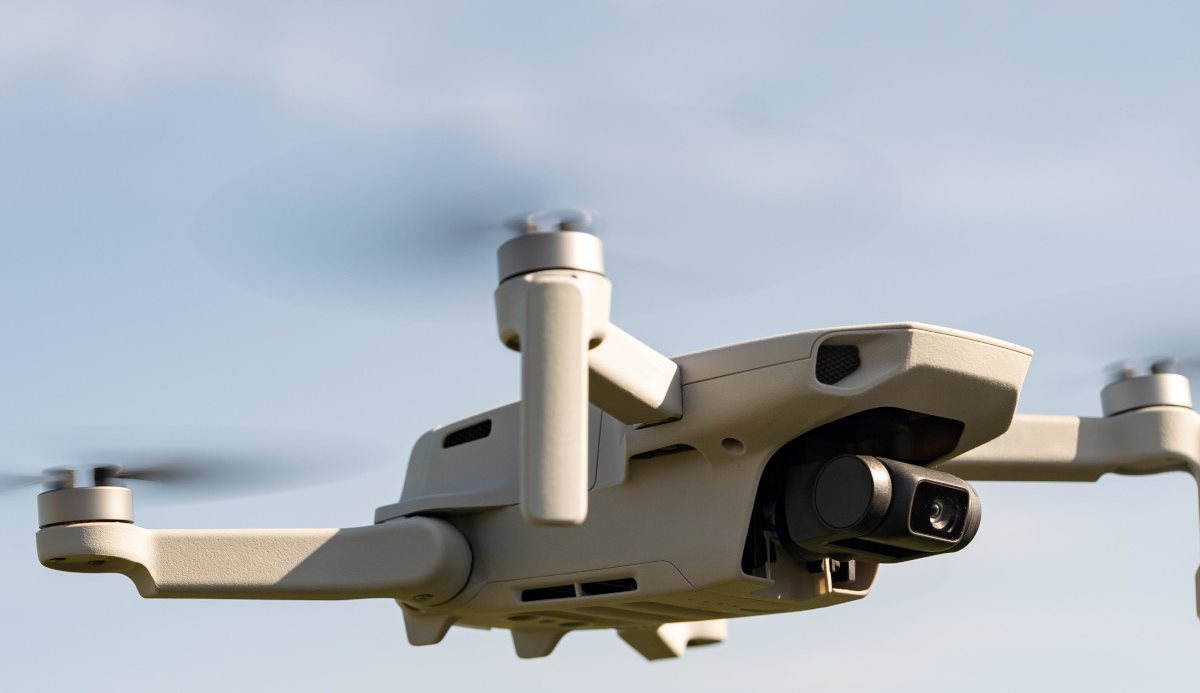
While the defence contractor grapples with operational challenges, autonomous systems and unmanned platforms are evolving into a new business segment with the potential to be worth billions. Rheinmetall set the course for this in the first half of 2026 with products ranging from the Victor U250 heavy-lift drone to the FV-014 loitering munition system and the LUNA NG reconnaissance drone. The strategic partnership with ERC Systems and the collaboration with Anduril demonstrate that the group no longer intends to offer just individual products, but rather complete system architectures from a single source. The integration of reconnaissance, strike, and defence across all domains addresses the central challenges of modern conflicts.
The cancellation of the F126 frigate program is putting significant pressure on the stock. The Ministry of Defence’s decision to order 8 MEKO frigates from TKMS came at an inopportune moment for Rheinmetall. The group had only acquired Lürssen’s naval division this spring in order to establish itself as a general contractor in shipbuilding. Now, the management team led by Armin Papperger must quickly redirect the freed-up shipyard capacity to other programs. If this fails, the billion-euro acquisition risks turning into a restructuring case. Rheinmetall’s market capitalization has fallen by over EUR 10 billion.
Despite the setback, Rheinmetall is consistently pushing ahead with its transformation. The sale of the automotive business to AEQUITA sharpens its profile as a pure-play defence group. The strategic partnership with Vantor for a European 3D information platform and the joint venture with LIG Defense for air defence systems are opening new doors. The North American business is being expanded with a USD 41 million investment, while production capacity for 155-mm ammunition is being significantly increased. The quarterly results on August 6 will show whether the operating business can offset the loss of the major contract. The share is currently trading at around EUR 942.10.
Volatus Aerospace: Operational Advantages in the New Billion-Euro Market
The drone industry is full of companies capable of developing impressive aircraft. But who has mastered large-scale operations? Volatus Aerospace has positioned itself precisely there—and is now gearing up for the defence market. With 28 manned aircraft and over 100 drones in four operational areas, the company gains practical experience daily in pipeline monitoring and infrastructure inspections. This commercial foundation sets Volatus apart from pure technology developers who are still validating their systems in the lab. The recurring revenue from its operational business not only funds day-to-day operations but also provides valuable, practical feedback for the continued development of its systems. This is a decisive advantage in the highly competitive unmanned systems industry.
The 2025 fiscal year shows where the company is headed. Revenue grew by 26% to CAD 34.2 million, with an improved margin of 32%. The defence segment accounts for 25% of revenue, while international activities increased by 244%. The recently completed bought-deal financing raised just over CAD 34.5 million for further business expansion. With the 53,000-square-foot production facility in Mirabel now operational, the company has secured manufacturing capacity for defence contracts. It is designed to handle approximately CAD 250 million in annual revenue. The first Sentinel docking station rolled off the assembly line just 10 weeks after commissioning. The company’s financial position, with cash and cash equivalents of CAD 41 million at the end of 2025 and recurring annual revenue of CAD 20 million, provides planning certainty.
Inclusion in the second phase of the US Drone Dominance Program is more than just a symbolic honor. This is a USD 1.1 billion program to procure over 300,000 autonomous systems. Volatus is competing with its FPV platform for long-range attacks, which was developed in collaboration with allied industry partners. The company stands out thanks to its presence in Canada, which meets strict supply chain requirements. This is further supported by the announced partnership with the UCan Brave Tech Center: The goal here is to scale up combat-proven technologies from Ukraine for use by NATO partners. The 21% insider ownership and broad employee participation through stock options underscore the entire team’s long-term commitment. The share is currently trading at around CAD 0.58.
Boeing: Operational Progress Meets Financial Legacy Issues
Boeing is advancing the development of unmanned systems through two key projects. After more than 150 test flights in Australia, the MQ-28 Ghost Bat has now secured a strategic partnership with Rheinmetall for the German Armed Forces. At the same time, the MQ-25 Stingray for the US Navy is approaching operational readiness with the first test flights of operationally capable prototypes. For investors, however, this sector remains primarily a strategic option. It is technologically promising but not yet a significant driver of earnings. The military drone business complements the traditional aircraft portfolio, but does not provide short-term relief for the balance sheet.
May saw 60 commercial aircraft delivered, marking the strongest monthly figure since the strike was settled in December 2024. The 737 MAX, in particular, stood out with 51 deliveries after a wiring issue was resolved in March. The fourth assembly line in Everett will begin operations on July 6 and is expected to increase capacity to 52 aircraft per month by 2027. Certification of the MAX 10 is drawing nearer. The FAA and EASA indicate that only formal hurdles remain. This variant is strategically crucial for competing against the A321neo and fulfilling hundreds of pending orders.
The quarterly figures show mixed signals. Revenue rose 14% to USD 22.2 billion, while the net loss narrowed to USD 7 million. The real challenge remains free cash flow, which remains negative. The company has USD 20.9 billion in cash and cash equivalents, offset by USD 47.2 billion in debt. The USD 695 billion order backlog provides long-term planning security. The stock is likely to benefit from concrete progress on margins and cash flow, and is currently trading at about USD 217.25.
ILA 2026 clearly demonstrated where the next billion-dollar market in aviation lies: in autonomous, connected systems. Rheinmetall is strategically driving this transformation forward, but is struggling with the loss of the frigate contract and must realign its shipyard capacities. Volatus Aerospace is benefiting from its operational experience and is well-positioned in the multi-billion-dollar US drone program with its FPV platform. Boeing is showing operational progress with the 737 MAX, while its drone business and ongoing debt are dampening short-term investor optimism.
Conflict of interest
Pursuant to §85 of the German Securities Trading Act (WpHG), we point out that Apaton Finance GmbH as well as partners, authors or employees of Apaton Finance GmbH (hereinafter referred to as “Relevant Persons”) currently hold or hold shares or other financial instruments of the aforementioned companies and speculate on their price developments. In this respect, they intend to sell or acquire shares or other financial instruments of the companies (hereinafter each referred to as a “Transaction”). Transactions may thereby influence the respective price of the shares or other financial instruments of the Company.
In this respect, there is a concrete conflict of interest in the reporting on the companies.
In addition, Apaton Finance GmbH is active in the context of the preparation and publication of the reporting in paid contractual relationships.
For this reason, there is also a concrete conflict of interest.
The above information on existing conflicts of interest applies to all types and forms of publication used by Apaton Finance GmbH for publications on companies.
Risk notice
Apaton Finance GmbH offers editors, agencies and companies the opportunity to publish commentaries, interviews, summaries, news and the like on news.financial. These contents are exclusively for the information of the readers and do not represent any call to action or recommendations, neither explicitly nor implicitly they are to be understood as an assurance of possible price developments. The contents do not replace individual expert investment advice and do not constitute an offer to sell the discussed share(s) or other financial instruments, nor an invitation to buy or sell such.
The content is expressly not a financial analysis, but a journalistic or advertising text. Readers or users who make investment decisions or carry out transactions on the basis of the information provided here do so entirely at their own risk. No contractual relationship is established between Apaton Finance GmbH and its readers or the users of its offers, as our information only refers to the company and not to the investment decision of the reader or user.
The acquisition of financial instruments involves high risks, which can lead to the total loss of the invested capital. The information published by Apaton Finance GmbH and its authors is based on careful research. Nevertheless, no liability is assumed for financial losses or a content-related guarantee for the topicality, correctness, appropriateness and completeness of the content provided here. Please also note our Terms of use.
Stockhouse does not provide investment advice or recommendations. All investment decisions should be made based on your own research and consultation with a registered investment professional. The issuer is solely responsible for the accuracy of the information contained herein. For full disclaimer information, please click here.