
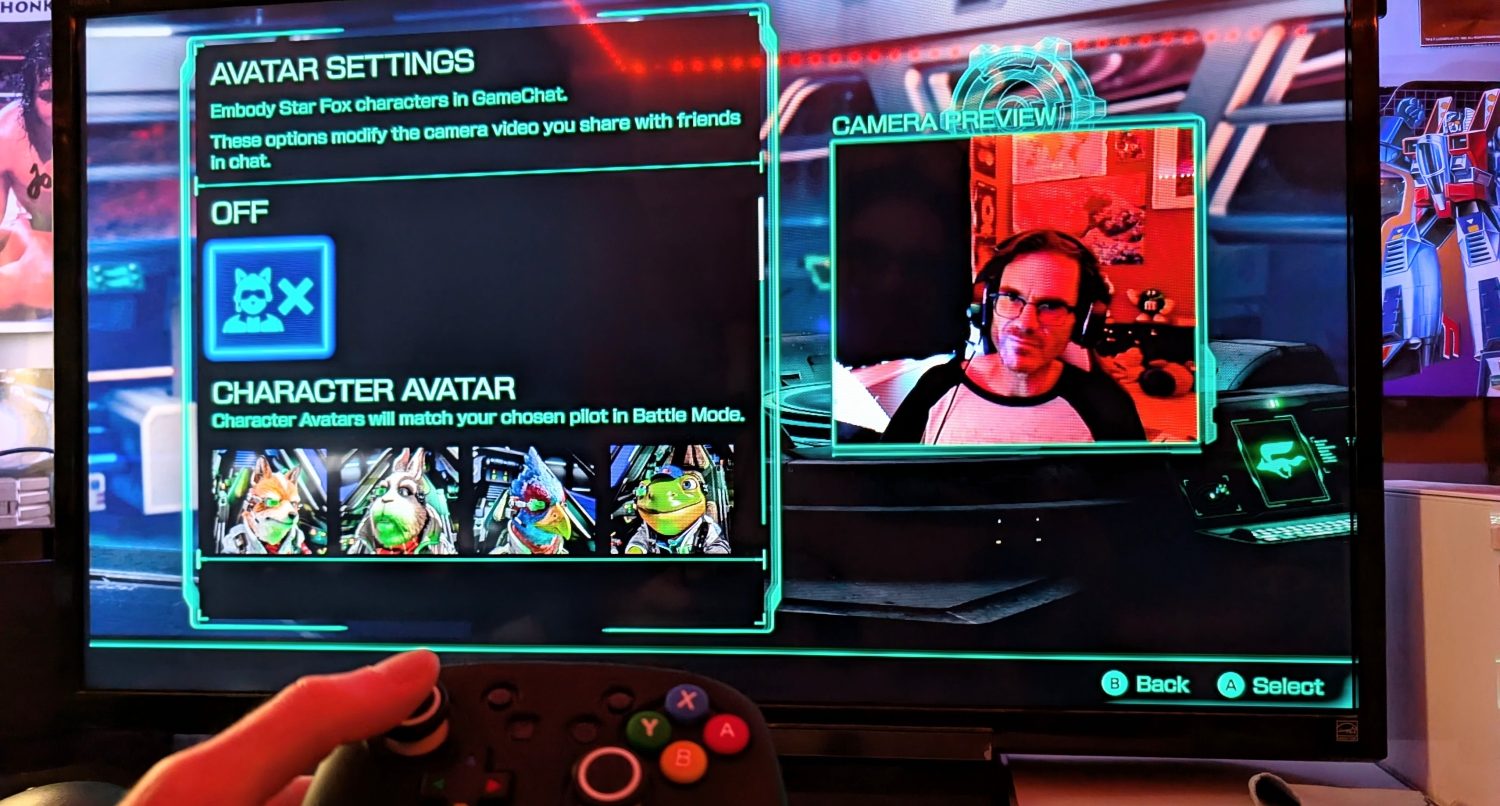

- Nintendo’s (OTC Pink: NTDOF) profits surged despite lower revenue, helped by tariff refunds and continued strong Switch 2 sales, while major franchises like Mario Kart and Tomodachi Life drove software performance
- Sony (NYSE:SONY) remains committed to ending new PS5 disc production in 2028, arguing that digital adoption continues to grow despite significant backlash from consumers and physical media advocates
- Microsoft’s (NASDAQ:MSFT) Xbox business posted solid content and services growth, but rising hardware costs and repeated console price increases are raising questions about the affordability of future Xbox systems
- Publishers including Ubisoft (OTC Pink:UBSFF) and Take-Two (NASDAQ:TTWO) are leaning into a digital future, with Capcom (OTC Pink: CCOEF) reporting that 90 per cent of sales are digital and Take-Two preparing for the industry-defining launch of Grand Theft Auto VI
The video game market had a lot of value both for gamers and the suits, but things started to change, and it is about to change even more. .
Console makers are navigating rising component costs, publishers are embracing digital distribution at an accelerating pace, and major platform holders are beginning to make decisions that could permanently reshape how consumers buy and own games.
Sony’s (NYSE:SONY) controversial plan to end production of new PlayStation 5 game discs beginning in 2028 has ignited backlash across gaming communities, while Microsoft (NASDAQ:MSFT) continues to wrestle with rising hardware costs and questions surrounding Xbox’s long-term console strategy following leadership and organizational changes. Meanwhile, Nintendo (OTC Pink:NTDOF) is attempting to balance the momentum of the Switch 2 with the realities of a market increasingly defined by digital distribution, third-party partnerships, and escalating hardware prices.
The sector remains filled with opportunity, but the next few years could determine which companies are best positioned for the industry’s digital-first future.
This article is a journalistic opinion piece that has been written based on independent research. It is intended to inform investors and should not be taken as a recommendation or financial advice.
Nintendo: Lower revenue, higher profit
Nintendo’s latest first-quarter results for fiscal 2027 offered an interesting contrast between top-line performance and profitability.
Net sales came in at approximately $3.25 billion, down 9.5 per cent year-over-year, largely due to comparisons against the explosive launch period of the Switch 2. However, operating profit surged roughly 150 per cent to $894 million, a figure heavily supported by approximately $300 million in tariff refunds (you are welcome, Nintendo.)
The key takeaway for investors is that, while revenue declined, Nintendo demonstrated significantly improved profit generation. The tariff-related benefit was an important factor, but the company still showed strong operational performance during what would ordinarily be considered a transitional hardware period.
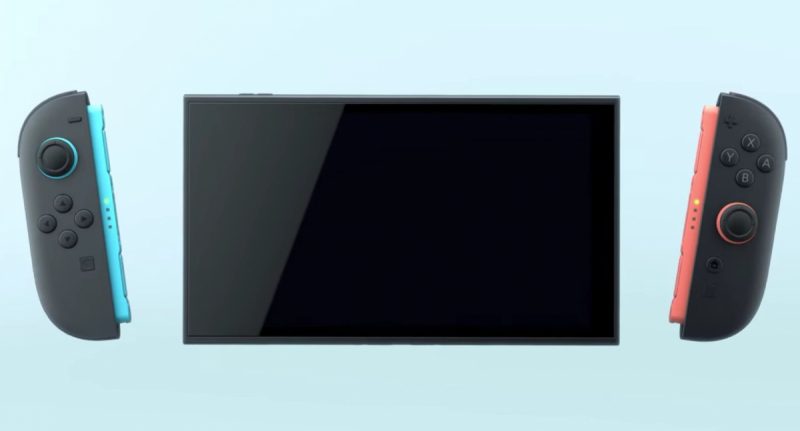
Switch 2 continues strong momentum
Nintendo reported 3.82 million Switch 2 units sold during the quarter, bringing the system’s lifetime sales to 23.68 million units.
While unit sales were lower compared with the prior-year launch quarter, context matters. Nearly four million units in a non-launch quarter remains a strong result and suggests sustained consumer demand. Some investors also believe recent demand may have been boosted by consumers rushing to purchase hardware ahead of expected price increases in key markets such as the United States.
The Switch 2 has now surpassed the lifetime sales of the Nintendo GameCube and is rapidly moving toward Nintendo 64 territory.
The original Switch continues its historic run, selling another 660,000 units and reaching 156.59 million lifetime sales, putting it within striking distance of the PlayStation 2’s long-standing sales record (unless Sony randomly “finds” more to sell from a back room at the last minute, again.)
Nintendo continues to forecast approximately 16.5 million Switch 2 sales for the remainder of the fiscal year, indicating confidence in both supply and demand.
Software sales reveal both winners and questions
Switch 2 software sales totalled 9.46 million units, while Switch software sales reached 33.81 million units.
Digital sales represented 61.5 per cent of Nintendo’s software business, up modestly from the previous year. While that percentage includes downloadable content, subscriptions, and microtransactions, it continues to demonstrate the company’s gradual shift toward digital distribution.
The biggest software story by far was Tomodachi Life, which reached an astonishing 8 million units sold. The title appears poised to become one of Nintendo’s largest long-term software successes, drawing comparisons to the breakout performance of Animal Crossing: New Horizons.
Meanwhile, some notable first-party releases failed to appear among Nintendo’s million-selling software milestones. Neither Star Fox nor Yoshi and the Mysterious Book reached the one-million-unit threshold during the reporting period. Nintendo characterized both titles as having performed steadily, though the absence of blockbuster sales figures could disappoint investors expecting stronger launches.
Questions also remain around Mario Tennis Fever, which appears to be struggling to reach major sales milestones following its February release.
On the positive side, Mario Kart World remains the Switch 2’s best-selling title at 15.39 million units, while Animal Crossing: New Horizons has surpassed 50 million lifetime sales and Super Mario Odyssey has climbed above 30 million units.
Zelda remains the vah ruta in the room
Investors and fans continue to focus on Nintendo’s upcoming software pipeline, particularly The Legend of Zelda: Ocarina of Time remake / remaster / re, uh, do?
Nintendo maintained its release guidance and made no changes to its first-party lineup. Because these statements were delivered directly to investors, many observers view the absence of a delay announcement as a positive signal that the game remains on track for release this year.
With the Zelda franchise approaching its 40th anniversary, investors will be closely watching for updates, marketing plans, and potential announcements surrounding both the game and Nintendo’s broader franchise strategy.
Nintendo stock (OTC Pink:NTDOF) is up more than 20 per cent since June when the Switch 2 celebrated its first anniversary on the market, though it is still 46 per cent lower than where it was this time last year. Back home in Japan, has lost 41 per cent in a year.
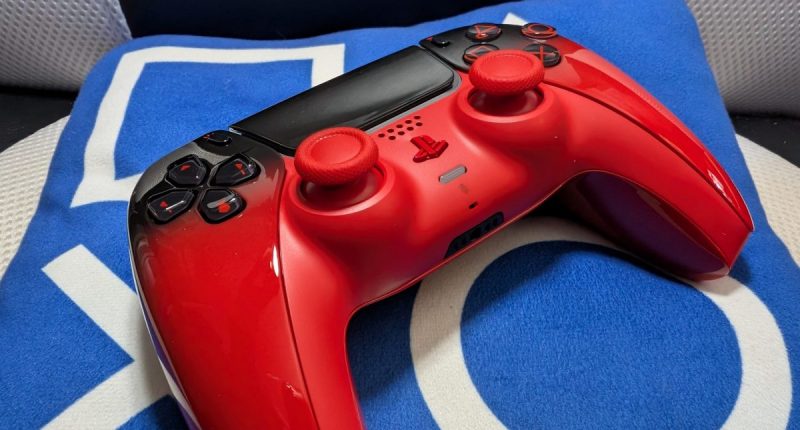
Sony doubles down on digital
Sony’s decision to discontinue manufacturing new PlayStation 5 game discs beginning in January 2028 continues to generate significant controversy.
During a recent investor Q&A, Sony CFO Lin Tao acknowledged consumer concerns but made it clear the company remains committed to the transition.
Sony argues that content consumption across entertainment categories is increasingly digital and believes gaming will continue moving in the same direction. Importantly, the company stated that it currently sees no material business impact from the decision and does not expect substantial negative effects through 2028.
From an investor perspective, Sony’s confidence is understandable.
The company’s Game & Network Services division continues to produce record profitability, driven largely by digital software sales, add-on content, subscriptions, and microtransactions. Sony appears convinced that consumer behaviour has already shifted sufficiently toward digital ownership to support the transition.
However, the bigger question is not the PlayStation 5 generation. It is the PlayStation 6 generation.
A successful console launch depends heavily on consumer trust, ecosystem loyalty, and software compatibility. While Sony continues emphasizing player engagement and long-term platform stability, many investors are questioning how the company will handle ownership concerns for physical PS4 and PS5 game libraries.
Sony may ultimately introduce accessory solutions or external drive options, but the company has yet to provide detailed answers.
For now, management appears willing to absorb criticism while benefiting from what is likely to be a highly profitable final phase of the PS5 lifecycle, especially with Grand Theft Auto VI approaching.
Sony stock (NYSE:SONY) is up 16 per cent over the past three months, but remains down 8 per cent since the year began.
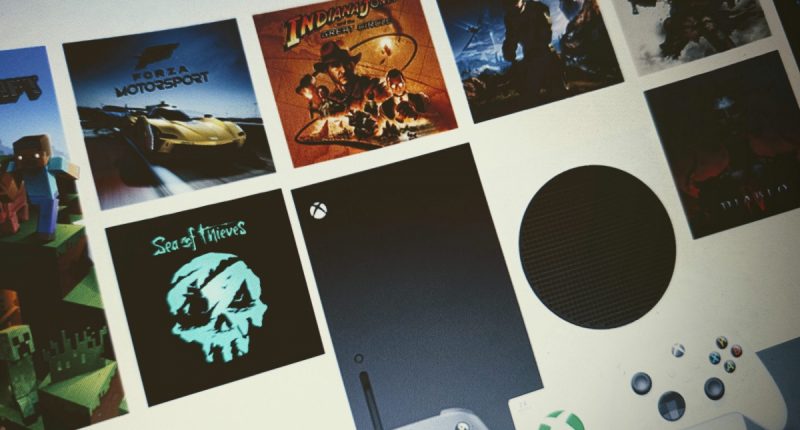
Microsoft’s hardware economics become increasingly difficult
Microsoft reported that Xbox content and services revenue increased 13 per cent year-over-year, demonstrating continued strength in software, subscriptions, and ecosystem spending.
The challenge is hardware.
Microsoft recently announced another Xbox price increase, pushing the standard disc-based Xbox Series X to approximately $800 in some markets.
Industry reports suggest Microsoft may still be losing roughly $150 per console sold despite those price increases due to rising memory costs and broader component inflation.
If those estimates are accurate, the economics of future hardware become significantly more complicated.
Investors are increasingly focused on Microsoft’s next-generation strategy, particularly the rumoured “Helix” platform and discussions surrounding a more open ecosystem that could potentially integrate third-party storefronts such as Steam.
Such a strategy could help attract users but would also reduce Microsoft’s ability to subsidize hardware, since software sales would no longer be fully captured within the Xbox ecosystem.
The result could be dramatically higher launch prices for future Xbox hardware, potentially pushing next-generation consoles into four-figure territory.
That raises an important question: how much are consumers willing to pay before traditional consoles become luxury purchases?
Microsoft stock (NASDAQ:MSFT) has risen more than 3 per cent since the year began, though it is down 4 per cent since this time last year.
Ubisoft and Capcom see a digital future
Not every major publisher is concerned about Sony’s shift away from physical media.
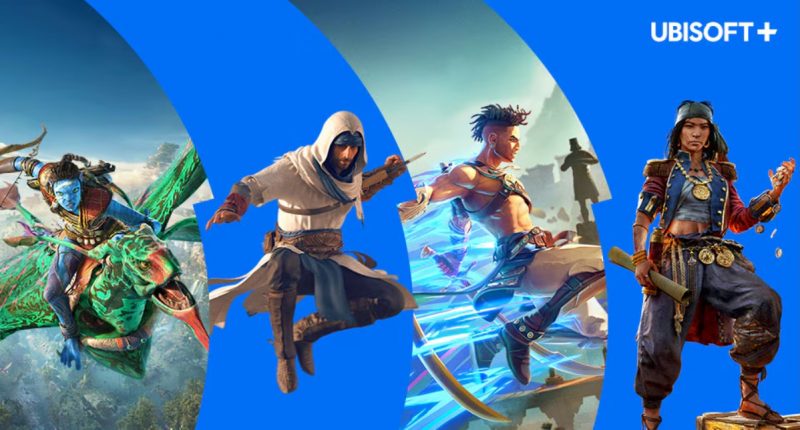
Ubisoft (OTC Pink:UBSFF) CEO Yves Guillemot argued during a recent investor discussion that digital-only distribution could ultimately help lower hardware costs and expand accessibility.
Drawing parallels to the PC market, Guillemot noted that digital distribution helped grow gaming audiences over time. While acknowledging both advantages and disadvantages, he said Ubisoft does not expect the change to significantly disrupt the industry.
In its latest financial report, the company touted the fact that Assassin’s Creed: Black Flag Resynced sold 3.5 million copies since its release in July, exceeding annual expectations within its first 14 days.
Ubisoft stock (OTC Pink:UBSFF) has lost 20 per cent since the start of the year.
Capcom (OTC Pink:CCOEF) appears even less concerned.
The publisher stated in its latest investor Q&A that approximately 90 per cent of its unit sales are already digital, leading management to conclude that the shrinking physical market should have minimal impact on future business performance.
Capcom’s confidence is supported by a remarkably strong release schedule.
The company continues to benefit from blockbuster performance across its major franchises, including Resident Evil, Monster Hunter, and the successful launch of Pragmata. Upcoming releases such as Onimusha: Way of the Sword, Dragon’s Dogma 2: Darker Risen for Switch 2, and future Resident Evil expansions provide investors with a robust pipeline heading into 2027.
Capcom stock (OTC Pink:CCOEF) has risen more than 9 per cent since the beginning of the year.
Gotta go fast
Let’s not forget Sega Samy (OTC Pink:SGAMY), Sonic the Hedgehog’s hometown.
Sega’s financial results for the opening quarter of fiscal year 2027, spanning April to June 2026, highlight strong sales across several of its flagship franchises. Like a Dragon exceeded 600,000 copies sold, Sonic the Hedgehog nearly reached one million units, and Persona emerged as the company’s best-performing series, clearing the one million-copy milestone.
The achievement is even more remarkable given the lack of a new Persona release during the reporting period. While Persona 3 Reload was brought to Nintendo Switch 2 last October, the franchise has gone several years without an all-new entry, making its continued sales momentum particularly impressive.
Sega Samy (OTC Pink:SGAMY) stock has risen more than 10 per cent since the year began.
We are all just sitting here waiting for gaming’s biggest release
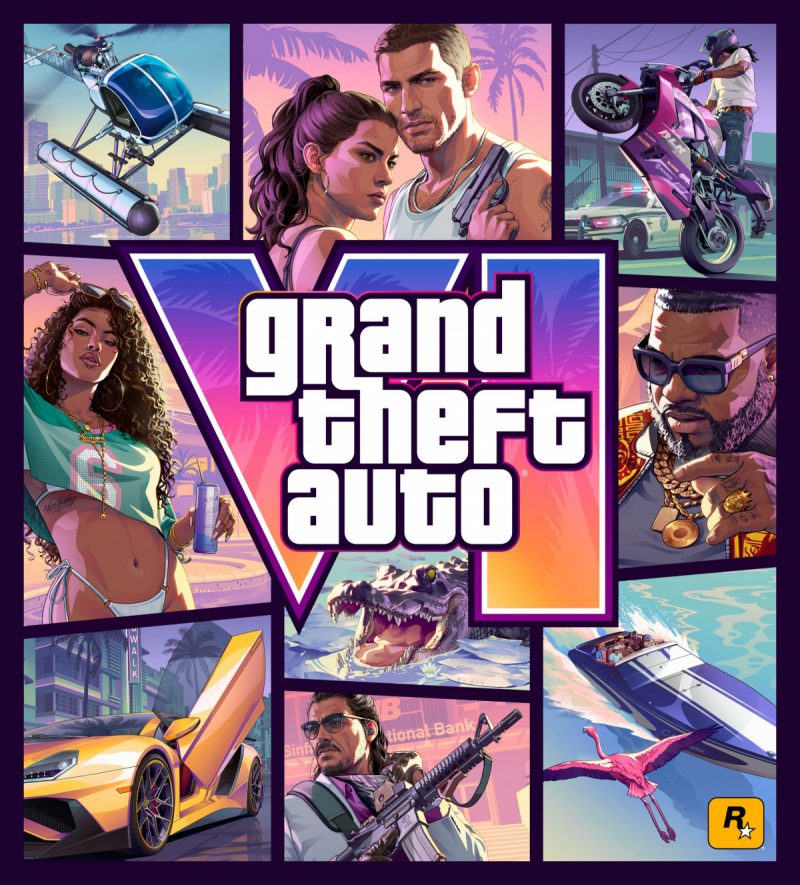
No company stands to benefit more from the next phase of the gaming cycle than Take-Two Interactive Software (NASDAQ:TTWO).
The publisher is preparing for the release of Grand Theft Auto VI in November, what many analysts expect will become the largest entertainment launch in history.
While Take-Two has remained relatively quiet regarding detailed gameplay information, anticipation continues to build ahead of an extended showcase scheduled to debut through Netflix (NASDAQ:NFLX) before appearing on YouTube. There is even a countdown ticking away … if you’re that excited to keep track (to the Netflix special, not GTA’s release.)
GTA VI represents more than just another major release.
It is expected to drive software sales, console purchases, digital spending, subscription activity, and engagement across the broader gaming ecosystem. Analysts project $3.25 billion to $5.2 billion in first-week revenue, potentially making GTA 6 the biggest entertainment launch ever. Sony, Microsoft, and third-party publishers may all benefit from the industry’s most anticipated launch in more than a decade.
Via the company’s latest quarterly financial report, net revenue was $1.53 billion, compared to $1.50 billion in last year’s fiscal first quarter.
Take-Two Interactive Software stock (NASDAQ:TTWO) is trading nearly 5 per cent lower compared to the start of the year, but is up 12 per cent since this time last year.
Coin heaven
Gaming stocks are no longer being driven solely by hardware sales. Increasingly, profitability comes from digital content, subscriptions, live-service engagement, and ecosystem control.
Nintendo is proving it can grow earnings even in a challenging comparison period. Sony is betting that digital distribution is inevitable. Microsoft is grappling with the mounting costs of console hardware. Ubisoft and Capcom continue embracing digital sales, while Take-Two prepares for what could be the most important software launch the industry has ever seen.
The next few years will reveal whether gamers fully embrace the digital future envisioned by platform holders or whether concerns around ownership, pricing, and preservation create unexpected resistance. For investors, that battle may prove just as important as the games themselves.
Join the discussion: Find out what the Bullboards are saying about electronic gaming and multimedia, then check out Stockhouse’s stock forums and message boards.