
Key Highlights
- MAX Power Mining signed a non-binding memorandum of understanding with Douglas Capital Inc.
- The parties plan to assess using Lawson natural hydrogen to generate power for Saskatchewan data centers.
- The review also includes a proposed Alberta-to-Ontario 2,000 MW transmission corridor concept.
- The companies aim to set a joint feasibility work plan within 30 days.
MAX Power Mining Corp. (CSE: MAXX; OTC: MAXXF; FSE: 89N) has signed a strategic memorandum of understanding (MOU) with Douglas Capital Inc. (DCI) to evaluate potential commercialization pathways for MAX Power’s Lawson natural hydrogen discovery in Saskatchewan.
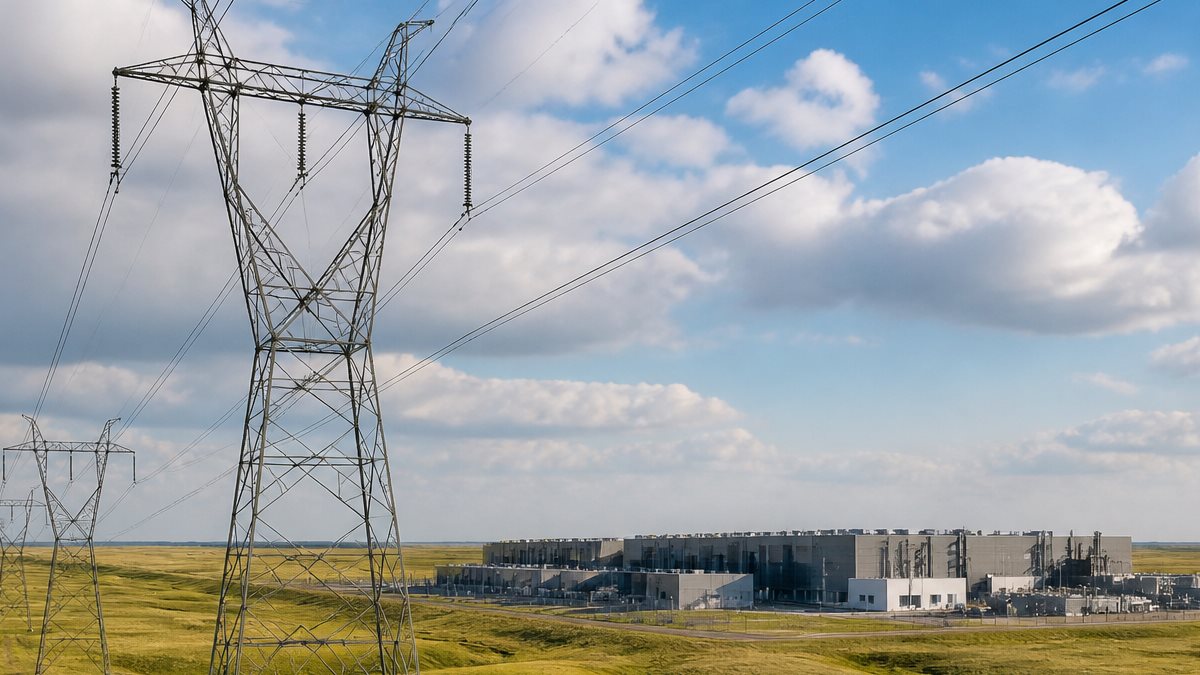
Under the MOU, the companies plan to study options to connect a potential natural hydrogen supply to electricity generation for Canadian-built artificial intelligence (AI) data centers in Saskatchewan, as well as other potential electricity markets. MAX Power described the arrangement as a framework to evaluate how energy from Lawson could be brought to market, subject to technical and commercial validation.
This article is a journalistic opinion piece which has been written based on independent research. It is intended to inform investors and should not be taken as a recommendation or financial advice.
The release said DCI is led by John Douglas, whose prior development experience includes the C$8 billion, 1,250 megawatt (MW) Champlain Hudson Power Express transmission project, which entered commercial operation in June 2026. MAX Power also highlighted DCI co-founder Dr. Denis Steyn’s background in high-voltage direct current (HVDC) transmission and power systems.
Data centers and proposed CANVergence Energy Way corridor
MAX Power and DCI said they will evaluate a network of data centers across Saskatchewan, with project sizing to be informed by hydrogen composition, quantity and flow data, alongside customer requirements and feasibility work. The MOU also contemplates examining potential customers and offtake arrangements through DCI’s proposed CANVergence Energy Way, described as an Alberta-to-Ontario corridor intended to include a 2,000 MW multi-terminal HVDC transmission system and to be 100% First Nations-controlled.
The MOU contemplates DCI leading project development work such as financial modelling, prospective customer solicitation and efforts to raise development capital for data center projects, while MAX Power would provide subsurface and hydrogen supply information for evaluation. The companies said a joint steering committee with a senior representative from each party would oversee the proposed work plan and discussions toward definitive agreements.
Non-binding terms and next steps
MAX Power said the MOU is non-binding other than certain customary provisions, and that no definitive agreement has been entered into. The company cautioned there is no assurance either initiative will proceed, and any development would remain subject to feasibility work, financing, permitting, required approvals and definitive agreements.
As a next step, the parties said they intend to agree on a joint feasibility work plan, budget and timetable within 30 days of the MOU’s effective date.
The original press release is available on stockhouse.com
s-5v2_h-6v2_i-7v2