

The transition to a low-carbon economy depends on minerals critical to the optimal functioning of clean technologies, and nickel sits near the top of the list, thanks to its strength, corrosion resistance and temperature resistance. Glencore estimates that demand will grow by 3.7x from 2019 to 2050 driven by the metal’s unique set of properties. Here’s a breakdown:
- Nickel is increasingly used as cathode material in lithium-ion batteries, improving their range and performance.
- It makes up high-performance alloys in solar panels, wind turbines and geothermal energy systems.
- The metal is also used in catalysts for water electrolyzers to produce green hydrogen.
- This is in addition to nickel’s main application, stainless steel, which accounts for about two thirds of total production.
Nickel’s varied applications grant it a US$56.42 billion global market expected to surpass US$100 billion by 2034. That said, this tailwind presents a pair of unmet needs essential to expediting the metal’s role in the energy transition:
- Firstly, Benchmark Intelligence sees increasing clean technology demand plunging the nickel market into a deficit that will grow to 840,000 tons by 2034.
- Secondly, traditional nickel extraction and refining is a top source of pollution, with mining causing deforestation and water contamination, and smelting tied to exorbitant greenhouse gas and particulate emissions, impoverishing the environment for communities and wildlife alike. Top producer Indonesia is enduring the brunt of the fallout.
This set-up favors environmentally-driven explorers, developers and refiners with robust resources to participate in the global nickel tailwind, create value and expedite the shift to a low-carbon economy.
Introducing FPX Nickel
A name that fits our deficit/emissions reduction thesis to perfection is FPX Nickel (TSXV:FPX), market capitalization C$85 million, an explorer and developer on a differentiated path to production driven by its 453-square-kilometre Baptiste nickel project in British Columbia, which is projected to be among the world’s 10 largest nickel mines by annual production (see slide 3 of the Q3 2025 investor presentation). The project is located only 80 kilometres west of Centerra Gold’s producing Mount Milligan mine, where reserves stand at 4.4 million ounces of gold and 1.7 billion pounds of copper, representing about US$24 billion in the ground at prices as of September 15, 2025.
This article is disseminated in partnership with FPX Nickel Corp. It is intended to inform investors and should not be taken as a recommendation or financial advice.
The stock, down by 60.87 per cent since 2020, stands in contrast to the company’s disciplined and consistent advancements at Baptiste over the period, including:
- A 2020 preliminary economic assessment (PEA).
- A 2023 pre-feasibility study (PFS).
- A successful 2025 drilling campaign.
- All of it supported by Baptiste’s alignment with Canada’s critical minerals strategy, as demonstrated by C$3.5 million in recent funding from Natural Resources Canada’s Critical Minerals Infrastructure Fund discussed later in this article.
Guided by a leadership team with tailormade exploration, permitting, financing and engineering experience, highly aligned with shareholders at 14 per cent insider ownership, FPX’s mismatch between stock price and development milestones strongly suggests undervaluation is at play, calling for a detailed look at what makes the Baptiste project so attractive.
The Baptiste nickel project
According to a 2023 PFS, Baptiste’s open-pit mine will average 59,100 tons of nickel (132 million pounds) annually over an estimated 29-year operating life at all-in sustaining costs of only US$4.17 per pound, generating pre-tax free cash flow of US$578 million per year, or more than 8 times FPX’s current market capitalization.
This output affords the project an estimated after-tax net present value (discounted at 8 per cent) of US$2.01 billion, requiring initial capital of US$2.18 billion with a payback of only 3.7 years at US$8.75 per pound of nickel. The critical metal’s price trades around US$6.92 as of September 15.
Proven and probable nickel reserves stand at 3.12 million tons as of 2023, in addition to resources of 3.82 million tons indicated and 720,000 tons inferred, representing more than US$53 billion in the ground. This is in addition to more than 76,000 tons of cobalt and 52 million tons of iron indicated and inferred, equivalent to about US$8 billion in value-added commodities.
Baptiste’s globally relevant nickel stores, recalling our aforementioned thesis, are expected to have the lowest carbon intensity in the entire market (slide 24), coming in at only 1.2 tons of carbon dioxide per ton of refined nickel produced, well ahead of 7.19-27.5 tons for Class 1 nickel, the nearest competitor, 45 tons for ferronickel and 69 tons for nickel pig iron.
Baptiste’s low-emission profile stems form the source of its mineralization, known as awaruite, a sulphur-free nickel-iron mineral that will enable FPX to extract it magnetically and process concentrate at 60 per cent nickel without the use of chemicals, a vast improvement from conventional nickel sulphide processing, which tops out at a grade of 25 per cent and requires energy intensive smelting before entering the stainless steel supply chain.
Easily refined into battery-grade nickel sulphate, which FPX intends to capitalize on with a new US$445 million refinery, awaruite is a game-changer when it comes to green nickel production.

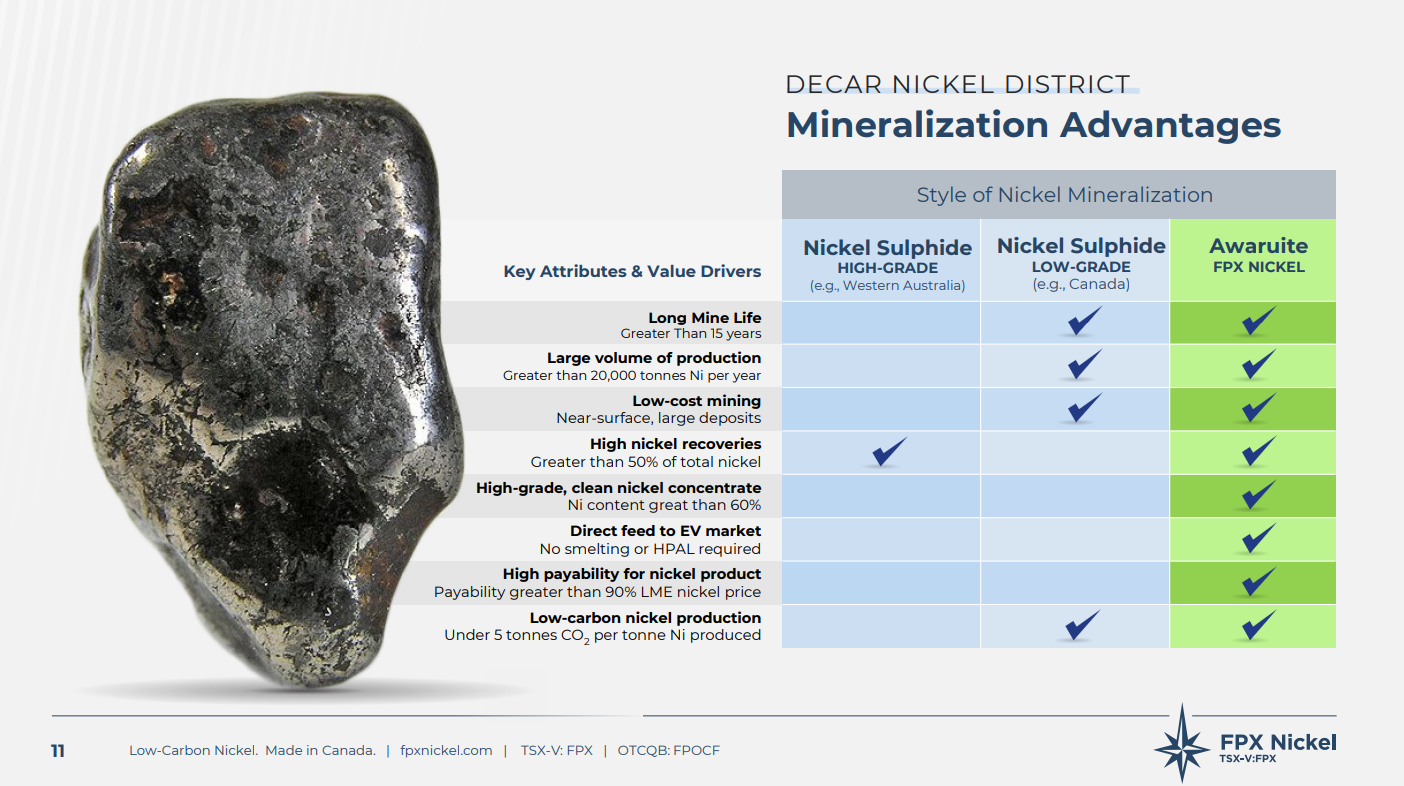
Strategically located near B.C Hydro’s grid, with easy access to ports in Asia and rail networks to supply markets across North America, Baptiste is estimated to top the list when it comes to operational efficiency compared to large nickel mines over the past 15 years, coming in at US$48,000 in pre-production capital costs per ton of nickel production, a full US$5,000 ahead of the nearest competitor (slide 23).
It’s no surprise, then, that the high-margin, long-life, large-scale project scores highly on a mine life-to-payback ratio and, given FPX’s low stock price, on a price-to-asset-value ratio as well, crystalizing the miner’s severely underappreciated road to production (slides 28-29).
Additional green flags strengthening conviction in FPX’s quest to bring Baptiste’s nickel to market include:
- A relationship with the Government of Canada since 2023, beginning with one of the first mining investments under Canada’s critical minerals strategy (slide 15).
- A C$16 million investment from global stainless steep producer Outokumpu in Q2 2023, granting it a 9.9 per cent ownership share.
- A global exploration alliance with JOGMEC, the Japan Organization for Metals and Energy Security, in April 2023, dedicated to discovering new awaruite nickel deposits across the world, and since expanded in Q2 2024.
- A non-binding, non-exclusive memorandum of understanding to collaborate on nickel production for the electric vehicle supply chain with JOGMEC and the Toyota/Panasonic Joint Venture in September 2023.
- Funding of C$14.4 million from Sumitomo Metal Mining in January 2024, granting the Japanese metals giant a 9.9 per cent ownership share.
Baptiste’s prospectivity is only elevated by numerous other targets confirmed to host awaruite mineralization, most notably the Van target 6 km to the north, which substantiates the project’s potential to host multiple deposits through:
- A total 2.5-square-km area delineated by 54 bedrock samples, 35 per cent of which graded over 0.12 per cent nickel.
- Maiden drilling in 2021 yielding 101 metres at 0.207 per cent nickel at a vertical depth of only 27 m.
- Step-out drilling in 2022 highlighted by an intercept of 427 m at 0.204 per cent nickel from 9 m vertical depth.
At present, Baptiste finds itself in the middle of its development stage, leaving about five years until commercial production, meaning that it’s not too late to participate in FPX’s growth runway as it unlocks and harvests project value.
A value-added 2025 drilling program
One of management’s latest development milestones at Baptiste centers on a 2025 drilling program, announced in July and finalized in August, providing new data in support of environmental assessment work planned for Q4 2025 and a feasibility study (FS) slated for 2027.

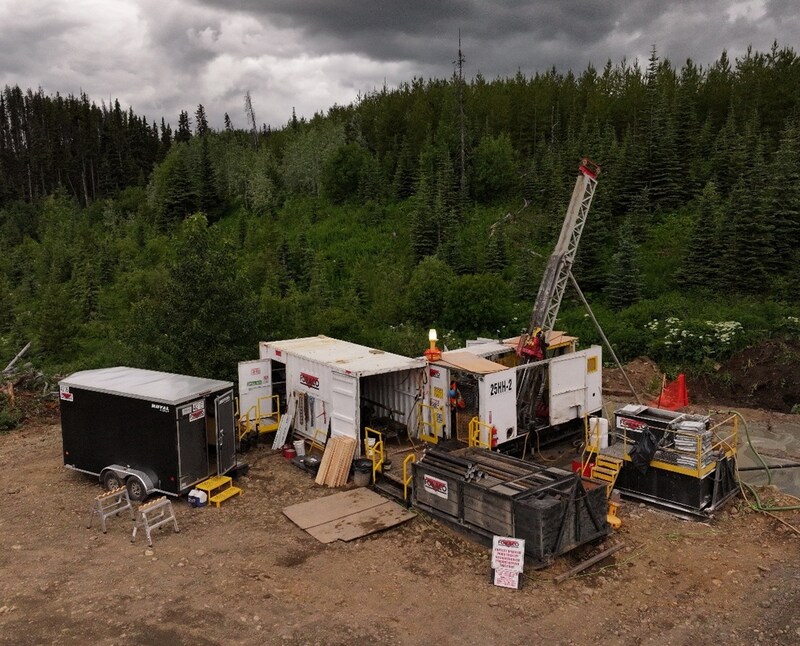
The program spanned 1,935 m of geomechanical, hydrogeological and condemnation drilling, informing phase-1 of FS engineering field work and setting a direction for phase-2, which will also include resource in-fill and ex-pit geotechnical drilling.
FPX is pursuing these advancements alongside cultural and environmental baseline studies, ongoing at Baptiste since 2022, to better protect surrounding communities, wildlife, vegetation and archeology.
Fully permitted to deliver the FS in 2027 and fully funded for 2025, FPX is also setting its sights farther down the supply chain, taking the technical steps required to ensure that Baptiste’s concentrate passes muster with third-party manufacturers.
Unlocking value through rigorous mineral processing test work
This brings us to Baptiste’s most recent development milestone, its fourth processing pilot testing campaign, under which FPX completed a bulk sample production run of its awaruite concentrate destined for select downstream partners, focused on battery, auto and related manufacturers, with whom strategic discussions are underway.

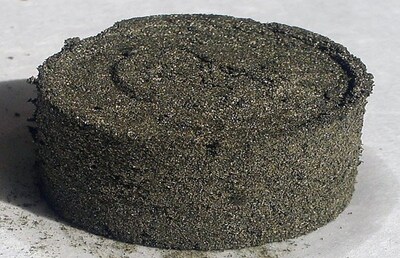
The campaign processed 23 tons of materials over 2.2 continuous days, achieving recoveries, concentrate nickel grade and impurity levels in line with expectations. Here are the numbers:
| Element | Nickel | Cobalt | Iron | Sulphur | Magnesium | Copper |
| Grade (%) | 64 | 1.1 | 26 | 0.3 | 1.6 | 0.4 |
Management envisions that the high-grade, magnetically separated concentrate can be integrated into the EV supply chain through two avenues. The first, in-house nickel sulphate refining, has been shown to be technically and economically viable, with a production run detailed in a June 17 news release. The second, through third-party refineries, aims to benefit from awaruite’s complementary properties compared to mixed hydroxide precipitate and nickel matte – the two most common nickel intermediates – holding fewer impurities than the first and requiring less aggressive leaching than the second, positioning awaruite as a complementary feedstock to be validated by FPX’s partner pipeline.
The miner’s budding third-party relationships, coupled with diversified exposure across the stainless steel and battery materials markets, maximize Baptiste’s flexibility on the road to commercial production.
New government funding
Baptiste’s development was recently reinforced by C$3.5 million in funding from Natural Resources Canada’s Critical Minerals Infrastructure Fund (CMIF), which will pay for 50 per cent of estimated costs for feasibility and baseline studies on the project’s access road and electrical transmission line, both essential to keeping costs low, enhancing operational efficiency and ensuring that the local community’s power supply isn’t disturbed.
FPX intends to route Baptiste’s powerline to B.C. Hydro’s Glenannan substation near Fraser Lake, British Columbia, located about 90 km south of the project. The line will measure approximately 155 km to avoid and protect waterbodies, provincial parks and other sensitive areas along the way.
The access road, for its part, will run from the Baptiste site to paved provincial highways in the Fort St. James region, leveraging a network of forest service roads.

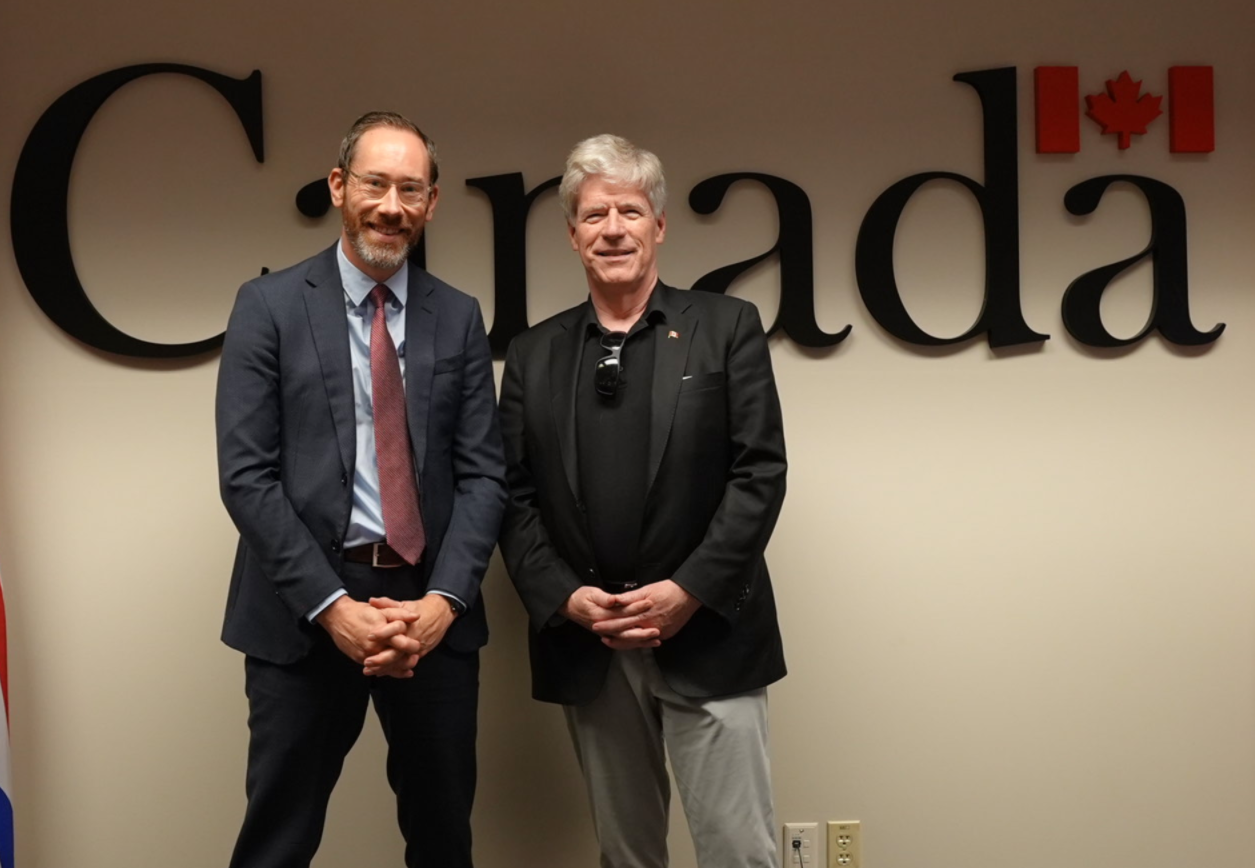
The funding demonstrates FPX’s alignment with Canada’s critical minerals strategy and the outsized role it is positioned to play in the country’s rapidly developing green industrial supply chain.
“We are grateful to receive this support from the Government of Canada for the Baptiste nickel project,” Martin Turenne, FPX Nickel’s president and chief executive officer, said in a statement. “These funds awarded under the CMIF will enable FPX to deepen its engagement with area First Nations as we advance feasibility studies and environmental and cultural baseline studies. We are optimistic that area First Nations will also be in a position to avail themselves of important Natural Resources Canada programing, such as the Indigenous Natural Resource Partnership Program, to compliment the funding provided to FPX under the CMIF program.”
The news follows the Government of British Columbia’s addition of Baptiste to the Critical Minerals Office concierge service initiative, which is designed to prioritize critical minerals projects in B.C.
Undervalued exposure to the global nickel tailwind
Tying everything together, FPX Nickel is on a solid path to medium-term production backed by a globally relevant resource, leadership with skin in the game, high-profile partners and a commodity without which the energy transition would not be possible.
That said, the broader market has yet to take notice of the miner’s tens of billions in untapped value, with the stock falling by more than 60 per cent since 2020, despite disciplined development from PEA, to PFS and robust resource estimate, to near-term FS. This is likely motivated by:
- A highly volatile economic environment, with newly re-evaluated tariffs by the United States on global partners turning near-term earnings expectations into a guessing game.
- The inherent complexity of evaluating pre-revenue miners, deriving conviction from prospective exploration results and economic studies.
- The advanced relationship with volatility required to be a contrarian investor, recognizing value in a falling stock price where others see a reason to run.
While these barriers bar the average investor from participating in the junior mining space, they pave the way for seasoned active investors to step in and pick up shares at a bargain, knowing full well that shareholder value reflects intrinsic value over the long term.
And when it comes to intrinsic value, all data suggests that FPX Nickel’s business far outshines what its stock currently reflects, granting it strong re-rating potential as feasibility work builds momentum towards a finished study.
Join the discussion: Find out what investors are saying about this Canadian nickel stock on the FPX Nickel Corp. Bullboard and check out the rest of Stockhouse’s stock forums and message boards.
Stockhouse does not provide investment advice or recommendations. All investment decisions should be made based on your own research and consultation with a registered investment professional. The issuer is solely responsible for the accuracy of the information contained herein. For full disclaimer information, please click here.