

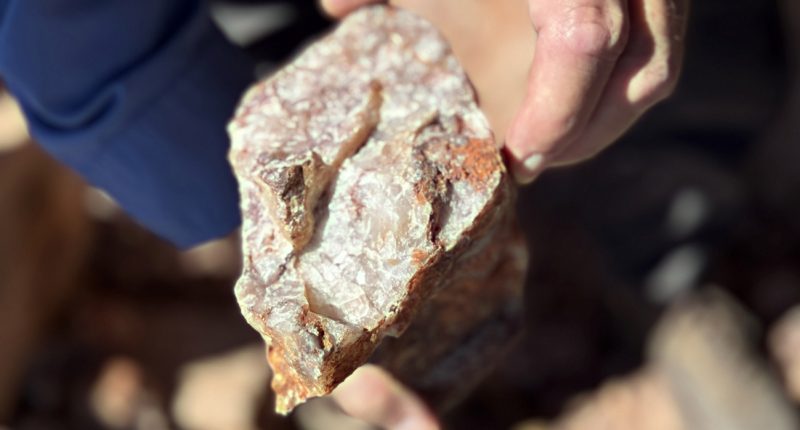
The race to secure critical minerals has become one of the defining industrial themes of the decade.
As nations seek to strengthen domestic manufacturing, electrify transportation networks and reduce reliance on foreign-controlled supply chains, attention is increasingly turning toward two strategically important materials: battery-grade manganese and fluorspar, the essential feedstock for hydrofluoric acid.
Together, these materials sit at the heart of industries ranging from electric vehicles and energy storage to semiconductors, advanced electronics, nuclear technologies and clean energy infrastructure.
For investors, companies capable of developing reliable, allied-sourced supply chains for these materials are emerging as a particularly compelling segment of the critical minerals sector.
One company positioning itself squarely at the intersection of these two markets is AE Fuels Corporation (TSXV:AEF).
Through a strategy that links battery-grade manganese assets in Western Australia with a district-scale fluorspar opportunity in New Mexico, while targeting downstream processing and end markets in North America, AEF is building a diversified platform designed to support resilient U.S. and allied-country supply chains.
Importantly, both manganese and fluorspar are designated critical minerals in the United States, Australia and the European Union. By advancing projects in stable, mining-friendly jurisdictions and focusing on future value-added processing opportunities, AEF aims to reduce dependency on concentrated foreign sources while helping strengthen the industrial foundations required for next-generation technologies.
This article is disseminated in partnership with AE Fuels Corporation. It is intended to inform investors and should not be taken as a recommendation or financial advice.
Advancing a battery-grade manganese strategy
A significant recent milestone for AEF came through the successful completion of a mini-pilot testing program conducted by Australia’s national science agency, CSIRO, focused on producing high-purity manganese sulphate monohydrate (HPMSM), one of the most important precursor materials used in lithium-ion battery manufacturing.
The test program delivered encouraging results across several key performance metrics. Continuous testing achieved manganese recoveries ranging from 95 per cent to 99 per cent, while demonstrating effective impurity removal, strong phase separation and stable operational performance. Importantly, calcium, one of the critical contaminants requiring tight control in battery-grade manganese production, was successfully reduced below targeted battery-grade impurity limits.
“These results represent an important technical milestone for AEF and further validate the South Woodie Woodie Manganese Project development pathway. The successful operation of the mini-pilot program demonstrated high manganese recoveries, strong impurity control, continuous purification performance and the subsequent production of battery-grade HPMSM crystals from the resulting strip liquor,” the company’s CEO, Gary Lewis, stated in a media release.

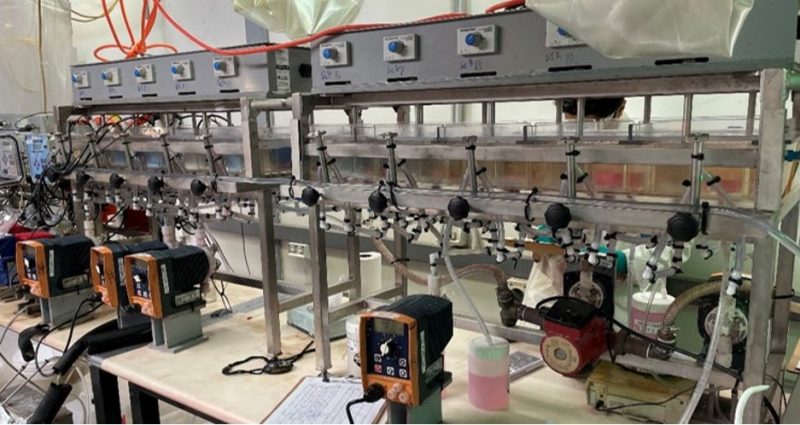
“Importantly, this work advances our understanding of a scalable purification pathway for battery-grade manganese products and provides additional validation of a key component of our broader manganese battery materials strategy. The results provide a strong technical foundation for larger-scale pilot operations, customer qualification programs and future development studies, while preserving optionality to evaluate downstream production pathways including EMM and EMD,” he added.
AEF CEO Gary Lewis would go into even greater detail on these results in an exclusive interview with The Market Online’s The Watchlist, which you can watch in full below.
The program culminated in the successful batch crystallization of HPMSM crystals from purified strip liquor produced during continuous operations. This result represents more than a laboratory milestone. For battery manufacturers and cathode precursor producers, product quality and impurity control are every bit as important as recovery rates. Demonstrating both simultaneously marks a meaningful step toward future customer qualification programs.
At the centre of this strategy is AEF’s South Woodie Woodie Manganese Project, located in the Eastern Pilbara region of Western Australia. Following the exercise of its acquisition option with Trek Metals in January 2026, AEF finalized control of the project and has continued advancing a staged development strategy focused on battery materials production.
The project is being developed primarily as an integrated HPMSM operation while preserving optionality to evaluate future downstream production of electrolytic manganese metal (EMM) and electrolytic manganese dioxide (EMD). This flexibility could prove valuable as battery chemistries evolve and North American demand for diversified manganese products grows.
The recent CSIRO work builds on metallurgical programs that began in 2024, which had already validated conceptual processing flowsheets using synthetic feed solutions representative of South Woodie Woodie mineralization. The mini-pilot was specifically designed to evaluate continuous purification performance, impurity rejection and batch crystallization under conditions more closely resembling future commercial operations.
Perhaps most important from an investment perspective, the results further reduce technical uncertainty. The successful production of battery-grade HPMSM in a continuous operating environment strengthens confidence in the project’s development pathway while providing valuable data for future engineering studies, pilot programs and feasibility-level evaluations.
The next phase is expected to incorporate feed solutions generated directly from bulk sample material collected from the South Woodie Woodie Contact deposit. This work should provide a more representative assessment of the overall processing flowsheet and support future customer sample generation and qualification efforts.
With demand for battery-grade manganese products projected to increase alongside electric vehicle and energy storage deployment, AEF’s progress positions the company to participate in higher-value downstream battery supply chains rather than remaining solely a mining developer.
Building a domestic U.S. fluorspar opportunity
While the manganese story offers exposure to battery materials, AEF’s fluorspar strategy provides access to another critical supply chain that has become increasingly important to U.S. industrial policy.
The company recently launched an integrated technical, permitting and stakeholder program at its 100 per cent-owned Fluorite Ridge Project in Luna County, New Mexico. The initiative represents a coordinated effort to systematically evaluate the project as a potential source of domestic U.S. fluorspar.
Fluorspar occupies a unique position among critical minerals because it is the world’s sole commercial source of fluorine and serves as the primary feedstock for hydrofluoric acid. Hydrofluoric acid is indispensable in semiconductor fabrication, battery manufacturing, fluorochemicals, nuclear fuel processing and numerous advanced manufacturing applications.
Given the United States’ current dependence on imported fluorspar, domestic development opportunities carry major significance. AEF’s program is designed to reduce uncertainty by integrating geological interpretation, environmental assessment, permitting analysis and stakeholder engagement from the outset.

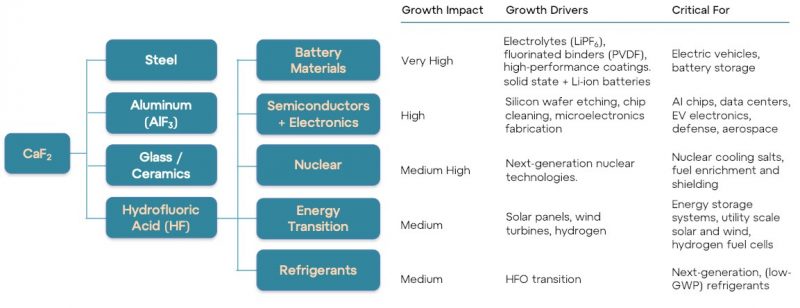
“Fluorspar has become one of the most strategically important industrial minerals in North America,” AEF CEO Gary Lewis explained in a news statement. “Our objective is to determine how Fluorite Ridge can become part of a secure domestic supply chain supporting semiconductor manufacturing, battery materials and national security applications.”
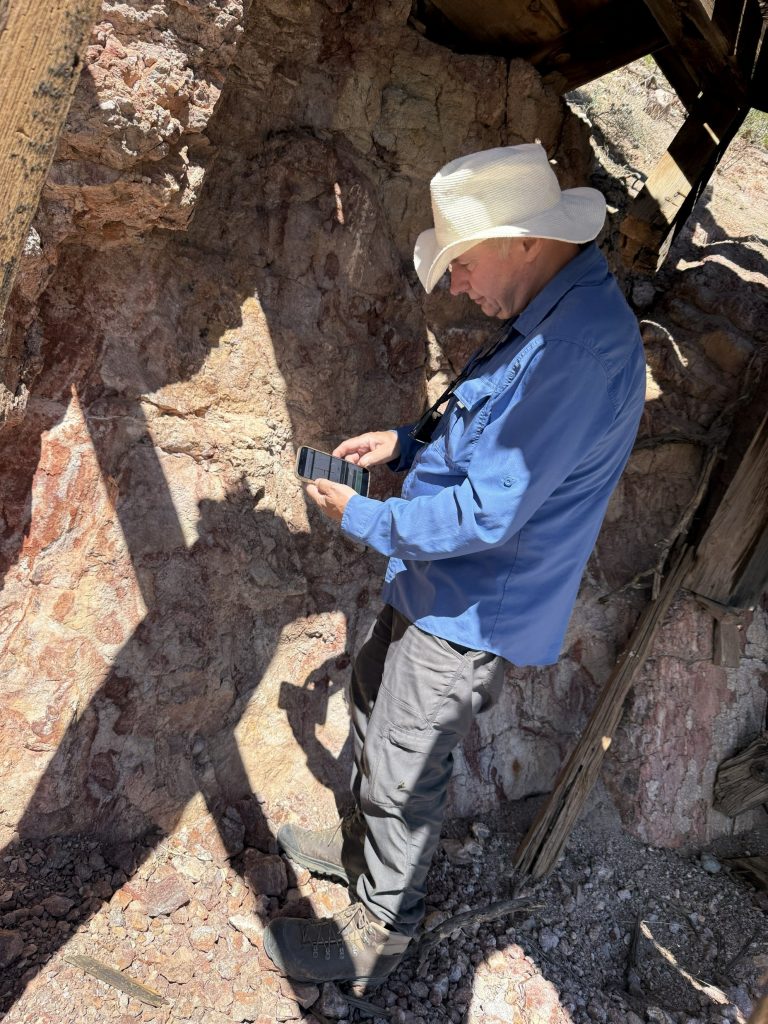
Rather than focusing solely on historic mine workings, AEF is evaluating the broader geological architecture of Fluorite Ridge. The company is utilizing LiDAR surveys, aeromagnetic and aeroradiometric datasets, satellite imagery and high-resolution aerial photography to identify structural controls, alteration patterns and potential mineralization targets across the wider project area.
Ground-truth mapping and sampling programs will then help validate priority targets and refine geological models. Historic records will be integrated with modern datasets to better understand whether known fluorite occurrences represent isolated veins or components of a larger, district-scale mineralized system.
The company is simultaneously expanding geochemical studies by re-assaying archived material using broader multi-element suites that include tungsten and rare earth elements. While historic work concentrated on fluorine content, the expanded program seeks to characterize the broader mineral system and identify potential pathfinder or by-product opportunities.
In parallel, preliminary mineralogical and metallurgical work is underway. Available samples are being evaluated for mineral composition, fluorite occurrence, grain size characteristics and impurity profiles. Initial beneficiation testing will assess crushing, grinding and flotation responses, providing early insight into concentrate quality and future processing requirements.
Just as important as the technical work is the groundwork being laid for responsible project development. AEF is actively developing permitting, environmental and stakeholder engagement frameworks addressing water resources, ecological considerations, cultural heritage, Tribal consultation and community interests. Establishing these foundations early can play a critical role in long-term project success and social license.
Expanding Fluorite Ridge through district-scale consolidation
AEF recently strengthened its position at Fluorite Ridge through the staking of lode mining claims covering the historic Sadler Mine, bringing the district’s two largest historic fluorspar producers under company control.
The expanded land position transforms Fluorite Ridge into a district-scale brownfield exploration opportunity. Rather than evaluating individual former mines in isolation, AEF can now assess the district as a unified mineralized system using modern exploration techniques.
Sadler carries a notable operating history. First discovered in 1909 and mined intermittently until 1947, historic development included multiple shafts, underground levels and stopes extending approximately 180 feet below surface. Historic reports indicate exceptionally high-grade fluorite mineralization in portions of the upper workings, with mineralization reportedly remaining open at depth and along strike.
The mine sits adjacent to the historic Greenleaf Mine, historically recognized as the district’s largest producer. Together with the Lucky Mine and additional workings across AEF’s property position, these assets provide multiple brownfield targets for modern evaluation.
Historical records describe structurally controlled fissure-vein systems with numerous fault orientations, brecciated zones and multiple vein sets. These features create attractive exploration targets, including potential down-dip extensions, fault offsets, parallel structures and previously untested zones.
AEF’s integrated assessment now spans 85 claims covering approximatey 1,756 acres, combining remote-sensing technologies, geophysical surveys, historic mining records and geochemical datasets. The objective is to determine whether known mines, mineralized structures and alteration systems represent parts of a substantially larger fluorite district.
The company has also moved from planning into execution of initial mineralogical and processing-development work. Combined with ongoing permitting, environmental baseline studies and stakeholder engagement initiatives, these efforts are establishing the framework for evaluating future drilling, metallurgical testing and resource development opportunities.
“Bringing the Sadler and Greenleaf Mines together is strategically important because it transforms Fluorite Ridge from a collection of individual historic workings into a district-scale fluorspar opportunity,” AEF CEO Gary Lewis said in a company update. “Multiple former mines provide established starting points, while the wider land position gives us the opportunity to test the geological relationships between them and identify mineralization that previous operators were neither equipped nor incentivized to pursue.”

A dual-critical minerals opportunity
What distinguishes AE Fuels is its exposure to two strategically important critical mineral supply chains through two wholly owned projects, each being advanced through a disciplined program designed to reduce uncertainty and preserve future commercial options.
Through South Woodie Woodie, the company is working toward participation in North America’s growing battery materials ecosystem. Through Fluorite Ridge, it is pursuing a potential domestic source of the fluorine feedstocks underpinning semiconductors, batteries, nuclear technologies and advanced manufacturing.
Both strategies align with broader government priorities focused on supply-chain security, critical mineral self-sufficiency and allied-country sourcing. Both also target materials essential to high-growth industries expected to shape the next generation of industrial development.
For investors seeking exposure to critical minerals beyond the more crowded lithium and rare earth narratives, AE Fuels represents an emerging story built around two very important commodities with significant geopolitical and industrial relevance.
As the company advances metallurgical testing, customer qualification efforts, exploration programs and development studies across both portfolios, interested investors may find it worthwhile to conduct deeper due diligence into AE Fuels Corporation’s projects, technical progress and long-term vision. In an era increasingly defined by secure supply chains and critical mineral resilience, AEF’s convergence of manganese battery materials and fluorine-based industrial inputs creates a story that could warrant closer attention.
Join the discussion: Find out what the Bullboards are saying about AE Fuels and check out Stockhouse’s stock forums and message boards.