

- DataMeds AI (NASDAQ:MEDS) gained investor attention after Helomics secured Humana Medicaid coverage for the ChemoFx cancer assay, creating a potential pathway for reimbursed diagnostic testing
- Corexa Pharmacy reported more than US$1 million in preliminary September revenue, highlighting strong growth and supporting the company’s expanding healthcare platform strategy
- The company is broadening its reach beyond oncology through GLP-1 telehealth, pharmacy, AI health tools, and peptide compounding initiatives, giving investors multiple growth catalysts to watch
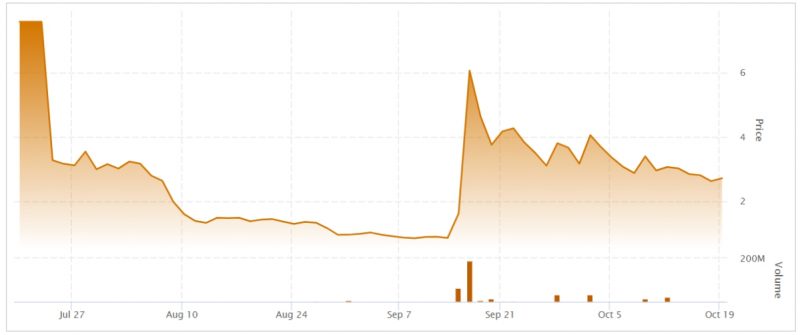
- DataMeds AI stock (NASDAQ:MEDS) opened trading at US$2.62
Building an AI-driven healthcare platform as investors watch execution
Shares of DataMeds AI Inc. (NASDAQ:MEDS) have attracted significant trader and investor attention in recent months following a series of announcements spanning oncology diagnostics, pharmacy operations, telehealth, and artificial intelligence. While the company remains in the early stages of executing its strategy, several developments have strengthened its growth narrative and positioned MEDS as a closely watched healthcare technology stock.
This article is a journalistic opinion piece that has been written based on independent research. It is intended to inform investors and should not be taken as a recommendation or financial advice.
A major milestone for Helomics and ChemoFx
One of the most closely watched catalysts for DataMeds AI came through its recently acquired precision oncology subsidiary, Helomics Corp.
The company announced that Helomics received a Medicaid coverage determination for its ChemoFx Assay in gynecologic cancers through certain Humana Medicaid coverage policies. The ChemoFx test is designed to evaluate how a patient’s live tumour cells respond to various chemotherapy agents, providing oncologists with additional information when making treatment decisions.
For diagnostics companies, reimbursement often represents the difference between scientific validation and commercial adoption. The ChemoFx assay is billed under CPT codes 81535 and 81536, creating a potential pathway for reimbursed testing volume. Investors responded favorably to the coverage announcement, helping drive substantial premarket gains in MEDS shares.
Why reimbursement matters
Diagnostic technologies frequently face challenges in translating clinical utility into sustainable revenue. Coverage decisions can help reduce barriers to physician utilization and patient access.
According to information provided by the company, historical analyses of recurrent epithelial ovarian cancer suggested that treatment decisions informed by ChemoFx may reduce healthcare costs compared with empiric treatment approaches. The studies cited by Helomics reported favourable cost-effectiveness metrics, including an incremental cost-effectiveness ratio of approximately US$6,206 per life-year saved in recurrent ovarian cancer populations.
However, investors should note that these findings are based on prior studies and that treatment patterns, costs, and standards of care may have evolved since publication. On top of that, ChemoFx is a laboratory-developed test that has not been cleared or approved by the U.S. Food and Drug Administration.
Oncology strategy extends beyond diagnostics
The Helomics acquisition also brought broader oncology assets into the DataMeds ecosystem.
Beyond commercial testing, Helomics maintains a large collection of annotated tumor samples representing more than 130 tumor types. Through its predictive oncology initiatives, the subsidiary combines biobank resources, artificial intelligence, and multi-omic data with the goal of assisting pharmaceutical and biotechnology companies in drug discovery and development.
This positions DataMeds AI in multiple areas of the oncology value chain, ranging from clinical diagnostics to research and pharmaceutical partnerships.
Corexa Pharmacy delivers revenue growth
Another development that attracted investor attention came from Corexa Pharmacy, DataMeds AI’s pharmacy division.
The company reported preliminary, unaudited September 2026 revenue exceeding US$1 million, representing growth of more than 66% compared with July results. For a company still working toward profitability, accelerating revenue growth can become a key metric for investors seeking evidence that operational businesses are gaining traction.
The announcement sparked another sharp move higher in the stock as traders focused on signs that Corexa may be scaling more rapidly than previously anticipated.
Revenue growth alone does not eliminate concerns surrounding profitability, cash requirements, or execution risk. Nevertheless, the update offered investors a tangible operating metric within a company often discussed primarily through the lens of future technology opportunities.
Expanding into the GLP-1 ecosystem
DataMeds AI has also sought exposure to one of healthcare’s fastest-growing trends: GLP-1-based weight management therapies.
The company partnered with Tollo Health to launch the Health Lives Here application, an integrated platform designed for GLP-1 users. The platform aims to combine multiple healthcare services, including:
- Telehealth
- Pharmacy services
- Nutritional support
- Wearable device integration
- Behavioral health resources
The initiative gained additional visibility through an exclusive partnership with Reboot Health AI, which is intended to integrate AI-driven weight management support into the platform.
For investors, the strategy broadens DataMeds AI’s potential addressable market beyond oncology. It also provides exposure to the rapidly expanding obesity-management sector, which continues to attract significant attention throughout healthcare and biotechnology markets.
Doctor on call
“The evidence for ChemoFx in gynecologic cancers was reviewed in the 2021 gynecologic cancer peer-reviewed publication on ChemoFx, as well as the 2015 cost savings peer-reviewed publication in epithelial ovarian cancer (EOC),” the company’s interim co-CEO, Gerald Commissiong explained in a media release. “We believe there is an opportunity to evaluate ChemoFx in additional settings, including difficult-to-treat cancers, and we are preparing data for publication to support label expansion.”
A push into peptide compounding
DataMeds is also positioning Corexa Health to participate in the peptide compounding market under the FDA’s proposed Interim Access Policy framework.
Compounded peptide and weight-management products have become an increasingly discussed area within healthcare as demand for obesity treatments grows. Supporters view the opportunity as a means of increasing patient access, while critics point to potential regulatory uncertainties and evolving policy considerations.
As a result, this business segment could represent either a meaningful growth opportunity or a source of future regulatory risk, depending on how the policy environment develops.
Balance sheet and capital structure improvements
Management has also highlighted efforts to streamline the company’s financial structure following the Helomics acquisition.
According to company disclosures, approximately US$19 million in liabilities were addressed and certain shares were retired as part of post-acquisition restructuring efforts. Investors often view these actions positively when they reduce complexity and help clean up legacy balance-sheet issues.
Whether these improvements translate into stronger long-term financial performance remains to be seen, but they represent another element of the broader transformation story surrounding the company.

The bigger picture
DataMeds AI is attempting to create an integrated healthcare platform that spans several interconnected markets:
- Precision oncology diagnostics
- Artificial intelligence-driven healthcare tools
- Pharmacy services
- GLP-1 and obesity management
- Peptide compounding
- Drug discovery and predictive oncology
That vision has helped establish MEDS as a high-profile healthcare growth story, with the stock responding sharply to developments across each of these business lines.
At the same time, the company remains in a stage where execution will be critical. Investors will likely continue monitoring reimbursement adoption of ChemoFx, growth within Corexa Pharmacy, user engagement on its GLP-1 platforms, and the company’s ability to translate emerging healthcare technologies into sustainable revenue streams.
For now, DataMeds AI represents a company with an ambitious healthcare integration strategy, multiple growth catalysts, and significant market interest. Whether it ultimately evolves into a scalable healthcare technology platform will depend less on headline announcements and more on its ability to consistently deliver commercial results across its expanding portfolio.
DataMeds AI stock (NASDAQ:MEDS) lost its 3% gain from the previous session to open trading 2.06% lower at US$2.62 and has lost more than 85% since the year began.
Join the discussion: Find out what the Bullboards are saying about DataMeds AI and check out Stockhouse’s stock forums and message boards.