

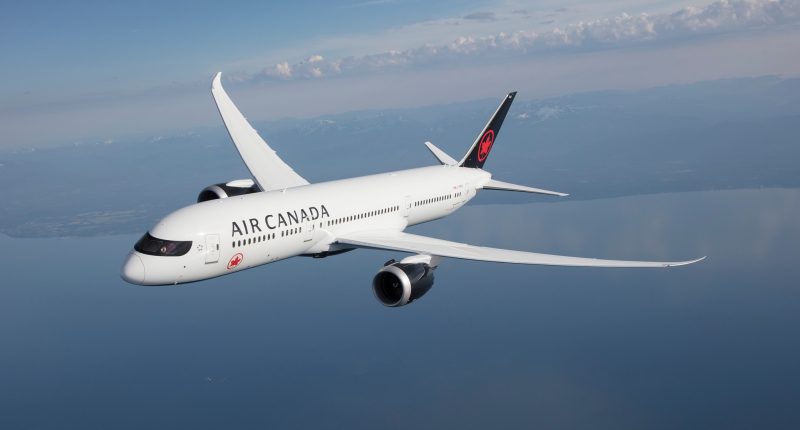
- Air Canada (TSX:AC) welcomed a new Canada-Vietnam air transport agreement that will allow direct flights between the two countries for the first time, with service to Ho Chi Minh City targeted for 2027
- The expanded agreement permits up to 14 weekly passenger flights and seven weekly cargo flights per country, supporting trade, tourism, and stronger economic ties
- The announcement comes as Canada and Vietnam elevate their relationship to a Strategic Partnership and as Air Canada continues to report record revenue and strong cash flow despite industry challenges.
- Air Canada stock (TSX:AC) opened trading at C$28.79
Air Canada (TSX:AC) welcomed the Government of Canada’s announcement of an expanded Air Transport Agreement with Vietnam, a move that will allow direct flights between the two countries for the first time and could pave the way for new commercial opportunities, stronger trade links, and increased travel demand.
The expanded agreement was highlighted by Transport Minister and Government House Leader Steven MacKinnon as part of a broader Strategic Partnership recently established between Canada and Vietnam. The announcement comes as Canada continues efforts to diversify international trade relationships and strengthen economic ties across the Indo-Pacific region.
“Vietnam is an important market in the broader Canada-Southeast Asia relationship. We welcome this expanded Air Transport Agreement and look forward to obtaining the necessary government approvals to begin service to Ho Chi Minh City,” Mark Galardo, executive vice president and chief commercial officer and president, Cargo at Air Canada, explained in a media release.
Air Canada said it intends to work with Canadian and Vietnamese authorities to secure the necessary approvals and complete regulatory procedures required to launch scheduled service between Canada and Ho Chi Minh City in 2027.
The new agreement responds to growing demand in the bilateral aviation market and supports Canada’s broader Trade Diversification and Indo-Pacific strategies. Government officials said enhanced air connectivity is expected to facilitate business travel, improve cargo transportation, streamline passenger travel, and strengthen cultural and people-to-people connections between the two nations.
Under the expanded framework, airlines from each country will be permitted to operate up to 14 weekly passenger-combination flights and up to seven weekly all-cargo flights. The agreement also includes fifth freedom rights for cargo operators, allowing airlines to transport freight between two foreign countries when a flight either begins or ends in the carrier’s home country.
Vietnam is Canada’s largest trading partner within the Association of Southeast Asian Nations (ASEAN), and the agreement is viewed as a significant step toward deepening economic cooperation between the two countries.
The announcement follows the state visit of Vietnamese President and General Secretary Tô Lâm to Canada. During his visit, Tô Lâm and Prime Minister Mark Carney announced the elevation of Canada-Vietnam relations to a “Strategic Partnership”, a clear desire to expand cooperation across trade, diplomacy, and regional security issues.
“Vietnam is one of Canada’s most dynamic trading partners in Southeast Asia. Our merchandise exports to Vietnam reached over C$1.3 billion in 2025, up 30% from the year before,” Maninder Sidh, Minister of International Trade, said in a media statement. “By expanding our air transport agreement, we’re making it easier for people and goods to move between our countries, opening new doors for businesses and diversifying Canada’s trade.”
The one-day state visit included several ceremonial and diplomatic events, including a tree-planting ceremony at Rideau Hall and an address to parliamentarians and members of the Vietnamese diaspora. The upgraded relationship builds upon ongoing efforts by both governments to strengthen collaboration among middle powers amid a rapidly evolving geopolitical environment.
For Air Canada, the agreement represents a potential growth opportunity in a region where passenger demand has continued to expand. The carrier has steadily increased its presence across Asia-Pacific markets in recent years, and direct service to Vietnam would mark another step in broadening its international network.
The announcement arrives as Air Canada continues to report solid financial performance despite ongoing economic uncertainty and geopolitical challenges.
Earlier this year, Air Canada reported record first-quarter operating revenues of C$5.785 billion for fiscal 2026, the highest first-quarter revenue in the airline’s history. The carrier said results were driven by sustained passenger demand across both its domestic and international operations, even as fuel-price volatility and broader geopolitical developments remained key industry concerns.
Operating income totalled C$117 million on operating expenses of C$5.668 billion, resulting in an operating margin of 2.0%. Adjusted EBITDA reached a first-quarter record of C$623 million, representing an adjusted EBITDA margin of 10.8%.
On the bottom line, the airline reported income before taxes of C$123 million and net income of C$48 million, equivalent to diluted earnings per share of $0.16. On an adjusted basis, Air Canada recorded a net loss of C$16 million, or an adjusted diluted loss of $0.05 per share.
The company’s liquidity position also remained strong during the quarter. Net cash flows from operating activities totalled C$1.798 billion, while free cash flow reached C$1.604 billion. Air Canada ended the quarter with long-term debt and lease liabilities of C$12.301 billion and a net leverage ratio of 1.4x.
Meanwhile, the airline reported continued progress on cost management, with adjusted cost per available seat mile (CASM) improving to $0.16.
As Air Canada works toward launching direct service to Vietnam, industry observers will be watching closely to see how quickly the carrier can capitalize on the newly expanded aviation rights. With trade relations deepening, tourism demand growing and direct flights now permitted under the revised agreement, the Canada-Vietnam aviation market appears poised for a new phase of development.
Air Canada is Canada’s largest airline with a presence in more than 180 airports in Canada, the United States and internationally across six continents.
Air Canada stock (TSX:AC) opened trading more than 3% lower at C$28.79 and continued to descend in early trading, but is still flying nearly 40% higher since the year began.
Join the discussion: Find out what the Bullboards are saying about Air Canada and check out Stockhouse’s stock forums and message boards.