

When Production Can Never Afford to Stop
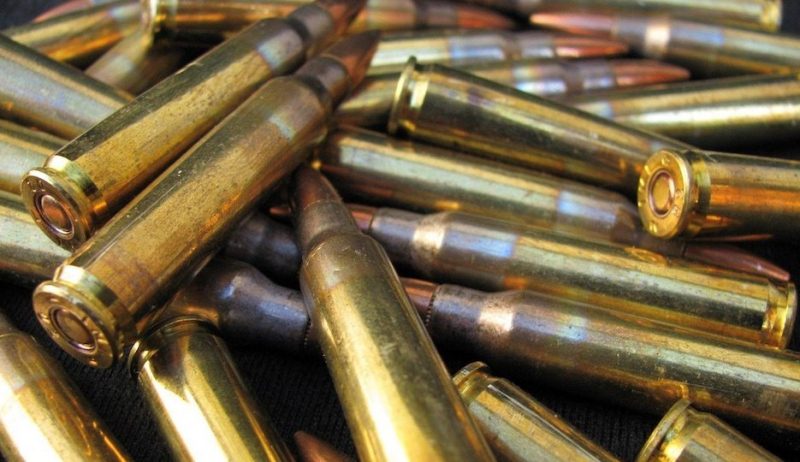
The defence industry is grappling with supply shortages. Ammunition, housings, and circuit boards require significant amounts of copper, while heat-resistant alloys and electronic components rely on nickel, platinum, and other metals. The race for these metals is keeping the stock market on edge, as they are also used in civilian aerospace, data centers, and electric vehicles. For a company like Rheinmetall, which is contractually obligated to governments to maintain operational readiness, a supply disruption of these raw materials could become a serious problem. Contracts simply do not provide for production stoppages. This makes securing one’s own supply chains—known in technical jargon as “friendly sourcing” (procurement from politically stable, allied nations)—a strategic necessity.
The latest figures show just how rapidly the problem is growing. In the second quarter alone, the Düsseldorf-based DAX-listed company’s revenue rose by nearly 70% compared to the same period last year, reaching almost EUR 3.3 billion. Operating profit before interest and taxes (EBIT) rose even more sharply, by 74%, to EUR 786 million. The order backlog reached a record high of EUR 80.5 billion, up 44%. In the second quarter alone, new orders worth EUR 11.4 billion were added, including a major Romanian contract worth EUR 5.7 billion for Lynx armoured personnel carriers and Skyranger air defence systems. The ammunition business is expected to grow particularly rapidly; according to the company, revenue is set to nearly triple over the next three years, rising from EUR 1.5 billion to around EUR 4 billion.
The fact that even this flood of orders does not shield the company from setbacks is evident in the 2026 revenue forecast, which has been lowered to EUR 13.7-14.2 billion due to the German Federal Ministry of Defense’s suspension of the F126 frigate program. Consequently, sentiment on the capital market is mixed: the initial euphoria immediately following the quarterly report has faded. Some experts have since sounded the alarm, which is why the share price has been largely stagnant since the start of the month. Currently trading at around EUR 1,194, it remains well below the 2025 high of EUR 2,009. For investors with a medium- to long-term horizon, this could present an opportunity. Analysts’ average price target is around EUR 1,700 (range: EUR 1,350 to 2,000), which corresponds to potential upside of more than 40%.
The Deposit That Can Close the Gap
Whether Rheinmetall will reach analysts’ targets, or even its former highs, is an exciting question for stock market investors. The real sticking point, however, remains the source of the metals for future growth, as long as mining and processing are dominated by countries whose interests run counter to Europe’s rearmament efforts. This is exactly where Power Metallic Mines comes in. The Canadian exploration company is developing a high-grade polymetallic deposit with the Nisk-Lion-Tiger project in Québec. Among other things, the ground there holds copper, nickel, cobalt, platinum, palladium, gold, and silver—an untapped treasure of geopolitical significance.
The latest drill results once again revealed well above-average copper-equivalent grades—in some cases at a depth of only about 140 m. A structural advantage: the critical metals in Québec occur as sulphide ores. This saves energy during processing and protects the environment, as no external sulfuric acid needs to be added. In addition, the project is located in close proximity to the Hydro-Québec substation, which means the future mine can be powered by affordable, CO₂-free hydroelectric power. This reduces the CO₂ footprint to as little as one-fifth of conventional levels. Given the government oversight of military supply chains, this combination of political stability and an impeccable environmental record offers exactly what corporations like Rheinmetall are looking for.
Mining Giants Stock Up
Following the acquisition of 313 adjacent claims from Li-FT Power in 2025, Power Metallic Mines now controls approximately 330 km² with about 50 km of basin-edge potential. To diversify, the Toronto-based company also holds an exploration license in Saudi Arabia (copper-gold-zinc) as well as a 50% stake in Chilean Metals, which owns land packages in British Columbia and Chile. In addition, the management team led by CEO Terry Lynch is pushing for a listing on the US technology exchange Nasdaq, which could lead to growing interest in the stock among institutional investors. The commodities community has long since taken notice of this stock market story. The shareholder roster includes big names such as Eric Sprott, Robert Friedland, and Rob McEwen—all mining veterans with impressive track records.
The average analyst price target is CAD 2.92 (range: CAD 2.38 to 3.72)—theoretically representing upside potential of 100% or more. The Mineral Resource Estimate (MRE) is expected by the end of August, and further project progress could drive the share price, which, after a strong rally at the turn of the year, is currently hovering around CAD 1.20 (EUR 0.75). GBC Research estimates the gross asset value of the project portfolio at CAD 737 million—and CAD 1 billion is conceivable in the long term, according to the latest study by the Augsburg-based research firm. This contrasts with a current market capitalization of only about CAD 300 million.
The Race for Battery Raw Materials
The electrification of the auto industry is driving demand for the same metals as the defence sector: nickel, copper, and cobalt are key components of battery cells. In this regard, industry icons such as Mercedes-Benz are also likely to be interested in the progress being made in the Nisk-Lion-Tiger Zone. The company is addressing the shortage of raw materials with long-term supply contracts. One example is the agreement with the German-Canadian company Rock Tech Lithium. Starting in 2026, an average of 10,000 metric tons of lithium hydroxide per year is to be supplied, with an estimated contract value of around EUR 1.5 billion over five years.
A prerequisite for the Swabian company is that the raw materials come exclusively from mines audited in accordance with the IRMA (Initiative for Responsible Mining Assurance) standard. A circular economy approach complements this strategy: since 2024, Mercedes-Benz has been operating Europe’s first battery recycling plant in Kuppenheim, with a recovery rate of over 96% for nickel, cobalt, and lithium—all part of the “Ambition 2039” sustainability strategy, which aims for a net-zero CO₂ new-car fleet. Since the recycled material is nowhere near sufficient to meet the company’s own raw material needs, Power Metallic Mines would be an ideal future ESG-compliant supplier.
Operationally, Mercedes-Benz, like the entire German automotive industry, is going through a difficult phase. Revenue fell by 3.3% to EUR 32.1 billion in the second quarter, primarily due to a 30% decline in sales in China. On the other hand, consolidated net income rose by 13.5% to EUR 1.09 billion—supported by cost reductions and strong performance in the Vans and Financial Services divisions. The direction the company is heading is evident in sales of pure-electric vehicles, which rose by 51%—and by as much as 87% in Europe. The decline in the share price that has persisted since the start of the year appears to be slowly coming to a halt. The stock is currently trading at around EUR 45; the average analyst price target is EUR 59.60 (range: EUR 52 to 73), which corresponds to upside potential of about one-third. If analysts’ consensus forecast of a EUR 3.17 dividend for this year is actually paid, that would translate into a solid dividend yield of around 7%.
Waiting for the Initial Spark
Military and civilian demand are competing for the same critical metals. Rheinmetall and Mercedes-Benz therefore face the challenge of sourcing raw materials from politically stable regions. Power Metallic Mines could be part of the solution for both DAX-listed companies, though production is not expected to begin before 2030. Nevertheless, exploration companies are particularly interesting during such phases: on the one hand, as acquisition targets for established mining companies; on the other hand, their share prices rise with every discovery of new deposits. The resource estimate expected at the end of the month could provide the initial spark. At Rheinmetall, the surging order intake suggests that the average analyst price target of around EUR 1,700 will be reached again in the foreseeable future. According to experts, Mercedes-Benz also offers significant upside potential; however, the automotive sector is not currently a top performer on the stock market. Investments could turn into a test of patience for shareholders. At Mercedes, the high dividend yield compensates for the wait.
Conflict of interest
Pursuant to §85 of the German Securities Trading Act (WpHG), we point out that Apaton Finance GmbH as well as partners, authors or employees of Apaton Finance GmbH (hereinafter referred to as “Relevant Persons”) may hold shares or other financial instruments of the aforementioned companies in the future or may bet on rising or falling prices and thus a conflict of interest may arise in the future. The Relevant Persons reserve the right to buy or sell shares or other financial instruments of the Company at any time (hereinafter each a “Transaction”). Transactions may, under certain circumstances, influence the respective price of the shares or other financial instruments of the Company.
In addition, Apaton Finance GmbH is active in the context of the preparation and publication of the reporting in paid contractual relationships.
For this reason, there is a concrete conflict of interest.
The above information on existing conflicts of interest applies to all types and forms of publication used by Apaton Finance GmbH for publications on companies.
Risk notice
Apaton Finance GmbH offers editors, agencies and companies the opportunity to publish commentaries, interviews, summaries, news and the like on news.financial. These contents are exclusively for the information of the readers and do not represent any call to action or recommendations, neither explicitly nor implicitly they are to be understood as an assurance of possible price developments. The contents do not replace individual expert investment advice and do not constitute an offer to sell the discussed share(s) or other financial instruments, nor an invitation to buy or sell such.
The content is expressly not a financial analysis, but a journalistic or advertising text. Readers or users who make investment decisions or carry out transactions on the basis of the information provided here do so entirely at their own risk. No contractual relationship is established between Apaton Finance GmbH and its readers or the users of its offers, as our information only refers to the company and not to the investment decision of the reader or user.
The acquisition of financial instruments involves high risks, which can lead to the total loss of the invested capital. The information published by Apaton Finance GmbH and its authors is based on careful research. Nevertheless, no liability is assumed for financial losses or a content-related guarantee for the topicality, correctness, appropriateness and completeness of the content provided here. Please also note our Terms of use.
Stockhouse does not provide investment advice or recommendations. All investment decisions should be made based on your own research and consultation with a registered investment professional. The issuer is solely responsible for the accuracy of the information contained herein. For full disclaimer information, please click here.