

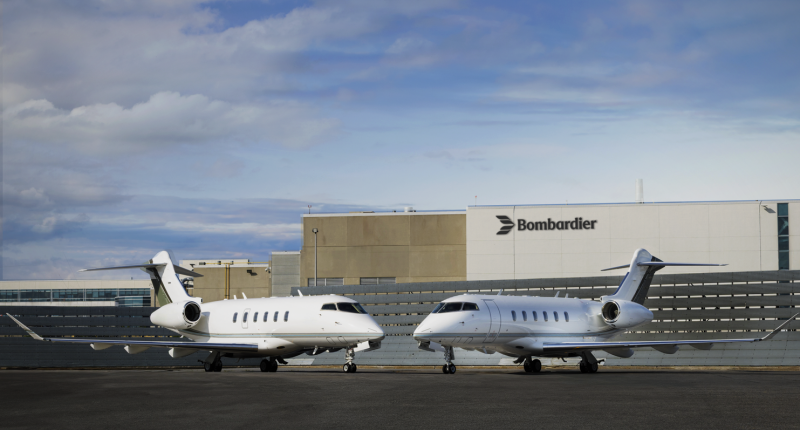
- Bombardier (TSX:BBD) reported second-quarter revenue of US$2.15 billion, with record services revenue of US$674 million, while delivering 32 aircraft and growing its backlog to US$21.8 billion
- Free cash flow improved to US$228 million from a year-earlier outflow, while adjusted EBITDA rose 9 per cent to US$325 million and adjusted net income increased to US$257 million
- CEO Eric Martel said Bombardier expects to choose a Canadian site by late 2026 or early 2027 to modify Global jets for military and special mission roles in partnership with Saab
- Bombardier stock (TSX:BBD) opened trading at C$337.88
Bombardier (TSX:BBD) reported higher revenue, earnings and free cash flow in the second quarter of 2026, as strong demand for its business jets and growing contribution from its services division helped drive profitability and expand its backlog.
The aerospace manufacturer reported second-quarter revenue of US$2.15 billion, up 6 per cent from a year earlier. The increase was supported by the delivery of 32 aircraft during the quarter and a record performance from the company’s services segment, which generated US$674 million in revenue, a 14 per cent increase year-over-year.
This article is a journalistic opinion piece which has been written based on independent research. It is intended to inform investors and should not be taken as a recommendation or financial advice.
Bombardier said its backlog reached US$21.8 billion as of June 30, 2026, an increase of US$4.3 billion from the end of 2025. The company attributed the growth largely to continued demand for its upcoming Global 8000 business jet, with a unit book-to-bill ratio of 1.5 times during the quarter.
Profitability also improved during the period. Adjusted EBITDA rose 9 per cent year-over-year to US$325 million, while the adjusted EBITDA margin increased 50 basis points to 15.1 per cent. Reported EBIT reached US$225 million, up 10 per cent from the same quarter last year, with an EBIT margin of 10.5 per cent.
Adjusted net income climbed to US$257 million, compared with US$117 million in the prior-year quarter, representing an increase of US$140 million. Reported net income was US$191 million, largely unchanged from the US$193 million reported a year earlier. Adjusted earnings per share came in at US$2.50, while diluted earnings per share totaled US$1.84.
One of the company’s strongest improvements came in cash generation. Bombardier reported free cash flow of US$228 million, compared with a cash outflow of US$164 million in the second quarter of 2025. Cash flow from operating activities improved to US$338 million, compared with a cash usage of US$128 million in the same period a year earlier.
Capital expenditures also increased, with net additions to property, plant and equipment and intangible assets totaling US$110 million, up US$74 million year-over-year.
The company maintained a strong liquidity position, ending the quarter with approximately US$1.9 billion in available liquidity, including US$1.5 billion in cash and cash equivalents.
Bombardier also continued efforts to reduce debt. During the quarter, the company repaid outstanding senior notes and debentures while issuing new long-term debt, resulting in a net debt reduction of US$356 million. Year-to-date debt reduction exceeded US$1.1 billion, bringing the company’s adjusted net debt-to-adjusted EBITDA ratio down to 1.6 times, approaching its long-term target of approximately 1.5 times.
As part of its financial strategy, Bombardier announced a new US$750 million secured revolving credit facility, replacing its previous US$450 million facility. The new five-year arrangement leaves the company with no debt maturities before November 2030 and provides additional financial flexibility to support future growth initiatives.
Beyond its commercial aviation business, Bombardier continues to expand its role in the defence and special mission aircraft market through its partnership with Swedish defence company Saab (OTC Pink:SAABF).
Chief Executive Officer Eric Martel said Bombardier expects to decide by late 2026 or early 2027 on a Canadian location that would be used to modify Global business jets for defence and surveillance missions. The planned facility would perform work similar to Bombardier’s operation in Wichita, Kansas, where aircraft are equipped with specialized wiring, radar systems and mission equipment before entering service as military or surveillance platforms.
The move comes as Canada seeks to strengthen domestic defence capabilities and diversify procurement away from U.S.-based defence suppliers. The federal government has announced plans to acquire Saab’s GlobalEye airborne early warning and surveillance aircraft, which are built on Bombardier’s Global jet platform. Earlier this month, NATO also announced plans valued at approximately US$4.5 billion to acquire up to 10 GlobalEye aircraft.
Martel said the Canadian site selection will depend largely on workforce availability. While the facility would initially focus on GlobalEye aircraft, it could eventually support other special mission and defence-related programs.
Bombardier said continued strength in its defence business, growing aftermarket services activity and sustained demand across its aircraft portfolio position the company to meet its raised 2026 financial guidance. The company remains on track to achieve its full-year targets while benefiting from a robust pipeline of both civil and defence opportunities.
Bombardier builds jets for businesses, governments and militaries around the world. The company’s customers operate a fleet of more than 5,200 aircraft supported by 10 service facilities across six countries. Manufacturing activities are based in Canada, Mexico and the United States.
Bombardier stock (TSX:BBD) opened trading 0.78 per cent higher at C$337.88 and has risen more than 40 per cent since the year began.
Join the discussion: Find out what investors are saying about this aviation stock on Bombardier’s Bullboard and make sure to explore the rest of Stockhouse’s stock forums and message boards.