

British Columbia has re‑emerged as one of Canada’s most active jurisdictions for precious metals and critical minerals exploration, driven by rising commodity prices, renewed infrastructure investment, and a shift in global supply chains toward secure, domestic sources of copper and platinum group elements.
Historical mining camps across southern BC—long regarded as mature or underexplored—are drawing fresh attention as modern geophysics, higher metal prices, and improved geological models breathe new life into districts once constrained by economics rather than geology. For investors, this narrative has helped sharpen interest in junior explorers with large land positions and the technical capacity to advance multi‑metal targets in proven camps.
One of the companies operating squarely within this resurgence is Grizzly Discoveries (TSXV:GZD), a Canadian mineral exploration company focused on its Greenwood Critical Minerals and Precious Metals Project in southern British Columbia. In February, the company announced that a crew from Peter E. Walcott and Associates had mobilized to Greenwood to initiate an Induced Polarization (IP) geophysical program, marking a key step toward follow‑up drilling at the Sappho Critical Minerals Target. The work comes amid escalating prices for copper, gold, silver, platinum, and palladium—metals that underpin both electrification trends and traditional store‑of‑value demand.
This article is disseminated in partnership with Grizzly Discoveries Inc. It is intended to inform investors and should not be taken as a recommendation or financial advice.

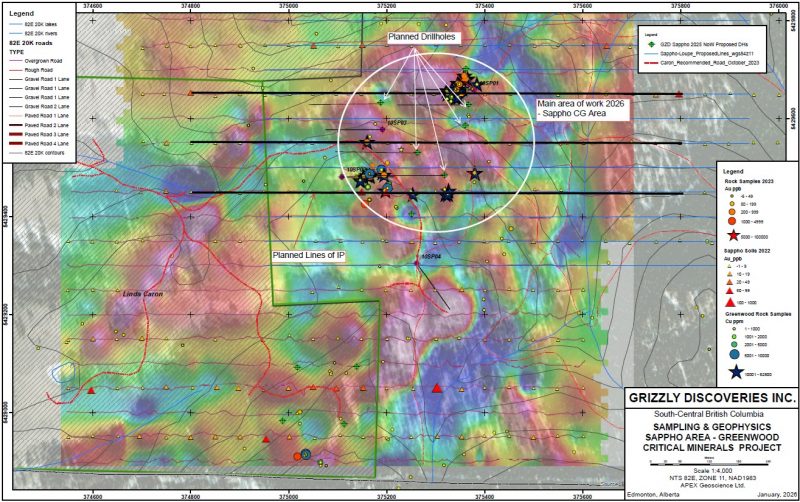
“New results are providing significant targets indicated by high-grade copper samples at surface. Anomalous ground magnetics has also outlined multiple new targets across the Sappho Project,” Brian “Griz” Testo, Grizzly Discoveries’ president and CEO explained in a media statement. “I am excited to see what IP might indicate – Grizzly will continue to refine these targets to the drill ready stage for anticipated drilling in the next month and potentially identifying some new discoveries.”
He elaborated on this further in an exclusive interview with the Market Link’s “The Watchlist”, which you can watch in full by clicking the video below.
Advancing the Sappho Target with modern geophysics
The Sappho area is being explored as a copper‑gold skarn and porphyry system associated with a Jurassic alkalic intrusive complex, later intruded by younger diorite bodies. Three IP lines were initially planned ahead of drilling, with the goal of refining drill targets and improving subsurface resolution in structurally complex terrain. The geological setting lies along the east fault contact of the Toroda Graben, a regional structure historically associated with significant gold‑silver and copper mineralization in the district.
Structural controls within the Toroda Graben are particularly relevant: the east and west bounding faults are interpreted to have influenced mineralizing fluids responsible for the Buckhorn skarn to the southwest and the Motherlode–Greyhound skarns to the north. At Sappho, skarn and porphyry‑style alteration has been observed in both outcrop and drill core, accompanied by a complex magnetic signature that aligns with known sulphide mineralization.
Compelling surface and historical results
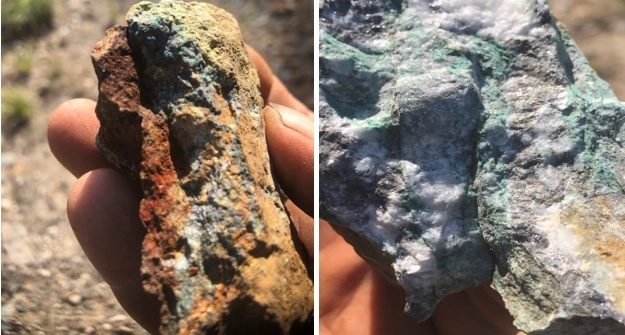
Grizzly’s confidence in advancing Sappho is supported by a robust body of surface sampling and historical drilling data. During 2022 fieldwork, five new sulphide showings were identified, four of which returned rock grab samples exceeding 1% copper, with values as high as 7.25% Cu. In total, 17 grab samples have returned copper grades above 1%, peaking at 9.06% Cu, many also accompanied by anomalous gold, silver, platinum, and palladium. Notably, 11 samples yielded more than 500 parts per billion combined platinum and palladium, with values reaching 4.64 g/t Pt and 2.28 g/t Pd.
Historical drilling at Sappho further reinforces the target’s potential. Four core holes completed in 2010 intersected skarn mineralization, including one interval in hole 10SP03 grading 0.31% Cu, 0.75 g/t Au, 0.34 g/t Pt, 0.39 g/t Pd, and 6.57 g/t Ag over 6.5 metres. Within this zone, higher‑grade one‑metre intervals returned up to 3.82 g/t gold and 199 g/t silver, along with strong platinum‑palladium values, all associated with copper grades exceeding 1%. These intersections form part of a broader 63.5‑metre skarn zone with an estimated copper‑equivalent grade approaching 0.7%, calculated using current metal prices.
Expanded IP results and fully funded drilling
Also in February, Grizzly reported preliminary results from an expanded IP survey completed by Peter E. Walcott and Associates. Four additional IP lines totalling approximately 4.5 line‑kilometres were completed. The survey identified a near‑surface conductivity anomaly coincident with known skarn mineralization and historical drill intersections, as well as a new, deeper chargeability anomaly on the southeast portion of the grid. This feature—measuring roughly 20 to 30 millivolts per volt and remaining open—exhibits characteristics consistent with porphyry systems that have led to recent discoveries elsewhere in British Columbia.
With drilling now fully funded, the company plans to test both the shallow conductive zones and the deeper chargeability anomaly. Weather conditions and additional planned IP work have shifted the commencement of drilling to early‑to‑mid April, with an initial program of four to six holes totalling approximately 1,500 to 2,000 metres.
District‑scale exploration across Greenwood
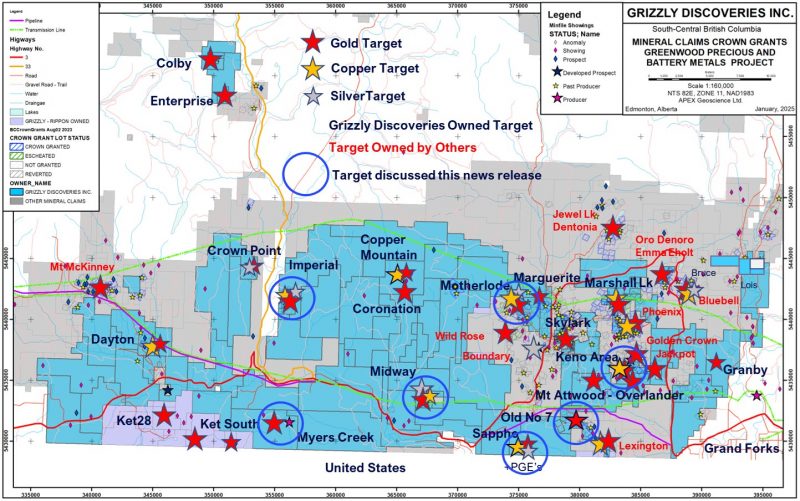
Beyond Sappho, Grizzly maintains an active, district‑scale exploration strategy across the Greenwood Project. Crews from APEX Geoscience Ltd. completed extensive soil and rock sampling between August and October 2025, with over 200 samples collected. Results from this work are pending and expected to be released as they are received. Concurrently, prospecting, mapping, and reconnaissance sampling have been conducted across Rock Creek, Midway, Copper Mountain, Overlander‑Attwood, and Motherlode target areas.
In April, the company released results from 218 rock samples collected during 2025 fieldwork, leading to the discovery of three new metal occurrences at the Keno area, Old No. 7 Mine area, and Myers Creek. Sampling at the historical Midway and Imperial mines confirmed high‑grade results from prior work and strengthened the case for drill testing. Highlights included multi‑ounce silver values, double‑digit gold grades, and polymetallic assemblages consistent with epithermal and skarn systems.

A full pipeline for 2026
Looking ahead, Grizzly’s 2026 program is designed to maintain steady technical momentum. Additional IP surveys are planned for the Sappho, Motherlode, and Greyhound areas, alongside trenching and drilling at the historic Midway Mine. Property‑wide sampling is expected to continue throughout the year, with multiple catalysts anticipated as geophysical, geochemical, and drilling data are released.

Why investors are taking a closer look
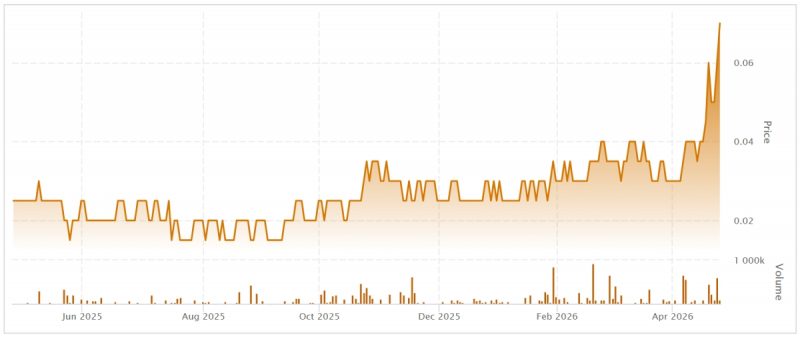
For investors evaluating early‑stage exploration risk, Grizzly Discoveries presents a combination of factors that warrant deeper due diligence: a large, contiguous land package in a proven mining district; exposure to both precious metals and critical minerals; extensive historical data now being reinterpreted with modern techniques; and a fully funded program with near‑term drilling. Importantly, market interest has already begun to reflect this operational progress—the company’s share price has risen approximately 160% since this time last year. While exploration outcomes remain uncertain by nature, Grizzly’s systematic approach and expanding technical dataset position it as a company increasingly followed by investors seeking leverage to metals fundamental to both energy transition and monetary protection.
Join the discussion: Find out what the Bullboards are saying about Grizzly Discoveries and check out Stockhouse’s stock forums and message boards.