

DEUTZ: 100 hours instead of downtime: New technology for millions of diesel engines
DEUTZ is targeting a technical problem with significant economic consequences. Last week, the Cologne-based engine manufacturer unveiled a revised control strategy for the exhaust aftertreatment of its off-highway engines. It aims to keep construction machinery and other working equipment out of action for as little time as possible when exhaust treatment problems arise.
The background to this is so-called SCR inducement. If the system detects, for example, inadequate quality of the urea solution, engine power may be reduced. Until now, operators had to expect significant restrictions after just four hours under certain conditions. The new software can extend this period to up to 100 hours in relevant use cases. Operators must remain compliant with applicable emissions regulations in Europe and the US.
For operators of construction and agricultural machinery, availability is the key consideration. Every unplanned stoppage incurs costs. DEUTZ therefore intends not only to deliver new engines but also to update units already installed via software.
The group is also focusing on a broader business in powertrain technology, services and decentralised energy supply. This is intended to reduce its dependence on the cyclical business in conventional internal combustion engines.
Stock market assessments differ. Warburg Research sees significant potential with a price target of EUR 19, while Bernstein Research sets its target at just EUR 12.40.
dynaCERT: France places repeat orders, Vietnam opens new doors
Millions of diesel engines will remain in use for years to come. Freight forwarding companies, mining companies and port operators therefore face the pressing question: how can they reduce fuel costs and emissions without replacing entire vehicle fleets?
One solution is offered by the retrofit system from dynaCERT, which uses electrolysis to produce hydrogen and oxygen that are fed into the engine’s air intake system. This is intended to improve combustion and fuel efficiency. The actual savings depend on the engine concerned and its operating conditions.
At the beginning of the month, dynaCERT reported progress in France. Distribution partner IPMD received a follow-up order from an existing customer. Further pilot projects are underway in road transport, port operations and industrial applications. The company also presented its technology at the commercial vehicle trade fair 24 Heures Camions in Le Mans.
An important step was taken in Vietnam back in June. Following successful field tests, a logistics company placed its first order for HydraGEN™ systems for regular operational use. In addition, several units were installed on trucks and container handling equipment belonging to an international port operator. Order values and unit numbers were not disclosed.
HydraLytica is opening up additional opportunities. The telematics platform records fuel consumption and emissions data. Since October 2024, a methodology developed with dynaCERT’s involvement for calculating emissions reductions has also been recognised by Verra. Whether this results in tradable carbon credits must be demonstrated separately for individual projects.
Commercialisation remains financially challenging. A CAD 1 million convertible bond is to be extended through October 2027, subject to stock exchange approval. The decisive factor over the coming months will be whether initial orders for regular operational use and follow-up orders develop into a business with sustained growth in unit volumes.

Cummins: New 29-litre engine – Diesel gets a future
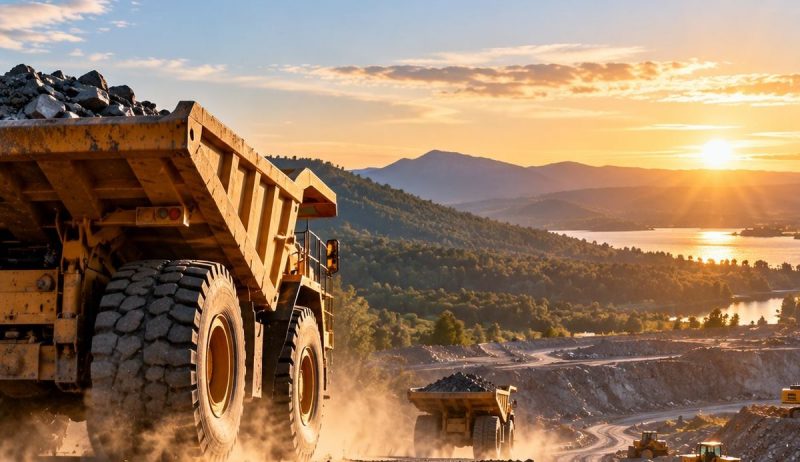
As policymakers and industry discuss zero-emission powertrains, Cummins is investing in a new generation of heavy-duty diesel engines. On October 28, the American engine manufacturer unveiled the S29. The unit was developed specifically for use in large mining machines.
With a displacement of 29 l and up to 1,300 hp, the engine targets dump trucks with payloads of 90 to 120 tonnes and excavators in the 150 to 220 tonnes weight class. Cummins promises high power density and low operating costs. The targeted best specific fuel consumption figure is 180 g per kWh. This is a development target, not a figure already demonstrated in series production.
In addition to diesel, the S29 is also intended to run on HVO and biodiesel blends up to B50 when it launches. Variants for natural gas, hydrogen and combined fuel systems are being investigated for the longer term.
Worldwide availability in suitable markets is planned for the end of 2027. Cummins aims to serve customers for whom range, machine availability, and fuel costs are crucial.
The financial starting point is solid. In the 2025 financial year, Cummins generated USD 33.7 billion in revenue and USD 2.8 billion in profit. Beyond engines, the group produces components, power generation systems and technologies for alternative powertrains.
Analysts view the shares predominantly positively, but have recently lowered their expectations. Wells Fargo cut its price target from USD 760 to USD 608. Barclays also reduced its target from USD 760 to USD 675. Both firms remain fundamentally positive.
Conclusion
DEUTZ reduces the risk of costly machine downtime with intelligent engine control. Cummins is developing new large engines for mining, focusing on greater efficiency and alternative fuels. dynaCERT is pursuing a different approach: retrofitting existing diesel units to become more fuel-efficient. Initial follow-up orders in France and market entry in Vietnam provide potential starting points for further growth. However, rising sales figures will be needed to demonstrate that this approach can develop into a sustainable business.
Conflict of interest
Pursuant to §85 of the German Securities Trading Act (WpHG), we point out that Apaton Finance GmbH as well as partners, authors or employees of Apaton Finance GmbH (hereinafter referred to as “Relevant Persons”) may hold shares or other financial instruments of the aforementioned companies in the future or may bet on rising or falling prices and thus a conflict of interest may arise in the future. The Relevant Persons reserve the right to buy or sell shares or other financial instruments of the Company at any time (hereinafter each a “Transaction”). Transactions may, under certain circumstances, influence the respective price of the shares or other financial instruments of the Company.
In addition, Apaton Finance GmbH is active in the context of the preparation and publication of the reporting in paid contractual relationships.
For this reason, there is a concrete conflict of interest.
The above information on existing conflicts of interest applies to all types and forms of publication used by Apaton Finance GmbH for publications on companies.
Risk notice
Apaton Finance GmbH offers editors, agencies and companies the opportunity to publish commentaries, interviews, summaries, news and the like on news.financial. These contents are exclusively for the information of the readers and do not represent any call to action or recommendations, neither explicitly nor implicitly they are to be understood as an assurance of possible price developments. The contents do not replace individual expert investment advice and do not constitute an offer to sell the discussed share(s) or other financial instruments, nor an invitation to buy or sell such.
The content is expressly not a financial analysis, but a journalistic or advertising text. Readers or users who make investment decisions or carry out transactions on the basis of the information provided here do so entirely at their own risk. No contractual relationship is established between Apaton Finance GmbH and its readers or the users of its offers, as our information only refers to the company and not to the investment decision of the reader or user.
The acquisition of financial instruments involves high risks, which can lead to the total loss of the invested capital. The information published by Apaton Finance GmbH and its authors is based on careful research. Nevertheless, no liability is assumed for financial losses or a content-related guarantee for the topicality, correctness, appropriateness and completeness of the content provided here. Please also note our Terms of use.
Stockhouse does not provide investment advice or recommendations. All investment decisions should be made based on your own research and consultation with a registered investment professional. The issuer is solely responsible for the accuracy of the information contained herein. For full disclaimer information, please click here.