

BP: Ambitious Goals Meet Historic Liabilities
British energy giant BP is under pressure from the capital markets and environmental organizations to reduce its carbon footprint. Through initiatives such as Aim 4, the group aims to monitor and reduce methane emissions at all key production sites. Furthermore, the group has committed to the stringent Level 5 measurement criteria under the UN’s Oil and Gas Methane Partnership 2.0 initiative. To detect even the tiniest leaks, management has sensitive drones from specialist partners such as SeekOps circling over the production facilities, capable of detecting even minimal quantities of 0.02 kilograms of methane per hour. However, the legacy issues are enormous. Over decades, companies such as BP sold mature fields to smaller operators, whose subsequent bankruptcies left behind countless wells. Today, BP is attempting to offset these residual emissions through its trading platform, bp Carbon Connect, using carbon credits; however, it imposes high environmental standards as a prerequisite.
Baker Hughes: Satellite Data Instead Of Dirty Work
When it comes to technology partners and equipment suppliers, Baker Hughes relies on precise sensor technology and digitalization. Using optical sensor systems such as LUMEN, the Texas-based company detects volatile gases with centimetre-level accuracy, both in the air and on the ground. The flare.IQ control software also continuously monitors flaring systems using ultrasound to optimize combustion processes and reduce the uncontrolled escape of gas. However, when it comes to actual decommissioning, the management is extremely selective. The group concentrates its resources on high-margin large-scale projects, in particular the technically highly complex dismantling of gigantic offshore platforms in the North Sea or deep-sea installations in Latin America. Baker Hughes appears to be deliberately avoiding the labour-intensive task of cementing hundreds of thousands of shallow onshore wells in remote woodlands for reasons of profitability. This creates opportunities for companies that are right at home on gravel roads and in oil-producing regions.
Zefiro Methane Tackles the Problem at Its Root
This is precisely where Zefiro Methane steps in. Rather than merely surveying leaks from a distance, the company first acquired a majority stake in May 2023 and then full ownership in September 2024 of the long-established firm Plants & Goodwin, which has been rooted in the heart of Pennsylvania since 1970. With Luke Plants, the third generation of the family business joined the management team, bringing with it a formidable fleet of drilling rigs, mobile cementing units and heavy-haul transporters. The specific on-site procedure requires precision: first, the drilling crews extract blocked old pipes or drill them free. The engineers then install mechanical bridge plugs and press special cement down into the depths, layer by layer, under constant pressure. This enables aquifers to be permanently isolated from hydrocarbon-bearing strata. When plugging a 4,500 m deep gas well in Oklahoma, Zefiro was able to generate 92,956 tonnes of verified CO₂ reduction credits in accordance with the ACR standard – a milestone for the company. The ACR methodology used at the time is currently suspended and is being revised.

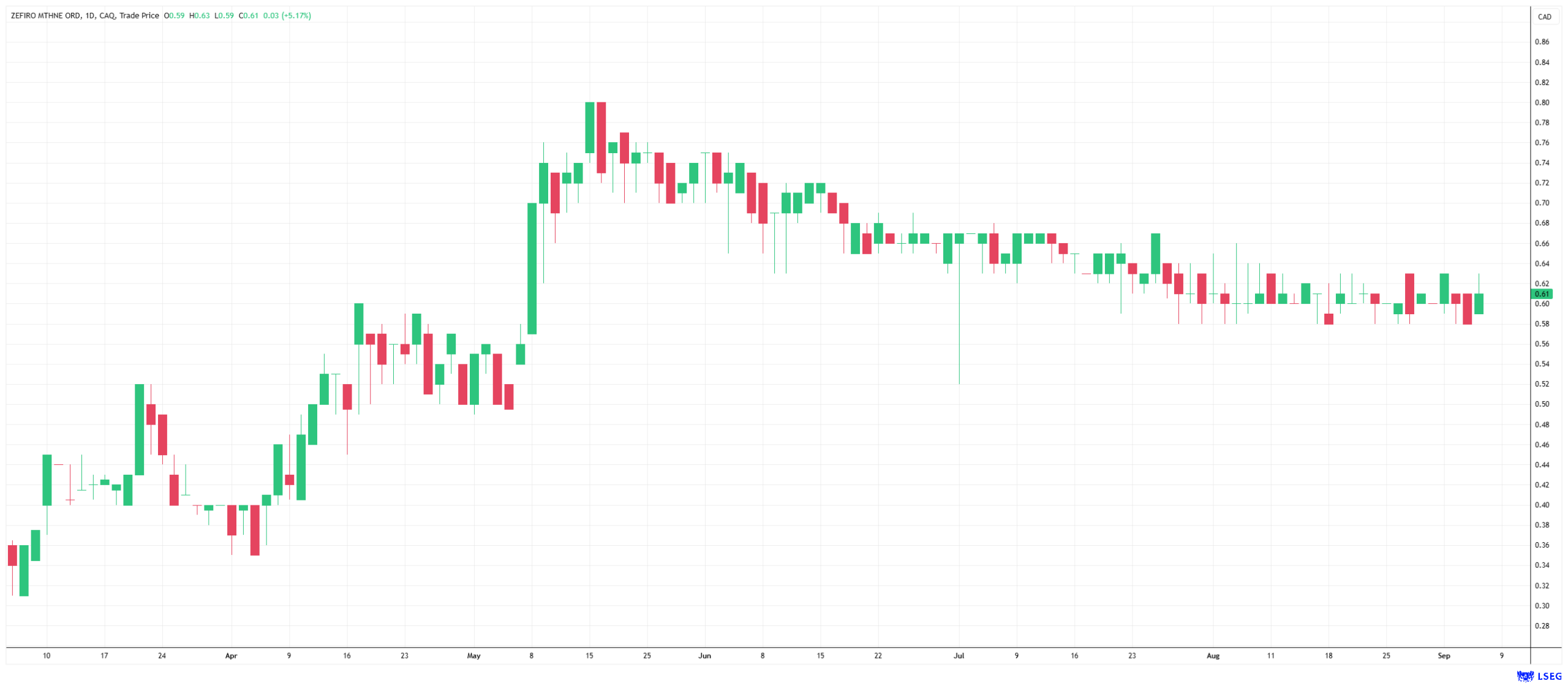
To build a resilient business, Zefiro relies on contracts from both industry and government agencies. In Ohio, Plants & Goodwin secured a three-year, USD 19.6 million framework agreement with the Ohio Department of Natural Resources. In 2025 alone, its teams plugged more than 75 wells in the field. At the same time, major natural gas producers are hiring additional drilling rigs from the subsidiary to properly decommission dozens of highly complex deep wells in the Appalachian Basin. The acquisition of Viking Well Service’s fleet of machinery for USD 4.3 million in May expanded Zefiro’s operational footprint to 13 US states and increased its annual revenue potential by approximately USD 10 million. Complemented by measurement technology contracts from the nationwide MERP funding program, these successes are clearly reflected in the company’s financials. Following revenue of USD 32.4 million in the 2025 financial year, Zefiro Methane had already generated over USD 33 million in the first three quarters of the 2026 financial year, with an adjusted EBITDA of USD 4.25 million. The message is clear: Zefiro is gaining momentum.
Zefiro and the Catalysts
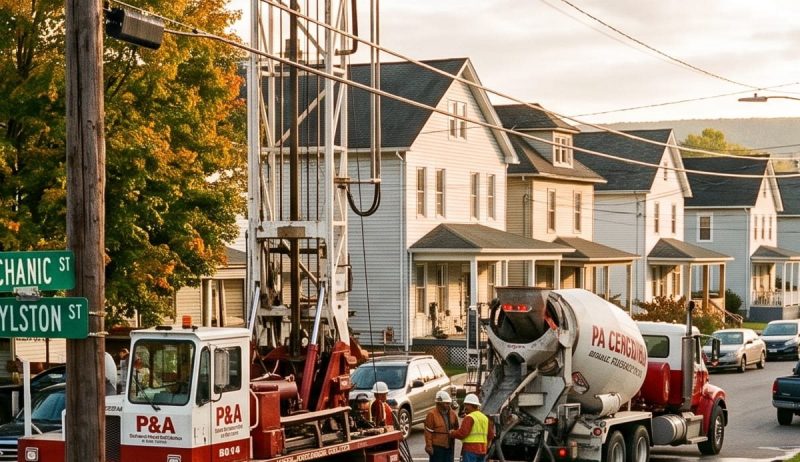
As documented on the front page of the US regional newspaper The Bradford Era, the company, in collaboration with the non-profit Well Done Foundation, plugged an explosive well in the middle of a residential area in Bradford, with TV cameras and prominent figures in attendance. CEO Catherine Flax is also driving forward new remediation projects in the Deep Fork National Wildlife Refuge through a joint operations hub in Oklahoma. This shows that Zefiro is doing business while also making a positive impact. While Zefiro’s operations can inevitably involve complications, the company’s track record and industry connections are already impressive. The stock is an intriguing candidate for almost any growth-oriented watchlist.

Conflict of interest
Pursuant to §85 of the German Securities Trading Act (WpHG), we point out that Apaton Finance GmbH as well as partners, authors or employees of Apaton Finance GmbH (hereinafter referred to as “Relevant Persons”) may hold shares or other financial instruments of the aforementioned companies in the future or may bet on rising or falling prices and thus a conflict of interest may arise in the future. The Relevant Persons reserve the right to buy or sell shares or other financial instruments of the Company at any time (hereinafter each a “Transaction”). Transactions may, under certain circumstances, influence the respective price of the shares or other financial instruments of the Company.
In addition, Apaton Finance GmbH is active in the context of the preparation and publication of the reporting in paid contractual relationships.
For this reason, there is a concrete conflict of interest.
The above information on existing conflicts of interest applies to all types and forms of publication used by Apaton Finance GmbH for publications on companies.
Risk notice
Apaton Finance GmbH offers editors, agencies and companies the opportunity to publish commentaries, interviews, summaries, news and the like on news.financial. These contents are exclusively for the information of the readers and do not represent any call to action or recommendations, neither explicitly nor implicitly they are to be understood as an assurance of possible price developments. The contents do not replace individual expert investment advice and do not constitute an offer to sell the discussed share(s) or other financial instruments, nor an invitation to buy or sell such.
The content is expressly not a financial analysis, but a journalistic or advertising text. Readers or users who make investment decisions or carry out transactions on the basis of the information provided here do so entirely at their own risk. No contractual relationship is established between Apaton Finance GmbH and its readers or the users of its offers, as our information only refers to the company and not to the investment decision of the reader or user.
The acquisition of financial instruments involves high risks, which can lead to the total loss of the invested capital. The information published by Apaton Finance GmbH and its authors is based on careful research. Nevertheless, no liability is assumed for financial losses or a content-related guarantee for the topicality, correctness, appropriateness and completeness of the content provided here. Please also note our Terms of use.
Stockhouse does not provide investment advice or recommendations. All investment decisions should be made based on your own research and consultation with a registered investment professional. The issuer is solely responsible for the accuracy of the information contained herein. For full disclaimer information, please click here.