

BYD: Between Battery Power and a Slump in the Domestic Market
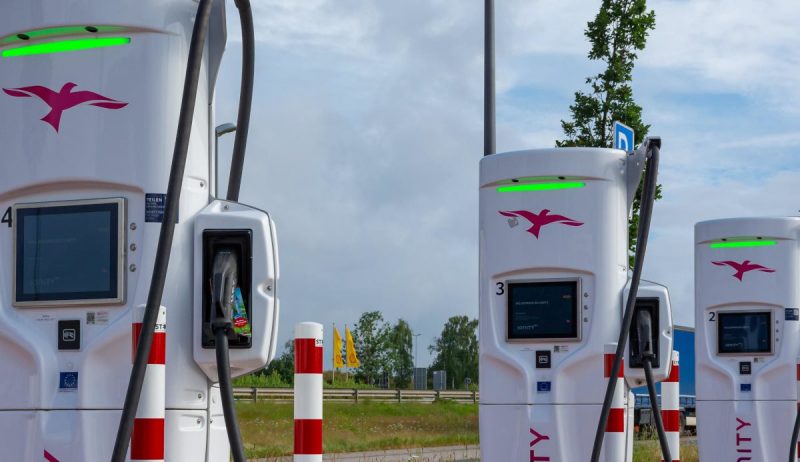
BYD is advancing the second stage of its Blade cell at a remarkable pace. The new energy storage units are designed to charge from 10% to 70% capacity in 5 minutes; at minus 30 degrees, the process from 20% to 97% takes just 12 minutes. Energy density has increased by 5%; combined with a lightweight design, this results in ranges exceeding 1,000 km. The “Flash Charging” system delivers 1,500 kW. By the end of 2026, the company plans to install 20,000 of these stations, 2,000 of which will be along highways. Production is already in full swing, with the workforce even working through the Spring Festival. The semi-solid-state battery, over 80% of which can be manufactured on existing production lines, is scheduled to enter small-scale production in 2027.
Domestically, BYD recorded its eighth consecutive month of sales decline in April. Passenger vehicle deliveries fell by 15.7% year-over-year. The price war in China’s mass-market electric vehicle market is relentless, with discounts reaching a two-year high in March. The first-quarter results were correspondingly bleak. Net profit plummeted by 55.4% to CNY 4.09 billion, and revenue fell by 12%, marking the third consecutive quarter of decline. The situation is exacerbated by new subsidy rules. Plug-in hybrids now require a minimum electric range of 100 km, and since the start of the year, buyers have been paying a 5% purchase tax. The operating cash flow margin is coming under massive pressure.
While the domestic market is in crisis, international business is on track to set records. In April, BYD shipped 135,098 vehicles overseas, an increase of over 70%. Exports recently accounted for around 45% of total deliveries, twice as much as in the previous year. Management raised the annual target to 1.5 million units. The premium brand Denza is just taking off in Europe. The 1,140-horsepower Z9GT model competes against Audi, Porsche, and Mercedes, while the D9 MPV targets the luxury market. Prices start at around EUR 115,000 in Germany. To circumvent tariff barriers, BYD is building plants in Hungary, Brazil, Turkey, Thailand, and Indonesia. The stock is currently trading at EUR 10.11.
HPQ Silicon: Batteries, Silica, Hydrogen — Things Are Getting Concrete
Just a few days ago, HPQ Silicon partner Novacium signed a memorandum of understanding with GH Technologies from Asia. The goal is to supply GEN4 cells in the 18650 and 21700 formats to the Pacific region, which accounts for nearly 60% of global demand. In testing, the cells exceed 7,000 mAh and achieve 395 Wh/kg in a drone battery pack. These are top-tier figures. A European drone manufacturer has already placed an order. The timeline for the 50-ton annual production facility is set. Approximately 750,000 cells can be manufactured from one ton of material. The government is funding the pilot production with CAD 3 million. The plant costs a total of CAD 5 million. Investors looking to make a mark in the drone and high-end market can hardly ignore these figures.
Unlike the battery segment, the market for fumed silica (pyrogenic silica) is highly concentrated. Four players dominate, and barriers to entry are extremely high. HPQ circumvents this with a single-stage quartz plasma reactor. The process is cleaner, cheaper, and modular. An initial 50-kg order for testing purposes has been placed, and a non-binding letter of intent with Evonik is in place. Canada currently imports all of its silica, representing a market value of around CAD 200 million. This is precisely the market the company is targeting. A 1,000-ton facility is planned in cooperation with a strategic partner — whether this will be Evonik is still unclear. If the plant is realized, it could significantly increase HPQ Silicon’s valuation.
The third pillar operates under the radar. Hydrogen is produced on demand from recycled aluminum slag (black aluminum dross), without expensive storage or transportation issues. In addition to energy, the system also produces heat and can purify water. A clever side effect is that the toxic black dross becomes a raw material instead of being disposed of at great expense. HPQ holds a 36.8% stake in Novacium and has secured exclusive North American licenses. It was not planned for all three projects to mature at the same time, but it spreads the risk, which is good for investors. The stock is currently trading at around CAD 0.18.

BASF — Shaking up Battery Chemistry
The Ludwigshafen-based company is working flat out on the next generation of lithium-ion cells. Instead of conventional graphite anodes, BASF is relying on silicon, which promises four times the energy density. The problem is that silicon expands significantly during charging, which shortens its lifespan. The solution comes from the company’s own lab. A newly developed Licity® binder based on styrene-butadiene is designed to cushion the mechanical stresses. In cooperation with Group14 Technologies, a “drop-in-ready” solution is being developed for existing production lines, enabling a silicon content of up to 70% in the anode. Initial tests show over 1,000 cycles with 80% residual capacity.
The figures at the start of the year were better than many market participants had expected. At EUR 2.36 billion, adjusted EBITDA was just under 6% below the previous year’s figure, even though the closure of the Strait of Hormuz in March caused massive disruptions in raw material logistics. BASF benefited from its decentralized structure. Local production for on-site customers makes the Group less vulnerable to global transport disruptions. However, strong currency effects from the USD and CNY weighed on earnings. Without these headwinds, the Group would have reached the level of the previous year.
The “Winning Ways” program is progressing as planned. The “CoreShift” project aims to reduce fixed costs in the core divisions by up to 20% by 2029. The annual cost-saving program has already achieved EUR 1.9 billion of the total EUR 2.3 billion target. At the same time, BASF is maintaining its attractive shareholder return. A minimum annual dividend of EUR 2.25 per share through 2028 has been committed. The sale of the Coatings business to Carlyle is expected to be completed in the second quarter, which creates financial flexibility for further buybacks or debt reduction. This provides a solid foundation in an uncertain geopolitical environment. Currently, one share costs EUR 51.11.
BYD is overcoming the domestic market slump with record exports and a superior Blade cell that charges from 10% to 70% in five minutes. HPQ Silicon is driving the development of high-capacity 7000-mAh cells for drones with Novacium, tapping into the silica market via a plasma reactor, and converting waste into hydrogen — a broadly diversified technology portfolio. BASF solves the silicon expansion problem with a novel Licity® binder, maintains its high dividend, and is slashing costs massively thanks to “Winning Ways.”
Conflict of interest
Pursuant to §85 of the German Securities Trading Act (WpHG), we point out that Apaton Finance GmbH as well as partners, authors or employees of Apaton Finance GmbH (hereinafter referred to as “Relevant Persons”) currently hold or hold shares or other financial instruments of the aforementioned companies and speculate on their price developments. In this respect, they intend to sell or acquire shares or other financial instruments of the companies (hereinafter each referred to as a “Transaction”). Transactions may thereby influence the respective price of the shares or other financial instruments of the Company.
In this respect, there is a concrete conflict of interest in the reporting on the companies.
In addition, Apaton Finance GmbH is active in the context of the preparation and publication of the reporting in paid contractual relationships.
For this reason, there is also a concrete conflict of interest.
The above information on existing conflicts of interest applies to all types and forms of publication used by Apaton Finance GmbH for publications on companies.
Risk notice
Apaton Finance GmbH offers editors, agencies and companies the opportunity to publish commentaries, interviews, summaries, news and the like on news.financial. These contents are exclusively for the information of the readers and do not represent any call to action or recommendations, neither explicitly nor implicitly they are to be understood as an assurance of possible price developments. The contents do not replace individual expert investment advice and do not constitute an offer to sell the discussed share(s) or other financial instruments, nor an invitation to buy or sell such.
The content is expressly not a financial analysis, but a journalistic or advertising text. Readers or users who make investment decisions or carry out transactions on the basis of the information provided here do so entirely at their own risk. No contractual relationship is established between Apaton Finance GmbH and its readers or the users of its offers, as our information only refers to the company and not to the investment decision of the reader or user.
The acquisition of financial instruments involves high risks, which can lead to the total loss of the invested capital. The information published by Apaton Finance GmbH and its authors is based on careful research. Nevertheless, no liability is assumed for financial losses or a content-related guarantee for the topicality, correctness, appropriateness and completeness of the content provided here. Please also note our Terms of use.
Stockhouse does not provide investment advice or recommendations. All investment decisions should be made based on your own research and consultation with a registered investment professional. The issuer is solely responsible for the accuracy of the information contained herein. For full disclaimer information, please click here.