

Newmont: Anticipation Ahead of Q2 Earnings
As recently as the end of January, Newmont shares were trading above USD 130. The high gold price significantly boosted profits for the world’s largest gold producer. As a result, the company achieved operating cash flow of USD 3.8 billion in the first quarter. Free cash flow rose to a record high of USD 3.1 billion, an increase of 161% compared to the same quarter last year. But that was not enough, as the correction in gold prices triggered a downward rally for the Denver-based company, resulting in a drop of more than 25% from its peak. From a technical analysis perspective, it is now important that support holds at around USD 93/94, which is only a few dollars below the current price.
In the first quarter, Newmont reported total revenue of USD 7.31 billion (+46%) and earnings per share of USD 2.90, significantly beating the market consensus estimate of USD 2.18. Newmont was able to offset the decline in production caused by wildfires in Australia and planned maintenance work thanks to the higher gold price. That is why a share buyback program worth a whopping USD 6 billion is currently underway. As the global market leader, the stock is heavily tied to the performance of the gold price—both on the upside and the downside. Operational momentum is likely to come primarily from two areas. First, Newmont continues to divest smaller deposits and mines acquired as part of the Newcrest takeover. These are primarily smaller, lower-margin non-core assets. Second, Newmont has a strong balance sheet and holds a net cash position of USD 3.2 billion. Total liquidity actually amounts to approximately USD 13 billion. The market has long anticipated that the US-based company will become an active acquirer. A typical acquisition target for a major mining company should have proven reserves of 5 million ounces and/or produce at least 500,000 ounces of gold per year. Since many now view the Newcrest acquisition as a success, a major deal involving the acquisition of a billion-dollar company could also be possible. On the cost front, investors should keep a close eye on cost trends when the Q2 results are released on July 23. Recent reports indicate that both wages and energy costs have risen. In addition, as a result of the war in the Persian Gulf, prices for consumables such as cyanide, explosives and tires are rising.
Desert Gold: It all starts on July 19
Things are about to get exciting at Desert Gold in the coming days. The company developing the SMSZ gold project in Mali plans to begin commissioning. In the mining industry, this milestone marks the point at which a developer becomes a producer. This is typically accompanied by a revaluation of the stock. Analysts at GBC Research have set a price target of CAD 0.93 for the share. By comparison, the share is currently trading at just CAD 0.115 on its home exchange in Toronto. According to the analysts, the upside potential is therefore enormous.
Commissioning essentially refers to the transition to startup or trial operation. During this phase, the newly constructed processing plant, in this case, Desert Gold’s gravity plant, is tested. All mechanical and electrical components, such as the crushers, conveyor belts, and the generator, are tested without actual material. Typically, the plant is then flushed with water, but still without gold ore, to observe the flow rate, pump performance, and piping under actual pressure. Only then is real gold ore fed into the plant from the deposit for the first time. The key question here remains: does the Gravity Plant successfully separate the gold from the worthless rock as planned?
For the SMSZ project, Desert Gold’s management has decided to ramp up production gradually. The property, covering an area of 440 km², more than half the size of Berlin, thereby conserves shareholders’ capital. Thus, the simple, modular gravity processing plant is to be built first in the “Barani East” area. Initial capacity will be 200-240 metric tons per day (tpd) and is expected to increase to 1,200 tpd by the end of the year. If the production ramp-up proceeds as planned, Desert Gold will be able to generate its first cash flows.
Desert Gold currently has a market capitalization of approximately CAD 60 million. Signs of this revaluation were already evident at the start of the year, when the stock was trading above CAD 0.14. In addition to expanding production by year-end, Desert Gold also has further blue-sky potential. The sheer size of the property and its location in the Senegal-Mali shear zone alone suggest the presence of additional deposits.
B2Gold: Goose Is the Key
With a market capitalization of just over USD 5 billion, B2Gold is one of the smaller mid-cap gold producers. At the beginning of the year, the stock briefly traded below USD 3. However, the gold price and the Q1 results then drove the share price higher. The subsequent consolidation in the gold price, however, led to a sharp correction. At USD 3.85, the stock is currently trading solidly above the support zone of USD 3.50 to USD 3.60. With B2Gold, investors are betting on a globally diversified mining portfolio focused on West Africa, Canada, and the Philippines. The flagship mine is the so-called Fekola Complex in Mali. It ranks among the 20 largest gold mines in the world and, with an annual production of 410,000 to 460,000 ounces (2026 forecast), contributes the largest share to the group’s earnings. In addition, the company operates the Masbate Mine in the Philippines. This is an established open-pit mine that regularly produces between 170,000 and 190,000 ounces of gold per year.
However, the most important growth project is the Goose Mine in Canada, which was acquired through the takeover of Sabina Gold & Silver. This is B2Gold’s first mine in a politically very stable jurisdiction. It is expected to contribute 170,000 to 230,000 ounces to the Group’s production as early as this year. Initially, the company will incur high costs of up to USD 2,970 per ounce (AISC), but these are expected to drop dramatically once the mine is fully operational. Importantly, the market is now recognizing the progress made on construction. Last year, the high capital expenditures were still weighing on the balance sheet. This factor will be significantly reduced this year and will disappear entirely next year.
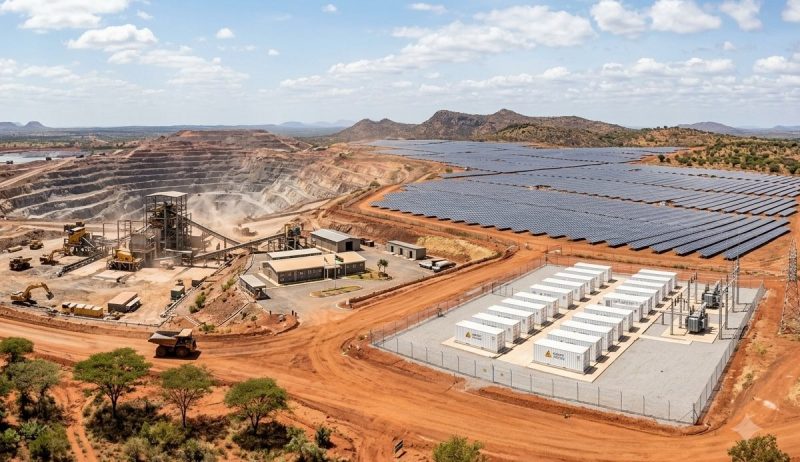
In terms of dividends, B2Gold has traditionally been considered a generous payer, though the company has recently been somewhat restrained due to the Goose project. Currently, B2Gold pays a quarterly dividend of USD 0.02 per share. In early 2025, the dividend was halved due to construction costs. In addition, the company is actively using its strong cash generation for share buybacks. This year, 20 million shares have already been repurchased and retired, which, purely mathematically, increases earnings per share. On the cost side, B2Gold has taken a forward-looking approach, particularly with regard to energy. The mines in Africa and the Philippines are equipped with solar power and battery storage. In terms of ESG, B2Gold is therefore considered exemplary and a leader. Analysts estimate the current P/E ratio at around 7, making the stock one of the most undervalued in the sector. With a market capitalization of USD 5 billion, the company is also often viewed as a takeover target. Should Goose reach full operation as planned, this will clearly make B2Gold more attractive.
Newmont is the industry leader and is heavily dependent on the gold price. Takeovers could provide momentum for the stock, in either direction. Desert Gold is transitioning from a developer to a producer, putting a re-rating of the stock on the agenda. B2Gold is arguably the most undervalued gold stock among North American producers. With Goose, the company could attract interest from other investors.
Conflict of interest
Pursuant to §85 of the German Securities Trading Act (WpHG), we point out that Apaton Finance GmbH as well as partners, authors or employees of Apaton Finance GmbH (hereinafter referred to as “Relevant Persons”) may hold shares or other financial instruments of the aforementioned companies in the future or may bet on rising or falling prices and thus a conflict of interest may arise in the future. The Relevant Persons reserve the right to buy or sell shares or other financial instruments of the Company at any time (hereinafter each a “Transaction”). Transactions may, under certain circumstances, influence the respective price of the shares or other financial instruments of the Company.
In addition, Apaton Finance GmbH is active in the context of the preparation and publication of the reporting in paid contractual relationships.
For this reason, there is a concrete conflict of interest.
The above information on existing conflicts of interest applies to all types and forms of publication used by Apaton Finance GmbH for publications on companies.
Risk notice
Apaton Finance GmbH offers editors, agencies and companies the opportunity to publish commentaries, interviews, summaries, news and the like on news.financial. These contents are exclusively for the information of the readers and do not represent any call to action or recommendations, neither explicitly nor implicitly they are to be understood as an assurance of possible price developments. The contents do not replace individual expert investment advice and do not constitute an offer to sell the discussed share(s) or other financial instruments, nor an invitation to buy or sell such.
The content is expressly not a financial analysis, but a journalistic or advertising text. Readers or users who make investment decisions or carry out transactions on the basis of the information provided here do so entirely at their own risk. No contractual relationship is established between Apaton Finance GmbH and its readers or the users of its offers, as our information only refers to the company and not to the investment decision of the reader or user.
The acquisition of financial instruments involves high risks, which can lead to the total loss of the invested capital. The information published by Apaton Finance GmbH and its authors is based on careful research. Nevertheless, no liability is assumed for financial losses or a content-related guarantee for the topicality, correctness, appropriateness and completeness of the content provided here. Please also note our Terms of use.
Stockhouse does not provide investment advice or recommendations. All investment decisions should be made based on your own research and consultation with a registered investment professional. The issuer is solely responsible for the accuracy of the information contained herein. For full disclaimer information, please click here.