

Rheinmetall: Record Orders, but Lowered Guidance
Rheinmetall’s second-quarter figures are strong. Turnover climbed by 69% to EUR 3.289 billion, operating profit rose by 115% to EUR 562 million, and the operating margin improved to 17.1%. In the first half of the year, consolidated turnover grew by 39% to EUR 5.2 billion, while operating profit rose by 74% to EUR 786 million. Nevertheless, the market reacted cautiously due to the unexpected cancellation of the German F126 frigate program. As a result of this cancellation, Rheinmetall had to absorb a revenue shortfall of around EUR 300 million in the current year and lowered its 2026 revenue forecast by EUR 300 million. The margin target, however, remains at around 19% for the full year.
The Group is increasingly positioning itself as a systems provider for networked, unmanned platforms across all sectors. The FV-014 loitering munition for the Bundeswehr, the MQ-28 Ghost Bat escort drone developed with Boeing, and the K3 Scout surface drone from Hamburg demonstrate this strategic breadth. The acquisition of DOK-ING in Croatia and the new centre of excellence for land autonomy in the UK underline this ambition. Most recently, Rheinmetall and Hensoldt demonstrated the successful integration of the Twinvis passive radar into the Skymaster command-and-control system, thereby creating an air situational picture for networked air defence.
The “Boxer” wheeled armoured vehicle could be the Bundeswehr’s next major order. A decision on the first tranche of around 1,500 vehicles, worth approximately EUR 12.4 billion, could be taken as early as September. At the same time, Rheinmetall is pressing ahead with the expansion of its main plant in Kassel. This could become Europe’s largest tank manufacturing facility. However, a final investment decision is still pending. The negative cash flow trend in the first half of the year reflects the significant build-up of inventory required to fulfil orders. Analysts hold differing views. The range of price targets extends from EUR 1,350 to EUR 2,380.
Volatus Aerospace: Drone Platform Expands
The Canadian aviation industry is transforming, with autonomous systems increasingly being viewed as a strategic necessity rather than a technology of the future. In this environment, Volatus Aerospace has positioned itself with a platform-based approach that spans everything from manufacturing and proprietary software to operational services. The recently commissioned 53,000-square-foot facility in Mirabel and the pipeline monitoring business, covering around 1.7 million km annually, underscore the company’s commercial acceptance. With 28 manned aircraft and a drone fleet that completes around 16 flights a day in Edmonton, the company has established an operational base that serves as a foundation for further growth.
Management is deliberately pursuing two business areas in parallel. On the one hand, there is the civil industrial business, which ensures predictability through regular contracts in energy monitoring and disaster management. On the other hand, the booming defence business is becoming increasingly important due to geopolitical conflicts. The partnership entered into in August with Singular Aircraft to launch the FlyOx 1, a 4,000 kg autonomous aircraft for forest firefighting, demonstrates the growing technological breadth. With revenue of CAD 8.4 million in the second quarter, up 49.5% from the previous quarter, and liquidity of CAD 59.2 million, the financial foundation is solid. Strategic upfront investments in production capacity and certifications have been deliberately made to pave the way for high-margin economies of scale.
The Canadian government plans to increase defence spending to between 3.5% and 5% of GDP, with domestic companies set to receive 70% of this budget. Volatus Aerospace is benefiting from this reorientation through its strategic partnership with Kraus Hamdani Aerospace to develop persistent reconnaissance capabilities and through regulatory successes, such as Transport Canada’s certification of the Canary system. The first list of qualified bidders for Canada’s Defence Drone Initiative is expected in September. If Volatus features on this list, it would not only be a milestone but could also lead to fixed, recurring contracts. It would act as a catalyst for a revaluation of the company.

Lockheed Martin: From Aircraft Manufacturer to Systems Architect
The US defence contractor is transforming. Although the F-35 fighter jet still forms the backbone of its business, the focus is increasingly shifting towards autonomous systems and intelligent networking. The latest drone tests, ranging from armed maritime vessels to 5G-enabled detection systems, illustrate this new focus. Lockheed Martin no longer wants to merely supply platforms, but to control entire ecosystems comprising sensors, firepower and artificial intelligence. This shift could unlock new profit potential in the medium term, even if the legacy programs continue to generate the bulk of revenue.
The group generated revenue of USD 20.1 billion in the second quarter and has a record order book of around USD 230 billion. The guided missiles division, in particular, is performing exceptionally well, with an order book that has almost doubled to just under USD 88 billion and margins of 14.5%. The latest framework agreements for PAC-3 and THAAD could boost this cushion to nearly USD 284 billion. Analysts see potential for a re-rating here, but warn that only conversion into profitable revenue counts. However, production ramp-ups will take years.
The group is currently facing challenges with its flagship product, the F-35. According to the Pentagon, the cost of ordering the F-35 fighter jet fleet is set to rise by a further USD 51 billion. In addition, two secret projects are making losses. At the same time, Lockheed is investing heavily in the future, for example in drone technologies, hypersonic manufacturing and the modular Strigo system. The USD 3.45 quarterly dividend remains stable, but capital requirements are enormous. For investors, the question arises whether strong demand for defence technology can offset operational problems.
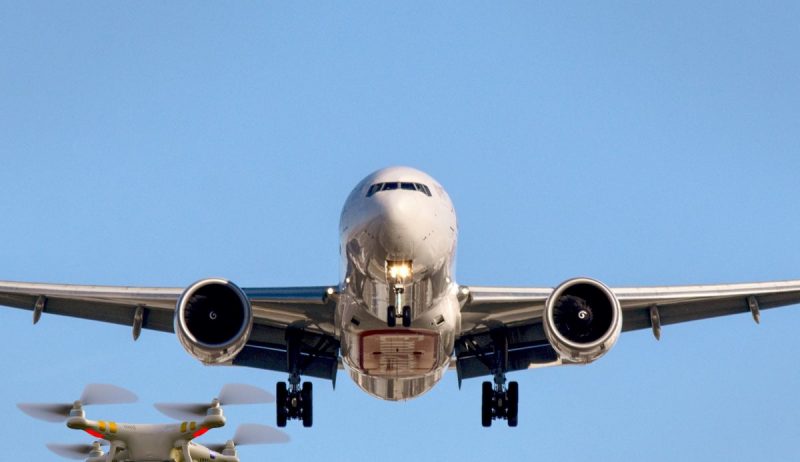
The drone attack on Leipzig Airport marks the starting point for a defence cycle worth billions. Rheinmetall is performing brilliantly with record figures and a broad technological portfolio, but is currently struggling with project cancellations and negative cash flow. Volatus Aerospace has established itself as an agile platform provider that has gradually expanded its business areas and intends to be increasingly active in the defence sector in future. Lockheed Martin impresses with a record order book, but has yet to translate its transformation into a systems provider into sustainable profitability.
Conflict of interest
Pursuant to §85 of the German Securities Trading Act (WpHG), we point out that Apaton Finance GmbH as well as partners, authors or employees of Apaton Finance GmbH (hereinafter referred to as “Relevant Persons”) currently hold or hold shares or other financial instruments of the aforementioned companies and speculate on their price developments. In this respect, they intend to sell or acquire shares or other financial instruments of the companies (hereinafter each referred to as a “Transaction”). Transactions may thereby influence the respective price of the shares or other financial instruments of the Company.
In this respect, there is a concrete conflict of interest in the reporting on the companies.
In addition, Apaton Finance GmbH is active in the context of the preparation and publication of the reporting in paid contractual relationships.
For this reason, there is also a concrete conflict of interest.
The above information on existing conflicts of interest applies to all types and forms of publication used by Apaton Finance GmbH for publications on companies.
Risk notice
Apaton Finance GmbH offers editors, agencies and companies the opportunity to publish commentaries, interviews, summaries, news and the like on news.financial. These contents are exclusively for the information of the readers and do not represent any call to action or recommendations, neither explicitly nor implicitly they are to be understood as an assurance of possible price developments. The contents do not replace individual expert investment advice and do not constitute an offer to sell the discussed share(s) or other financial instruments, nor an invitation to buy or sell such.
The content is expressly not a financial analysis, but a journalistic or advertising text. Readers or users who make investment decisions or carry out transactions on the basis of the information provided here do so entirely at their own risk. No contractual relationship is established between Apaton Finance GmbH and its readers or the users of its offers, as our information only refers to the company and not to the investment decision of the reader or user.
The acquisition of financial instruments involves high risks, which can lead to the total loss of the invested capital. The information published by Apaton Finance GmbH and its authors is based on careful research. Nevertheless, no liability is assumed for financial losses or a content-related guarantee for the topicality, correctness, appropriateness and completeness of the content provided here. Please also note our Terms of use.
Stockhouse does not provide investment advice or recommendations. All investment decisions should be made based on your own research and consultation with a registered investment professional. The issuer is solely responsible for the accuracy of the information contained herein. For full disclaimer information, please click here.