

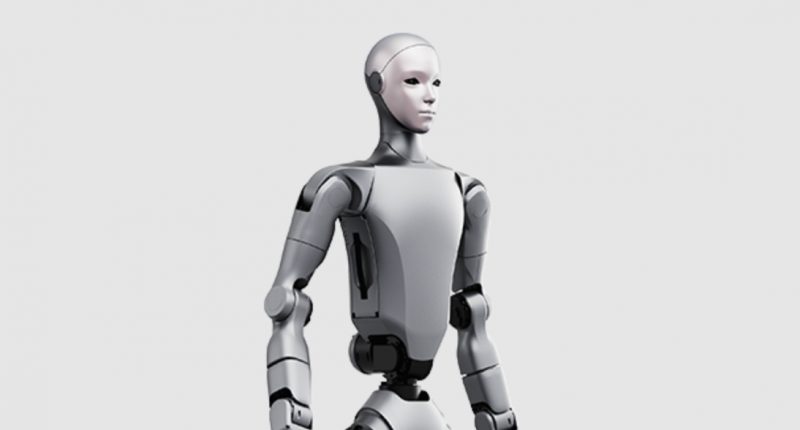
- Unitree shares jumped as much as 629 per cent in their trading debut and closed up 460 per cent, giving the Chinese robotics firm a market value of about US$50 billion
- The company raised US$904 million in China’s first major humanoid robotics IPO, reflecting strong investor interest in the fast-growing sector
- Chinese companies accounted for 97 per cent of global humanoid robot shipments in the first half of 2026, with Unitree holding roughly 31 per cent market share
- Despite strong growth and government support, Unitree faces challenges including high valuation expectations, uncertain commercial adoption, and U.S. restrictions on certain Chinese-made humanoid robots
Shares of Chinese robotics company Unitree soared in their stock market debut on Wednesday, underscoring growing investor enthusiasm for the country’s rapidly expanding humanoid robotics industry.
The Hangzhou-based company, known globally for its dancing and backflipping humanoid robots, saw its shares rise by as much as 629 per cent during intraday trading after pricing its initial public offering (IPO) at around 150 yuan per share. The stock later pared gains but still closed at 845 yuan (US$125), representing a gain of approximately 460 per cent from its IPO price.
Unitree raised 6.1 billion yuan (US$904 million) in what is considered mainland China’s first major public offering by a humanoid robotics company. At its peak on debut day, the company’s shares were valued at roughly US$163, before retreating into the close. Unitree finished the session with a market capitalization of approximately US$50 billion.
The debut is an obvious sign of investor confidence in China’s emerging humanoid robotics sector, which has become a strategic priority for Beijing amid intensifying global competition in robotics and artificial intelligence.
This article is a journalistic opinion piece that has been written based on independent research. It is intended to inform investors and should not be taken as a recommendation or financial advice.
Does investor demand reflect industry momentum?
China’s government has identified humanoid robotics as a key technology area, supporting domestic companies through policy initiatives and investment programs. Chinese manufacturers have benefited from the country’s extensive technology supply chain, helping firms scale production and reduce costs.
According to data from Smart Analytics Global, Chinese companies accounted for approximately 97 per cent of global humanoid robot shipments during the first half of 2026, with Unitree holding an estimated 31 per cent market share. Other domestic players, including AgiBot, have also expanded rapidly, strengthening China’s position in the sector.
The strong reception for Unitree’s IPO suggests investors are willing to place significant value on companies positioned to capitalize on the long-term potential of humanoid robotics, despite the technology remaining in the early stages of commercial adoption.
You can even buy a Unitree humanoid robot of your own on AliExpress for C$27,000, with free shipping. Compare that to estimates that Boston Dynamics’ Atlas humanoid robot will cost C$180,000 or more.
High expectations meet industry challenges
While interest in humanoid robots has surged, widespread deployment remains limited. Industry experts point to ongoing technical challenges, including the development of sophisticated AI systems capable of operating in unpredictable real-world environments and the creation of robotic hands that can match human dexterity.
Unitree reported revenue of approximately US$252 million and net profit of about US$41 million last year, according to its IPO filings. At the IPO price, the company was valued at around 219 times its 2025 earnings, reflecting expectations for substantial future growth.
Some analysts and investors have cautioned that current valuations assume rapid commercialization of the technology. Earlier this month, Trace Cohen, co-founder of U.S. venture capital firm Six Point Ventures, wrote that Unitree’s valuation already reflected considerable optimism, noting that the company still faces the challenge of converting growing robot shipments into sustained commercial demand.
Regulatory and market risks
In addition to execution risks, Unitree faces geopolitical and regulatory challenges. The company disclosed that the United States accounted for 13 per cent of its revenue last year. Recent U.S. restrictions on certain foreign-made humanoid robots could create headwinds for future sales in that market.
Nevertheless, China remains the company’s primary growth opportunity. Government support, rising investment, and growing interest from manufacturers seeking automation solutions continue to drive demand across the domestic robotics ecosystem.
Who is Unitree?
Founded in 2016 by entrepreneur Wang Xingxing, Unitree has become one of China’s most recognizable robotics companies. The company produces a range of products, including robotic sensors, robotic arms, quadruped robots, and humanoid machines.
Its robots have attracted widespread attention through viral demonstrations of advanced mobility and agility. Earlier this year, a group of Unitree’s G1 humanoid robots performed a kung fu routine during China’s nationally televised Spring Festival Gala, further raising the company’s profile.
Unitree also markets several headline-grabbing products, including a humanoid robot the company claims can run faster than Olympic sprinter Usain Bolt and the GD01, a large rideable robotic platform priced at approximately US$650,000.
The IPO attracted backing from prominent investors in China’s artificial intelligence sector, including AI startup DeepSeek, which invested about US$20 million in the offering.
The listing also significantly increased the wealth of Unitree founder Wang Xingxing. Based on the company’s closing valuation, his stake was worth an estimated US$15.9 billion, placing him among China’s wealthiest technology entrepreneurs.
No future but what we make
Unitree’s listing on Shanghai’s technology-focused STAR Market, often compared to the Nasdaq, marks a significant milestone for China’s robotics industry. The debut comes as China and the United States compete for leadership in advanced technologies, particularly robotics and AI.
Although robots are already widely used in industrial automation, warehouses, and consumer applications, investors increasingly view humanoid robots as a potentially transformative next-generation market. Major companies including Tesla (NASDAQ:TSLA) and Amazon (NASDAQ:AMZN) are pursuing two-legged robotic systems designed to perform tasks currently handled by humans.
For now, Unitree’s dramatic market debut serves as a powerful indicator of investor optimism. Whether the company’s valuation can be justified by future commercial adoption remains one of the key questions facing the rapidly developing humanoid robotics industry.
Join the discussion: Find out what the Bullboards are saying about electronics and robotics, then check out Stockhouse’s stock forums and message boards.