

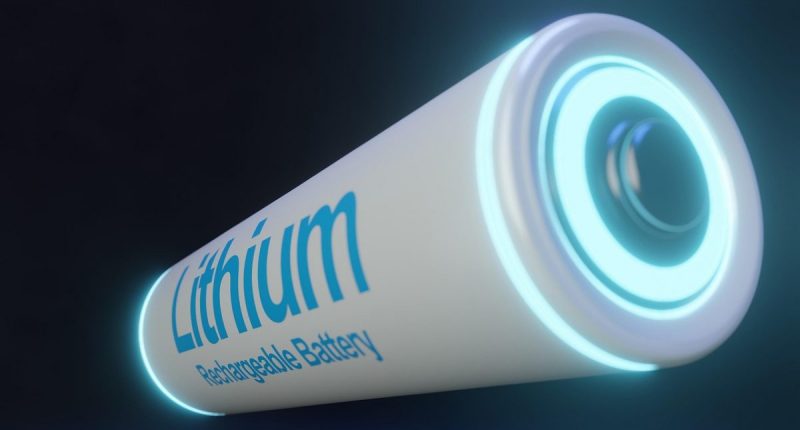
A new era of scarcity is dawning. Lithium prices are skyrocketing. As lithium becomes the strategic oil of the 21st century, entirely new technologies are fueling the appetite for energy. Electric mobility, drones, robotics, and AI all have one thing in common: they are driving up demand for energy storage systems that need to be more powerful, more efficient, and simply more robust. In this race for what is arguably the most important resource of our time, what counts most is secure supply chains. Without them, the much-vaunted technology of the future will fall by the wayside. We take a look at three specific companies that are benefiting from the new technologies: BYD, NEO Battery Materials, and DroneShield.
This article is disseminated in partnership with Apaton Finance GmbH. It is intended to inform investors and should not be taken as a recommendation or financial advice.
BYD – Appears well prepared
While many automotive companies are driven by fluctuations in the lithium market, BYD is going its own way. The Company is securing its future not only through traditional supply contracts, but also by actively building a more resilient raw material base. The key is a three-pronged strategy: own mining projects, such as in Brazil, long-term partnerships with suppliers, and, above all, technological diversification. By focusing strongly on cobalt-free LFP batteries and developing sodium-ion alternatives, BYD is systematically reducing its dependence on pure lithium. This provides a clear strategic buffer against price shocks.
Sales show a remarkable duality. In the challenging domestic market of China, BYD has to survive a relentless price war, while internationally, expansion is gaining momentum. In Europe, especially in Germany and the UK, new registrations are growing exponentially. The upcoming start of production at the Hungarian plant in mid-2026 will be decisive. This local manufacturing will lower customs barriers and shorten delivery times, which could really open up access to the European mass market. Exports remain a key pillar.
The short-term outlook remains a balancing act. Aggressive expansion investments and the price war continue to put pressure on margins, as shown by declining quarterly profits. In the long term, however, the strategy could pay off. BYD is banking on becoming more cost-efficient through vertical integration and global scaling. If it succeeds in meeting growing international demand with local production while maintaining its technological leadership in areas such as batteries and driver assistance, more robust margins are possible. For investors, it is a long-term game. The stock is currently trading at around EUR 10.745.
NEO Battery Materials – From the laboratory to the supply chain
At the end of 2025, the Fraunhofer Institute warned of China’s export restrictions. NEO Battery Materials (TSXV:NBM) did its homework at the right time. The latest proof of this is the announcement on January 5. NEO Battery has been granted official supplier status by an Asian Fortune 500 automotive group. This formal recognition is more than a symbolic step; it confirms the quality of the product and paves the way for direct follow-up orders without detours. At the same time, NEO is expanding its presence in another demanding sector, the defense industry. A recently signed partnership with a South Korean defense institute (KOIDI) paves the way for the use of its batteries in drones and unmanned systems.
The operational core has been running since November in a leased factory in South Korea. The plant was already production-ready, allowing deliveries to begin immediately. The first customers demonstrate the range. In addition to the aforementioned automotive manufacturer, production is currently underway for another North American Fortune 500 company. These pilot orders for testing and integration purposes are already generating short-term revenue and validating the Company’s manufacturing expertise at an industrial scale. The factory operates on a megawatt-hour scale and can therefore deliver far more than just laboratory samples.
The future potential lies in the unique combination of in-house material development and vertical integration. While the current plant primarily produces pouch cells, a second factory for prismatic and cylindrical formats is being planned in the immediate vicinity. This would make NEO a rare, independent supplier for all common cell formats. However, the Company’s own expertise in silicon anode materials could be the decisive lever. Their integration promises significantly higher energy densities. This is a clear competitive advantage in niches such as high-performance drones, where every gram of weight counts. Here, research is directly linked to marketable products. The stock is currently trading at CAD 0.61.

DroneShield – Drone defense: Why the market is just waking up
The threat posed by drones is not only becoming more diverse but also more technically sophisticated. One key driver is more powerful batteries. Higher energy density means longer flight times or larger payloads, both of which significantly increase the potential for damage. Whether for longer reconnaissance missions or the transport of dangerous cargo, technological evolution is making drones a more versatile and persistent risk to infrastructure and security. This trend is structural and creates a sustainable demand for reliable defense solutions.
This is precisely where DroneShield comes into play. The Company has transformed itself from a supplier of portable stand-alone devices to a developer of integrated systems. Its flagship solution combines AI-powered sensor technology for detection with various effectors for neutralization. The systems are scalable and can be seamlessly integrated into existing security infrastructures. DroneShield is thus addressing the growing need of military and critical infrastructure operators who require a comprehensive, networked protective shield.
The financial performance shows that the strategy is working. Record order intake and a bulging pipeline demonstrate market acceptance. However, investors also see downsides. Recent massive insider sales by management and communication mishaps have undermined investor confidence and put pressure on the stock. The long-term thesis of a huge, untapped growth market remains intact. In the short term, however, the Company must prove that it has learned from its management mistakes in addition to its technological expertise. The stock is currently on the rise and is trading at AUD 3.97.
The lithium shortage is forcing resilience and creating clear winners. BYD is strategically protecting itself from price shocks through vertical integration and battery innovation. NEO Battery Materials is paving its way into global supply chains with supplier status and in-house manufacturing. DroneShield is benefitting structurally as more powerful batteries increase the threat and thus the market for defense systems. Together, the trio demonstrates how companies can position themselves in the new era of scarcity through technological specialization and robust supply chains.
Conflict of interest
Pursuant to §85 of the German Securities Trading Act (WpHG), we point out that Apaton Finance GmbH as well as partners, authors or employees of Apaton Finance GmbH (hereinafter referred to as “Relevant Persons”) currently hold or hold shares or other financial instruments of the aforementioned companies and speculate on their price developments. In this respect, they intend to sell or acquire shares or other financial instruments of the companies (hereinafter each referred to as a “Transaction”). Transactions may thereby influence the respective price of the shares or other financial instruments of the Company.
In this respect, there is a concrete conflict of interest in the reporting on the companies.
In addition, Apaton Finance GmbH is active in the context of the preparation and publication of the reporting in paid contractual relationships.
For this reason, there is also a concrete conflict of interest.
The above information on existing conflicts of interest applies to all types and forms of publication used by Apaton Finance GmbH for publications on companies.
Risk notice
Apaton Finance GmbH offers editors, agencies and companies the opportunity to publish commentaries, interviews, summaries, news and the like on news.financial. These contents are exclusively for the information of the readers and do not represent any call to action or recommendations, neither explicitly nor implicitly they are to be understood as an assurance of possible price developments. The contents do not replace individual expert investment advice and do not constitute an offer to sell the discussed share(s) or other financial instruments, nor an invitation to buy or sell such.
The content is expressly not a financial analysis, but a journalistic or advertising text. Readers or users who make investment decisions or carry out transactions on the basis of the information provided here do so entirely at their own risk. No contractual relationship is established between Apaton Finance GmbH and its readers or the users of its offers, as our information only refers to the company and not to the investment decision of the reader or user.
The acquisition of financial instruments involves high risks, which can lead to the total loss of the invested capital. The information published by Apaton Finance GmbH and its authors is based on careful research. Nevertheless, no liability is assumed for financial losses or a content-related guarantee for the topicality, correctness, appropriateness and completeness of the content provided here. Please also note our Terms of use.
Stockhouse does not provide investment advice or recommendations. All investment decisions should be made based on your own research and consultation with a registered investment professional. The issuer is solely responsible for the accuracy of the information contained herein.
For full disclaimer information, please click here.