

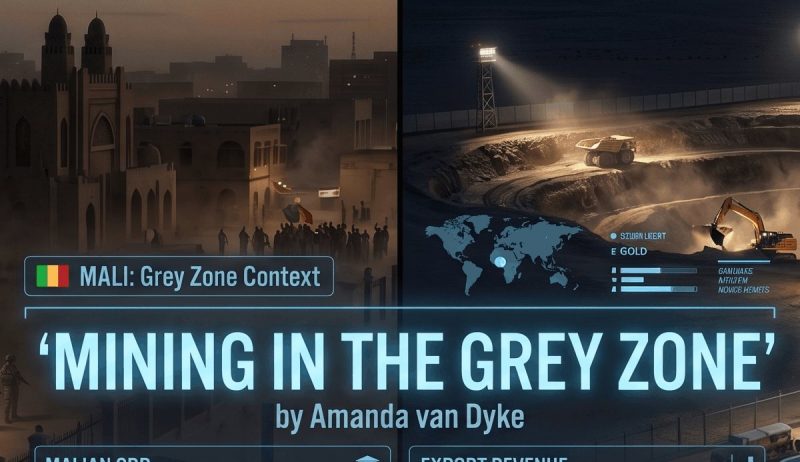
Mali: Gold as an Anchor of Stability – Despite Unrest
Mali, Africa’s third-largest gold-producing country, currently illustrates this theory vividly. Despite severe political upheaval and coordinated attacks on strategic targets in Bamako and the Kati military base a few days ago, in which a minister was also killed, the gold sector remains the country’s most important anchor of stability. Since gold accounts for around 25% of Mali’s gross domestic product and over 75% of its export revenues, continued production is in the interest of every political or military faction in the country. Despite the bad news and headlines, one must ask how vulnerable gold companies in Mali really are. This is especially true given that the industry’s biggest players are also active in the country.
The Economic Anchors: Barrick Mining and B2Gold
Industry giants like Barrick Mining and B2Gold are not just mining companies for Mali, but economic stabilizers. Barrick Mining operates the Loulo-Gounkoto complex, one of the world’s largest gold mines, which contributes significantly to the Malian state’s foreign exchange earnings. The situation is similar with B2Gold and the Fekola mine, which, due to its sheer size and extensive local employment base, benefits from special protection that goes far beyond conventional security measures.
Both companies have proven over decades that they can operate even under changing governments and during periods of extreme uncertainty, as their continued existence is crucial to Mali’s solvency. For investors, this means that gold production in Mali is often more resilient to political upheavals than headlines in Western media suggest.
Desert Gold: Local Roots as a Competitive Advantage
While the major producers operate their mines, Desert Gold occupies a unique niche within Mali’s “grey zone.” The company focuses on the SMSZ (Senegal-Mali Shear Zone) project, which spans a strategically important area in the immediate vicinity of the world-class mines operated by Barrick Mining and B2Gold. While many foreign investors are shying away from new investments in Mali due to recent attacks, Desert Gold is leveraging its long-standing presence and local roots to consistently drive the project toward production.

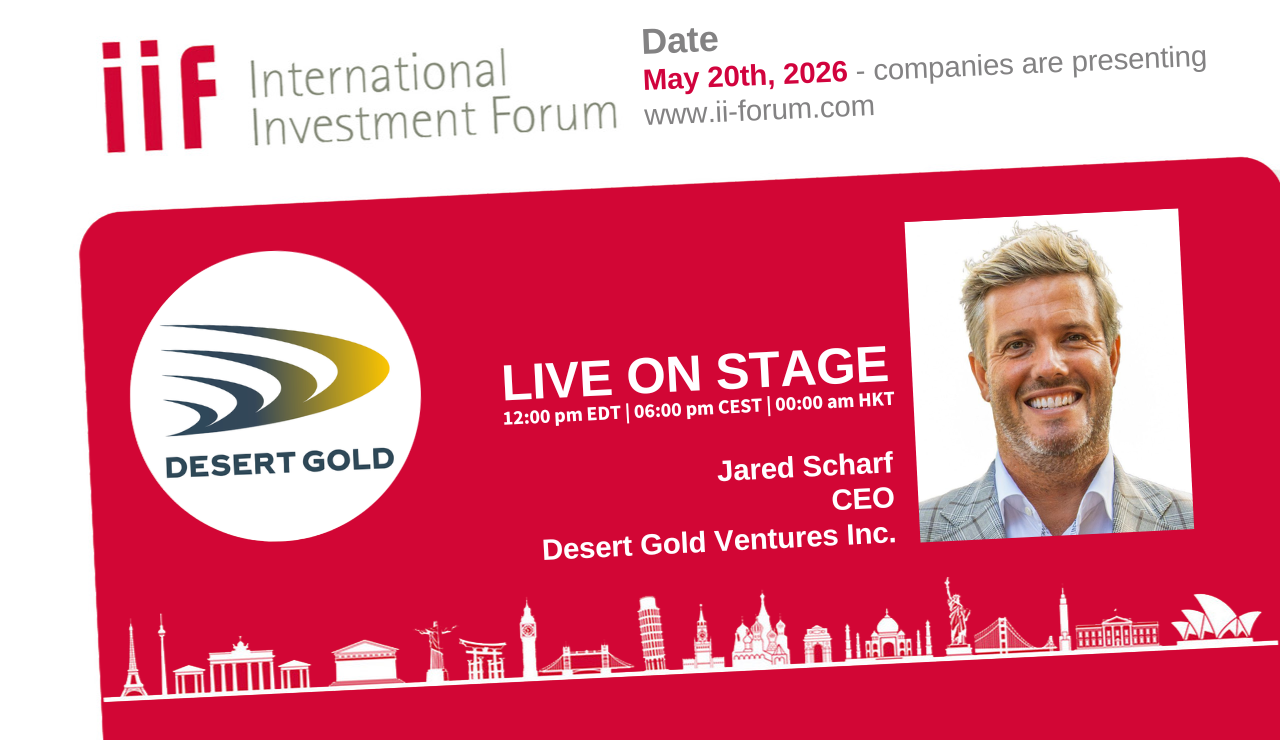
Management relies on a deep understanding of local dynamics and leverages informal networks, which are often more reliable than government guarantees in times of crisis. This operational approach enables the company to tap into resources that would be considered difficult to access under purely Western risk models.
Desert Gold: Top Drilling Results Near Major Mines
The SMSZ project also benefits from its excellent geological location on one of West Africa’s most significant gold structures. Experts familiar with the company and the local situation emphasize that Desert Gold has already identified over twenty gold zones through targeted exploration programs, all of which offer the potential for large-scale production. CEO Jared Scharf’s goal is to transform the company from a pure explorer into a producer, with the existing infrastructure of the surrounding major mines significantly facilitating logistics and market access.
Mali: Investing Beyond Traditional Risk Models
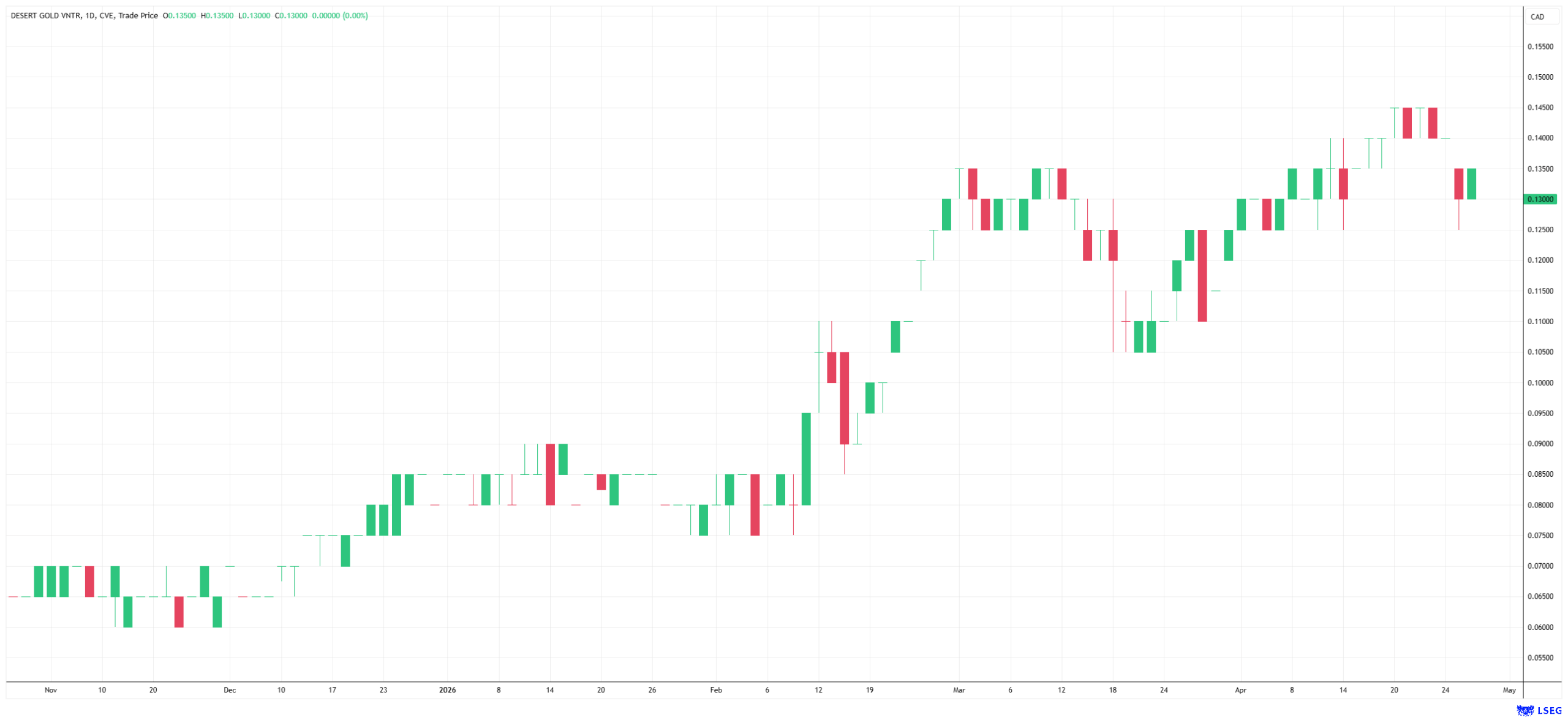
In the capital markets, the current situation in Mali presents an opportunity: the discrepancy between perceived political risk and the actual operational continuity of the gold mines often leads to asset undervaluation in the region. Analysts emphasize that gold is sought as a safe haven during periods of geopolitical instability, which can drive prices higher and significantly expand margins for producers in Mali.
Those who understand the mechanisms of “Mining in the Grey Zone” recognize that companies like Desert Gold are advancing their projects not despite, but precisely because of their mastery of local complexities. In summary, Mali remains a global gold hotspot despite recent events. Barrick Mining and B2Gold demonstrate that large-scale mines in the country have a future. For investors willing to think outside the box, the Malian gold sector offers a rare combination of geological excellence and politically driven valuation discounts in the current environment. It is precisely in these grey zones, such as the one currently in Mali, that informed, risk-aware investors with experience can turn the situation to their advantage.
Conflict of interest
Pursuant to §85 of the German Securities Trading Act (WpHG), we point out that Apaton Finance GmbH as well as partners, authors or employees of Apaton Finance GmbH (hereinafter referred to as “Relevant Persons”) currently hold or hold shares or other financial instruments of the aforementioned companies and speculate on their price developments. In this respect, they intend to sell or acquire shares or other financial instruments of the companies (hereinafter each referred to as a “Transaction”). Transactions may thereby influence the respective price of the shares or other financial instruments of the Company.
In this respect, there is a concrete conflict of interest in the reporting on the companies.
In addition, Apaton Finance GmbH is active in the context of the preparation and publication of the reporting in paid contractual relationships.
For this reason, there is also a concrete conflict of interest.
The above information on existing conflicts of interest applies to all types and forms of publication used by Apaton Finance GmbH for publications on companies.
Risk notice
Apaton Finance GmbH offers editors, agencies and companies the opportunity to publish commentaries, interviews, summaries, news and the like on news.financial. These contents are exclusively for the information of the readers and do not represent any call to action or recommendations, neither explicitly nor implicitly they are to be understood as an assurance of possible price developments. The contents do not replace individual expert investment advice and do not constitute an offer to sell the discussed share(s) or other financial instruments, nor an invitation to buy or sell such.
The content is expressly not a financial analysis, but a journalistic or advertising text. Readers or users who make investment decisions or carry out transactions on the basis of the information provided here do so entirely at their own risk. No contractual relationship is established between Apaton Finance GmbH and its readers or the users of its offers, as our information only refers to the company and not to the investment decision of the reader or user.
The acquisition of financial instruments involves high risks, which can lead to the total loss of the invested capital. The information published by Apaton Finance GmbH and its authors is based on careful research. Nevertheless, no liability is assumed for financial losses or a content-related guarantee for the topicality, correctness, appropriateness and completeness of the content provided here. Please also note our Terms of use.
Stockhouse does not provide investment advice or recommendations. All investment decisions should be made based on your own research and consultation with a registered investment professional. The issuer is solely responsible for the accuracy of the information contained herein. For full disclaimer information, please click here.