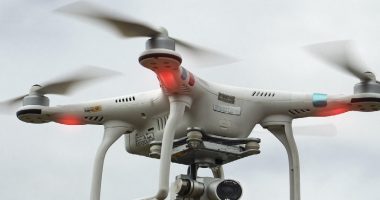


On the Path to an Integrated Aerospace Ecosystem
Canadian company Volatus Aerospace is increasingly evolving from a traditional drone provider into a diversified technology and security services provider. While many competitors either build pure hardware or serve individual, specialized applications, the company pursues a significantly more comprehensive approach across the entire value chain, which creates strategic relevance. Volatus combines operational flight services, pilot training, maintenance, data analysis, software solutions, and AI-supported security architecture under one roof in its service portfolio.
The market has so far underestimated the extent of the industry’s current structural change. Modern conflicts increasingly demonstrate that autonomous systems are no longer merely supplementary tools but central components of military infrastructure. Today, drones handle reconnaissance, target acquisition, electronic warfare, and real-time operational control. At the same time, demand for automated aerial systems is growing rapidly in the civilian sector. Energy providers, pipeline operators, mining companies, and infrastructure firms are seeking solutions to cut costs, reduce risks, and efficiently monitor large areas.
Thinking Ahead: The New Defence Cycle Begins Now
The current geopolitical situation is accelerating the global adoption of autonomous security systems. The war in Ukraine, escalations in the Middle East, and increasing tensions within critical NATO airspaces are fundamentally reshaping the priorities of Western defence strategies. Military decision-making processes are visibly shifting away from purely traditional weapon systems toward flexible, cost-effective, and rapidly scalable drone platforms.
Volatus stands to benefit in several ways. On one hand, there are already NATO-related training and service contracts in place; on the other hand, the company is massively expanding its industrial base in Québec. A production and integration platform for military long-range drones is currently being built in Mirabel. The long-term securing of the location, as well as investments in manufacturing capacity, suggest that management is already preparing for significantly larger government and defence programs. The political component is of particular interest to investors. Canada is increasingly relying on domestic defence suppliers to build more independent strategic supply chains. For Volatus, this very development could become a key growth driver.
Software, AI, and Operational Platform Solutions are Becoming Margin Drivers
However, the real valuation driver in the long term may lie less in the hardware itself and more in the software and data architecture. With the SKYDRA platform, Volatus is addressing the rapidly growing market for counter-UAS systems—that is, the detection, tracking, and potential Defence against hostile drones. Recent conflicts impressively demonstrate just how critical these capabilities are likely to become in the future. Modern security architecture no longer ends with the deployment of one’s own drones. The ability to identify and neutralize enemy systems at an early stage is also becoming increasingly crucial.
This area is complemented by the AI structure V-Cortex, on which the company is working intensively. Should Volatus succeed in establishing a recurring SaaS or data-based revenue model from this, the company’s valuation profile could change fundamentally. Software-based aerospace models are traditionally valued significantly higher on the capital markets than pure hardware providers with cyclical project business. This is precisely why institutional investors are now paying less attention to individual drone models and more to platform capabilities, data integration, and recurring revenue. Operationally, the first signs of this transformation are already emerging. Despite still-weak quarterly figures, the gross margin recently rose to around 35%, reaching the highest level for a first quarter in the company’s history. This suggests that higher-margin service and software segments are slowly gaining importance. At the same time, the liquidity position remained solid, which continues to provide the company with strategic flexibility.
CEO Glen Lynch in his latest interview with IIF host Lyndsay Malchuk on building a new drone ecosystem.
And Now the US Launches the “Drone Dominance Program”: A Potential Game-Changer
However, what is arguably the most significant development of the year so far for Volatus could come from the United States. The company was invited as one of only 48 companies to the Phase II qualification round of the US Department of Defence’s “Drone Dominance Program.” This selection alone carries significant weight, as the program is currently one of the most ambitious military drone initiatives in North America. The overall program has a budget of approximately USD 1.1 billion and aims to establish a highly scalable Western drone supply chain with more than 200,000 cost-effective units by 2027. The structure of the selection process is particularly noteworthy. Instead of traditional bidding processes, the Pentagon is relying on live operational tests under realistic combat conditions. What matters, therefore, is not the best sales proposal but actual operational capability under electronic jamming, in poor visibility, and under tactical pressure.
This could open up enormous leverage for Volatus. Prototype and production contracts worth at least USD 300 million are expected to be awarded as early as Phase II. The procurement targets include up to 30,000 drones for various operational applications. Particularly attractive is the opportunity to establish itself as a preferred supplier within US defence structures over the long term. Whoever clears this hurdle gains not only revenue potential but also strategic credibility within Western security architectures. Added to this is another aspect that many market participants have so far barely factored in: tighter supply chain regulations increasingly favour suppliers from allied nations with controllable production chains. A presence in Canada, the UK, and Norway could therefore offer structural advantages. In a market where geopolitical reliability is becoming increasingly more important than pure production costs, this factor is gaining massive significance.
Capital Markets Discover the Second Tier of the DefenceTech World
The stock market is now slowly beginning to realize that the next big wave in Defence may no longer be limited exclusively to traditional defence contractors. While many established defence stocks have already reached ambitious valuations, the next generation of autonomous security and drone systems is increasingly coming into focus. Volatus Aerospace is currently evolving visibly from a small drone provider into an integrated defence and aerospace platform with growing geopolitical relevance. In particular, participation in the US Department of Defence’s multi-billion-dollar “Drone Dominance Program” could prove to be a decisive turning point in the medium term. Should the company demonstrate operational capability there and advance to the next program phases, perception on the capital market would likely change radically.
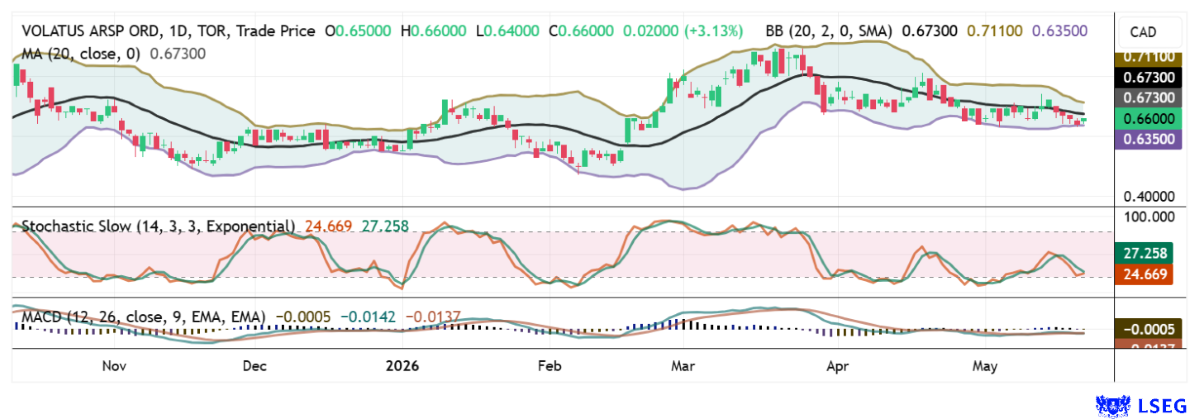
Volatus Aerospace is ready for its next leap, with momentum clearly accelerating! Last week, the stock (FLT) was trading around EUR 0.42 or CAD 0.66, while LSEG Refinitiv analysts have 12-month price targets ranging from CAD 0.90 to CAD 1.25. It should not be forgotten that the company has now set all the key strategic foundations and is increasingly securing new contracts. As a result, the next quarter could already deliver very different figures. By then, however, the share price may already be at a significantly higher level!
Conflict of interest
Pursuant to §85 of the German Securities Trading Act (WpHG), we point out that Apaton Finance GmbH as well as partners, authors or employees of Apaton Finance GmbH (hereinafter referred to as “Relevant Persons”) currently hold or hold shares or other financial instruments of the aforementioned companies and speculate on their price developments. In this respect, they intend to sell or acquire shares or other financial instruments of the companies (hereinafter each referred to as a “Transaction”). Transactions may thereby influence the respective price of the shares or other financial instruments of the Company.
In this respect, there is a concrete conflict of interest in the reporting on the companies.
In addition, Apaton Finance GmbH is active in the context of the preparation and publication of the reporting in paid contractual relationships.
For this reason, there is also a concrete conflict of interest.
The above information on existing conflicts of interest applies to all types and forms of publication used by Apaton Finance GmbH for publications on companies.
Risk notice
Apaton Finance GmbH offers editors, agencies and companies the opportunity to publish commentaries, interviews, summaries, news and the like on news.financial. These contents are exclusively for the information of the readers and do not represent any call to action or recommendations, neither explicitly nor implicitly they are to be understood as an assurance of possible price developments. The contents do not replace individual expert investment advice and do not constitute an offer to sell the discussed share(s) or other financial instruments, nor an invitation to buy or sell such.
The content is expressly not a financial analysis, but a journalistic or advertising text. Readers or users who make investment decisions or carry out transactions on the basis of the information provided here do so entirely at their own risk. No contractual relationship is established between Apaton Finance GmbH and its readers or the users of its offers, as our information only refers to the company and not to the investment decision of the reader or user.
The acquisition of financial instruments involves high risks, which can lead to the total loss of the invested capital. The information published by Apaton Finance GmbH and its authors is based on careful research. Nevertheless, no liability is assumed for financial losses or a content-related guarantee for the topicality, correctness, appropriateness and completeness of the content provided here. Please also note our Terms of use.
Stockhouse does not provide investment advice or recommendations. All investment decisions should be made based on your own research and consultation with a registered investment professional. The issuer is solely responsible for the accuracy of the information contained herein. For full disclaimer information, please click here.