

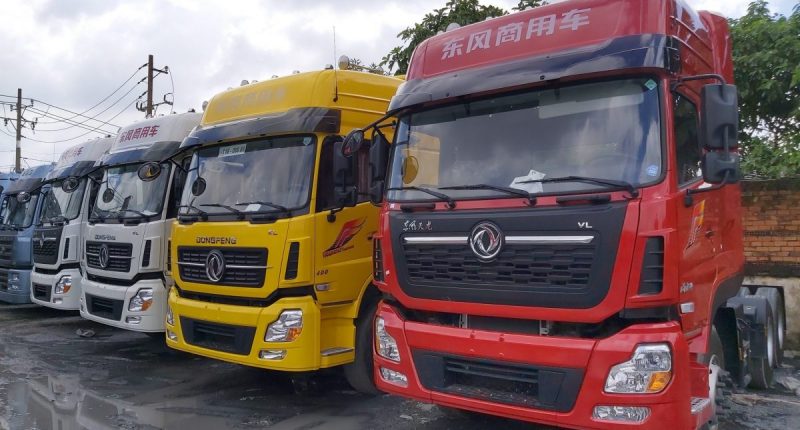
When geopolitical crises send oil prices soaring and Brussels simultaneously tightens CO2 regulations for trucks, the transportation industry comes under immense pressure. The combination of war-driven supply fears and strict EU climate rules suddenly propels alternative powertrains into the economic spotlight. While battery-powered trucks score points in distribution transport, fuel cells are experiencing a renaissance on long-haul routes. Amid this tension, three players positioned along the entire value chain are stepping into the spotlight: Norwegian electrolyser specialist Nel ASA, cleantech specialist Pure One, and commercial vehicle giant Daimler Truck.
Nel ASA – A Technological Fresh Start
The past year was anything but easy for Norwegian electrolyser specialist Nel ASA. The 2025 figures show a significant decline in revenue and deep red numbers. But a closer look reveals that a clean slate was deliberately created here. The management team led by CEO Håkon Volldal seized the opportunity to clear the balance sheet of legacy burdens while simultaneously significantly streamlining the cost base. The workforce was reduced, and the cash burn rate fell by over 40%. What remains is a company that has strategically realigned itself and is well-padded with solid liquidity of approximately EUR 140 million.
While the public focused on the weak quarterly figures, Nel worked behind the scenes on what really matters to investors: the next generation of technology. The new pressure-based alkali platform, which officially launches in May, promises real quantum leaps. Space requirements are expected to be reduced by up to 80%, and total system costs could drop by 40–60%. The standardized container solutions can be installed much more quickly and are ideally suited for supplying hydrogen to trucks, ships, and heavy-duty vehicles. This is precisely where the key to decarbonizing transportation lies – where battery-electric solutions often reach their limits.
Despite all the challenges of the past year, there are clear signs that demand for Nel’s technology remains strong. Order intake in the final quarter of 2025 surged to the second-highest level in the company’s history, driven by major orders in the PEM sector. A 40 MW project in Norway and repeat orders from Switzerland demonstrate that customers trust the systems. With an order backlog equivalent to approximately EUR 120 million and support from the EU Innovation Fund in the amount of EUR 135 million for the new production line, Nel has sufficient leeway to manage the market launch. The stock is currently trading at EUR 0.20.
Pure One – From Hydrogen Player to Comprehensive Energy Transition Solution
Pure One (ISIN: AU0000442865) specializes in clean mobility and energy solutions. The company offers a wide range of zero-emission commercial vehicles powered by electricity or hydrogen. In addition, the company operates hydrogen production facilities as well as storage and refueling infrastructure. In partnership with Advanced Manufacturing Queensland (AMQ), the company has agreed to assemble hydrogen vehicles in Brisbane and has also secured the marketing rights for the all-electric Ford F-150 Lightning in Australia. At the same time, an agreement with the US company Utility Global is opening up the American market. Pure One supplies fuel cell vehicles, while Utility Global provides the necessary hydrogen supply. This integrated approach is a smart choice. Fleet operators and municipalities get everything from a single source without having to worry about compatibility issues. The recent partnerships with Advanced Manufacturing Queensland for local vehicle assembly and with Utility Global for the US market demonstrate that management is serious about scaling up.
At the same time, through its subsidiary Eastern Gas Corporation, Pure One owns highly attractive gas assets in the Cooper Basin, which are gaining strategic importance in the current market environment. The Australian grid operator AEMO is already warning of structural supply gaps starting in 2028. This is precisely when the depleted offshore fields in Bass Strait will be producing less, and gas-fired power plants will need to fill the gaps left by the phase-out of coal. Eastern Gas’s Windorah project is located in the continent’s most productive onshore basin, embedded within existing pipeline infrastructure. This drastically reduces development costs and shortens the time to first cash flow. Comparisons with already highly valued pure-play gas explorers suggest that the market has so far barely priced in this value for Pure One.
On February 26, the decisive step followed. Eastern Gas Corporation was traded independently on the stock exchange for the first time. The IPO at AUD 0.20 per share was significantly oversubscribed. This is a clear signal that the market recognizes the value of the spun-off gas assets. Pure One shareholders received shares in the new gas explorer, while the parent company can now focus fully on its core cleantech business. In terms of market capitalization, Eastern Gas is valued at AUD 18 million, while Pure One stands at around AUD 26 million. The core business is thus valued at only AUD 8 million. The stock is currently trading at AUD 0.066.
Daimler Truck – Reorganizing
The past few months have been anything but smooth sailing for Daimler Truck. The 2025 fiscal year was dominated by the freight recession in North America and subdued investment by freight carriers. Group-wide sales declined by 8% to around 422,500 vehicles, while revenue in the industrial business fell to EUR 45.9 billion. Nevertheless, the manufacturer managed to defend its profitability to some extent. The operating margin of 7.8% was in line with targets. Shareholders can also look forward to a stable dividend proposal of EUR 1.90 and a new share buyback program. Order intake picked up significantly in the fourth quarter, a reliable leading indicator of a potential market recovery in 2026.
While tariffs and cost pressures shape day-to-day business, the Group is driving the decarbonization of long-haul transport with two clear technology paths. The pace has noticeably picked up for battery-electric trucks. The new eActros 400 targets customers with medium-distance routes, while the larger eActros 600 is now entering the fleets of major customers such as IKEA. With TruckCharge, Daimler Truck is also establishing a semi-public charging network to solve the chicken-and-egg problem regarding infrastructure. At the same time, the company is gearing up for long-haul operations. Starting in late 2026, a small series of 100 NextGenH2 fuel cell trucks will be delivered to selected customers.
To achieve profitable growth in the long term, Daimler Truck is realigning its strategy. The Asian business, comprising the Fuso and Hino brands, will be consolidated into the new holding company ARCHION and is slated for a listing on the Tokyo Stock Exchange in the medium term. This will not only bring in fresh capital but also sharpen the Group’s profile. At the same time, the “Cost Down Europe” cost-cutting program is in full swing, with an additional EUR 250 million planned for 2026. The outlook for the current year remains cautious, however. Due to ongoing tariff risks and geopolitical uncertainties, the Executive Board expects a return on sales of between 6% and 8%. The stock is currently trading at EUR 42.02.
While geopolitical tensions and strict EU climate regulations are increasing pressure on the transportation industry, three companies are repositioning themselves along the hydrogen value chain. Nel ASA has set the course for profitable growth with a sweeping restructuring and its new scalable alkali platform. Pure One stands out with an integrated cleantech approach, the value of which is underscored by its gas subsidiary Eastern Gas. Daimler Truck, in turn, is driving the decarbonization of long-haul transport with both technologies and is sharpening its profile through the planned IPO of its Asian business.
Conflict of interest
Pursuant to §85 of the German Securities Trading Act (WpHG), we point out that Apaton Finance GmbH as well as partners, authors or employees of Apaton Finance GmbH (hereinafter referred to as “Relevant Persons”) currently hold or hold shares or other financial instruments of the aforementioned companies and speculate on their price developments. In this respect, they intend to sell or acquire shares or other financial instruments of the companies (hereinafter each referred to as a “Transaction”). Transactions may thereby influence the respective price of the shares or other financial instruments of the Company.
In this respect, there is a concrete conflict of interest in the reporting on the companies.
In addition, Apaton Finance GmbH is active in the context of the preparation and publication of the reporting in paid contractual relationships.
For this reason, there is also a concrete conflict of interest.
The above information on existing conflicts of interest applies to all types and forms of publication used by Apaton Finance GmbH for publications on companies.
Risk notice
Apaton Finance GmbH offers editors, agencies and companies the opportunity to publish commentaries, interviews, summaries, news and the like on news.financial. These contents are exclusively for the information of the readers and do not represent any call to action or recommendations, neither explicitly nor implicitly they are to be understood as an assurance of possible price developments. The contents do not replace individual expert investment advice and do not constitute an offer to sell the discussed share(s) or other financial instruments, nor an invitation to buy or sell such.
The content is expressly not a financial analysis, but a journalistic or advertising text. Readers or users who make investment decisions or carry out transactions on the basis of the information provided here do so entirely at their own risk. No contractual relationship is established between Apaton Finance GmbH and its readers or the users of its offers, as our information only refers to the company and not to the investment decision of the reader or user.
The acquisition of financial instruments involves high risks, which can lead to the total loss of the invested capital. The information published by Apaton Finance GmbH and its authors is based on careful research. Nevertheless, no liability is assumed for financial losses or a content-related guarantee for the topicality, correctness, appropriateness and completeness of the content provided here. Please also note our Terms of use.
Stockhouse does not provide investment advice or recommendations. All investment decisions should be made based on your own research and consultation with a registered investment professional. The issuer is solely responsible for the accuracy of the information contained herein. For full disclaimer information, please click here.