

Newmont: Peace in Nevada for USD 1.95 Billion
Newmont describes itself as the world’s leading gold company. Founded in 1921, the company has been publicly traded since 1925 and remains the only gold producer in the S&P 500. In addition to gold, the company also extracts copper, zinc, lead, silver and molybdenum from the ground. Gold remains the core of its business. If demand from the Far East remains as high as it has been recently, this industry giant could be among the first to benefit. Size alone, however, is not enough. What matters most is how much of the gold price ultimately stays in the company’s bottom line.
On August 10, Newmont and Barrick settled all outstanding disputes regarding their joint venture in Nevada. Together, the two companies operate the Nevada Gold Mines there. Now they are contributing additional projects: Newmont is contributing Fiberline and Mike, while Barrick is contributing the Fourmile project. In exchange, Newmont will pay its partner USD 1.95 billion. At the same time, the agreement was updated and voting rights were reorganized. Newmont also approved the planned initial public offering (IPO) of Barrick’s North American mines. Both sides aim to fully realize the value of the joint venture in this way. This clears the way for Barrick Mining, though it remains unclear whether the IPO can actually be completed this year.
The company has also strengthened its leadership team. Peter Beaven, who served as BHP’s CFO from 2015 to 2021, has been on the board of directors since September 1. According to CEO Natascha Viljoen, his expertise is valuable for continuing to manage the portfolio in a disciplined manner. On September 28, the quarterly dividend of USD 0.26 per share was also paid out to shareholders. The payment to Barrick Mining, however, puts pressure on cash flow. If the company moves forward quickly with the additional projects in Nevada, the cost could be worth it. The third-quarter results, to be released on October 22 after the market closes, will provide more clarity.
DRC Gold: Explorer in the Vicinity of Kibali
Where are tomorrow’s gold deposits? One answer lies in the northeastern part of the Democratic Republic of the Congo. There, in the Kilo Moto greenstone belt, Vancouver-based DRC Gold has established a foothold. The Giro gold project lies about 35 km west of the Kibali mine and comprises two mining licenses covering about 497 km². A historical estimate indicates 4.10 million ounces of gold at the Kebigada deposit. Added to this is the Douze Match deposit, whose mineralization, according to the company, is similar to that of Kibali. The proximity to the mine, which produces over 600,000 ounces per year, immediately catches the eye.
On September 1, DRC Gold announced the next step. Due diligence has been completed, and the parties have signed a detailed option agreement that supersedes previous agreements. This allows DRC Gold to initially secure a 55% stake in the project company Giro Goldfields in exchange for new shares. Additional rights permit the company to increase its stake at a later date. The Congolese mining company SOKIMO retains a 35% stake. To finalize the deal, DRC Gold is now seeking approval from its shareholders and the CSE stock exchange. This would secure a project of considerable size.
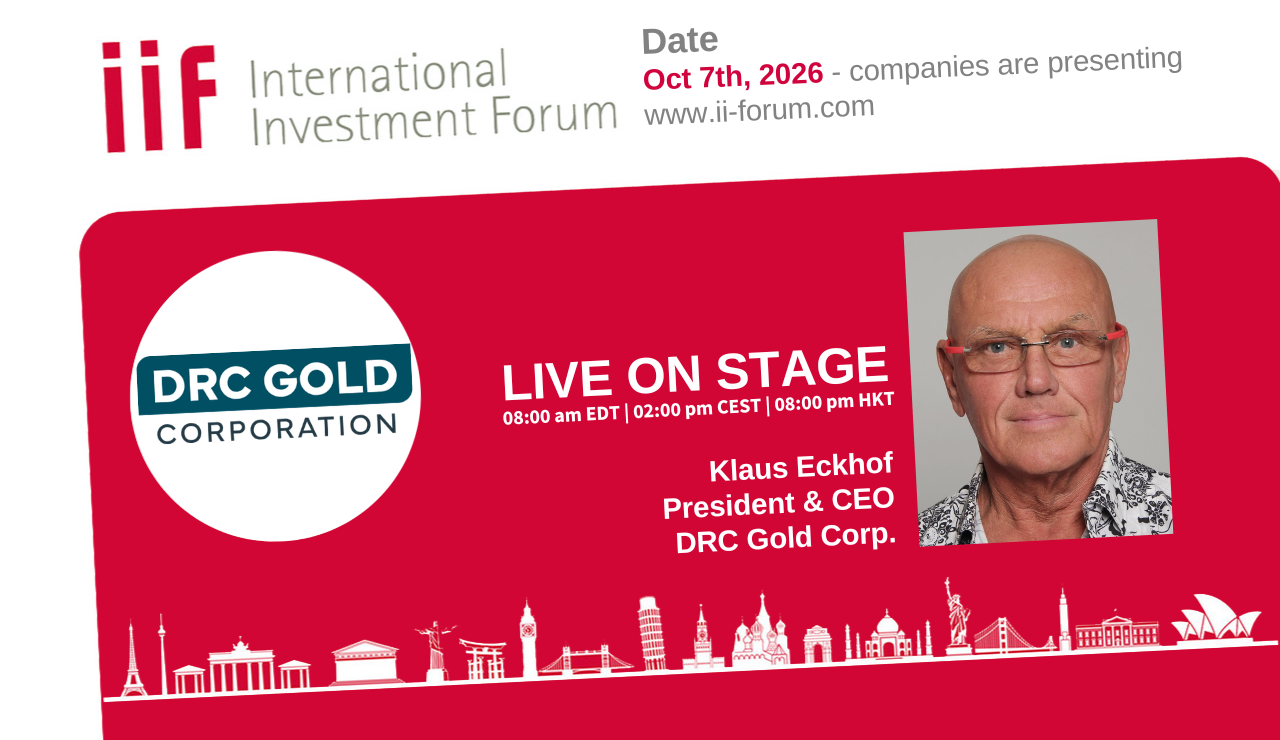
In addition, the Nizi project, whose license covers 113 km², is to be transferred to Giro Goldfields. The historic King Leopold underground mine is located there, which intermittently produced gold between 1913 and 1931. According to reports, only two of the known main veins were mined. DRC Gold is led by geologist Klaus Eckhof. He once founded Moto Goldmines, which proved reserves of over 20 million ounces in the Moto project before Randgold acquired the company. The project later became Kibali. Now Eckhof intends to acquire additional gold projects in northeast DRC. He has the experience to do so, and that should be worth its weight in gold in the Congo.

Agnico Eagle: Investing in a Quebec-Based Explorer
According to its own statements, Agnico Eagle is Canada’s largest mining company and one of the world’s largest gold producers. The Toronto-based group operates mines in Canada, Australia, Finland, and Mexico. On September 15, Agnico paid a quarterly dividend of USD 0.45 per share. Third-quarter results will be released on October 28 after the market closes, with the earnings call scheduled for the following day. Then we will see whether the high demand for gold is also having a significant impact on the Canadian company’s results. As a major producer, it certainly has a front-row seat.
On August 24, Agnico Eagle announced its investment in Radisson Mining, and the transaction was completed on September 1. For CAD 57,159,400, Agnico acquired 53,420,000 units at CAD 1.07 each. This gives Agnico an undiluted stake of approximately 10.45% in the exploration company and the right to nominate a director. The funds will be directed toward underground exploration at the O’Brien gold project in Abitibi, Québec. According to the company, Agnico strategically invests in projects with high geological potential. This allows it to get a foothold early. Whether this pays off depends on exploration success.
When it comes to growth, Agnico relies primarily on its own projects. At an industry conference on September 9, management emphasized that it is very selective when it comes to acquisitions. The conference also addressed the mine wall that had begun to shift in July at the Barnat mine in Canadian Malartic. The company had already planned to wind down open-pit mining there in early 2029. However, this means a portion of the planned production volume from the mine will be lost. If the company succeeds in implementing the projects in its pipeline as scheduled, Agnico could continue to grow under its own steam.
Gold demand from China is keeping the industry moving. Newmont has resolved its dispute with Barrick in Nevada, paying USD 1.95 billion to settle the matter. Now the company must prove that the price was worth it. DRC Gold has reached a milestone with the option agreement for Giro and is operating near one of Africa’s largest gold mines. At the helm is Klaus Eckhof, a geologist who has previously made discoveries in this region. Agnico Eagle is focusing on its own projects and, with Radisson, is securing an early equity stake in an explorer. Gold remains in demand.
Conflict of interest
Pursuant to §85 of the German Securities Trading Act (WpHG), we point out that Apaton Finance GmbH as well as partners, authors or employees of Apaton Finance GmbH (hereinafter referred to as “Relevant Persons”) currently hold or hold shares or other financial instruments of the aforementioned companies and speculate on their price developments. In this respect, they intend to sell or acquire shares or other financial instruments of the companies (hereinafter each referred to as a “Transaction”). Transactions may thereby influence the respective price of the shares or other financial instruments of the Company.
In this respect, there is a concrete conflict of interest in the reporting on the companies.
In addition, Apaton Finance GmbH is active in the context of the preparation and publication of the reporting in paid contractual relationships.
For this reason, there is also a concrete conflict of interest.
The above information on existing conflicts of interest applies to all types and forms of publication used by Apaton Finance GmbH for publications on companies.
Risk notice
Apaton Finance GmbH offers editors, agencies and companies the opportunity to publish commentaries, interviews, summaries, news and the like on news.financial. These contents are exclusively for the information of the readers and do not represent any call to action or recommendations, neither explicitly nor implicitly they are to be understood as an assurance of possible price developments. The contents do not replace individual expert investment advice and do not constitute an offer to sell the discussed share(s) or other financial instruments, nor an invitation to buy or sell such.
The content is expressly not a financial analysis, but a journalistic or advertising text. Readers or users who make investment decisions or carry out transactions on the basis of the information provided here do so entirely at their own risk. No contractual relationship is established between Apaton Finance GmbH and its readers or the users of its offers, as our information only refers to the company and not to the investment decision of the reader or user.
The acquisition of financial instruments involves high risks, which can lead to the total loss of the invested capital. The information published by Apaton Finance GmbH and its authors is based on careful research. Nevertheless, no liability is assumed for financial losses or a content-related guarantee for the topicality, correctness, appropriateness and completeness of the content provided here. Please also note our Terms of use.
Stockhouse does not provide investment advice or recommendations. All investment decisions should be made based on your own research and consultation with a registered investment professional. The issuer is solely responsible for the accuracy of the information contained herein. For full disclaimer information, please click here.