
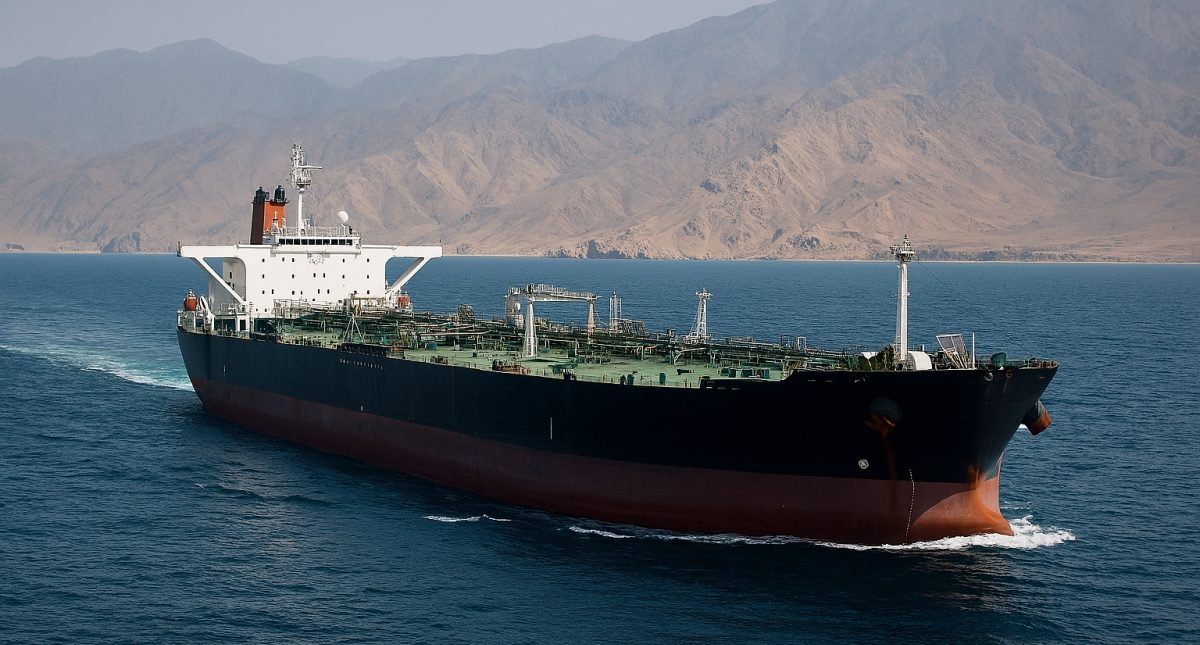

- Oil prices fell sharply as the U.S.–Iran agreement reduces geopolitical risk and restores access to a key global shipping route
- The reopening of the Strait of Hormuz removes a major supply disruption, but markets may take months to fully normalize
- Ongoing uncertainty around shipping safety, insurance costs, and possible future transit fees could limit further downside in oil prices
- Energy stocks face mixed impacts, with upstream producers pressured by lower crude prices while broader markets benefit from reduced volatility
Global energy markets are reacting swiftly to a diplomatic breakthrough between the United States and Iran, with oil prices falling to their lowest levels in nearly three months as investors reassess geopolitical risk in one of the world’s most critical energy corridors.
The agreement—set to be formally signed in Geneva later this week—would end a U.S. blockade of Iranian ports and reopen the Strait of Hormuz, a chokepoint that handles roughly one-fifth of global oil flows. The prospect of normalized shipping through the waterway has already removed a substantial “risk premium” that had been priced into crude markets during the 15-week conflict.
Brent crude has fallen sharply following the announcement, reflecting growing expectations that supply disruptions in the Persian Gulf may begin to ease.
This article is a journalistic opinion piece that has been written based on independent research. It is intended to inform investors and should not be taken as a recommendation or financial advice.
The recent drop in oil prices highlights how quickly geopolitical risk can reshape energy markets. During the conflict, fears of a sustained closure of the Strait of Hormuz—through which about 20 million barrels per day typically transit—triggered one of the largest oil supply shocks in modern history.
Crude prices surged as traders priced in worst-case scenarios, including prolonged export disruptions and infrastructure damage across the Gulf.
Now, with a ceasefire and reopening on the table, that premium is unwinding. Historically, oil markets have shown extreme sensitivity to shifts in Middle East tensions, with price spikes and subsequent declines often tied more to perceived risk than actual supply loss.
For investors, the current move lower reflects a familiar pattern: geopolitical de-escalation tends to depress oil prices at least in the short term, even if underlying fundamentals remain tight.
Why the downside may be limited
Despite the initial sell-off, analysts caution that a full normalization of oil flows—and prices—may take months.
Even with a formal agreement in place, shipping through the Strait of Hormuz is not expected to immediately return to pre-conflict levels. Insurance costs remain elevated, tanker operators are cautious, and recent attacks on vessels have left the industry wary of rapid re-entry.
More broadly, reopening a chokepoint is not the same as restoring a fully functioning supply chain. Years of precedent show that energy logistics require sustained confidence from shippers, insurers, and producers—not just diplomatic assurances.
At the same time, conflicting signals from Iran add a new layer of uncertainty. Iranian officials have indicated that while shipping may be toll-free during an initial 60-day negotiation window, fees could be imposed afterward as Tehran seeks to monetize transit through the Strait. That proposal echoes earlier periods when informal “tolls” or security payments distorted shipping costs and trade flows.
If implemented, such fees could effectively replace part of the geopolitical risk premium with a structural cost embedded in global oil pricing.
Implications for energy stocks
For energy equities, the impact of the agreement is likely to diverge across subsectors.
Upstream producers (Oil & gas E&P)
Lower crude prices typically weigh on earnings expectations for exploration and production companies, particularly those with high operating leverage to spot prices. The recent decline in benchmarks may pressure share prices in the near term, especially for U.S. shale producers that benefited from elevated prices during the conflict.
Integrated majors
Large integrated oil companies may be more insulated. While lower oil prices reduce upstream revenue, improved shipping conditions and lower input volatility can support refining margins and downstream operations.
Oilfield services
Companies tied to drilling activity could face a lagged impact. If lower prices persist, capital spending by producers may soften, affecting demand for services over time.
Shipping and midstream
A reopening of the Strait could benefit tanker operators and midstream firms by restoring volumes, though continued security concerns may keep freight rates and insurance premiums elevated.
Broader market effects
The agreement’s influence extends beyond energy stocks.
Lower oil prices can ease inflationary pressures and provide a modest tailwind to consumer-facing sectors, while also influencing central bank expectations. At the same time, the removal of extreme tail risk in the Middle East is broadly supportive for global equities, as evidenced by rising U.S. stock futures following the announcement.
However, the situation remains fluid. Ongoing tensions—particularly Israel’s continued military posture in Lebanon and unresolved aspects of the agreement—highlight the fragility of the ceasefire.
The bottom line for investors
For now, the market reaction underscores a key principle: oil prices are driven as much by perceived risk as by actual supply.
The U.S.–Iran agreement removes a major source of immediate disruption, prompting a sharp repricing in crude. But structural uncertainty—including shipping safety, potential transit fees, and unresolved regional tensions—suggests volatility is likely to remain elevated.
In practical terms:
- Short term: bearish for oil prices and upstream energy stocks
- Medium term: dependent on whether shipping normalizes and agreements hold
- Long term: could introduce new structural costs into global energy trade
For investors, the story is less about a definitive end to disruption—and more about the transition from acute crisis to a still-uncertain new equilibrium in global energy markets.
Join the discussion: Find out what the Bullboards are saying about oil and gas, and check out Stockhouse’s stock forums and message boards.