

ArcelorMittal Secures Raw Materials for Its Own Transformation
Steel producer ArcelorMittal is attempting to mitigate the looming shortages of raw materials through aggressive vertical integration. The company relies on a diversified business model that links steel production to its own mining operations to protect itself against price fluctuations in spot markets. Nevertheless, the commissioning of the new electric arc furnace at the Calvert plant in the US, which has an annual capacity of 1.5 million tons, alone requires immense additional quantities of high-purity iron.
To secure the massive raw material requirements of the new furnaces, the group has acquired several scrap recycling companies in recent years. The first quarter of 2026 was profitable for ArcelorMittal, with an operating profit of USD 753 million and a net profit of USD 575 million. However, high investments of USD 1.3 billion led to a significant increase in net debt to USD 9.3 billion. This debt burden illustrates how capital-intensive the transition to green steel is and how great the pressure is to secure resources in the future as well.
thyssenkrupp: Restructuring and High Pressure for Impairment Charges in the Steel Business
The long-established German conglomerate thyssenkrupp is facing considerable resistance as part of its realignment. Management aims to transform the highly diversified industrial group into a pure financial holding company to enable individual segments, such as Steel Europe or Marine Systems, to operate independently. However, the sluggish state of the European core market is weighing heavily on the group’s profitability.
The Steel Europe division, which is under extreme pressure to transform, recorded massive impairment charges in the 2024/2025 fiscal year. On the stock market, this crisis is reflected in a massive valuation discount—the stock currently has a market capitalization of only around EUR 6.6 billion. To close the difficult-to-recover technological gap versus competitors such as ArcelorMittal, thyssenkrupp urgently requires access to high-purity iron ore pellets.
Strategic Resources as a Response to the Raw Materials Shortage
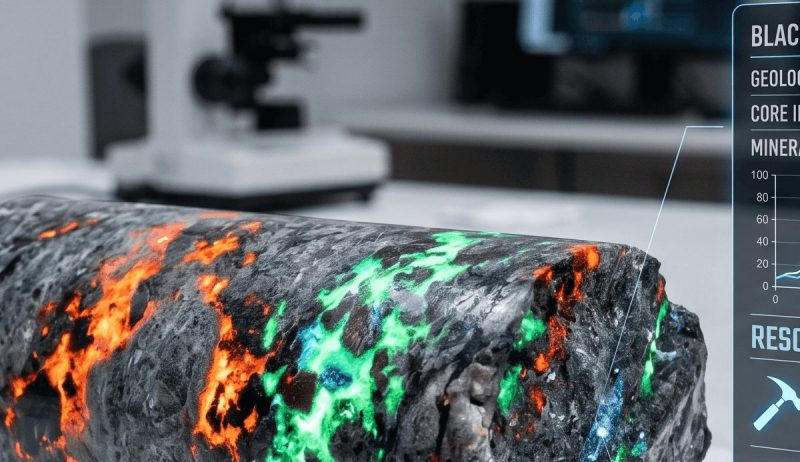
This is precisely the bottleneck that the Canadian development company Strategic Resources aims to resolve. The business model is based on a fully integrated industrial value chain for the extraction and processing of vanadium, high-purity iron, and titanium. At its heart is the BlackRock project in the Lac-Doré complex in the Canadian province of Quebec, which is 100% owned by the group. A feasibility study confirms the project’s outstanding economic metrics over a 39-year lifespan.
Official reserves for the open-pit mining operation total 127.8 million tons of ore with an average in-situ grade of 0.46% vanadium pentoxide and 40.2% iron oxide. The development plan from 2022 anticipates an average annual production of 526,000 tons of high-purity pig iron and 4,400 tons of ferrovanadium once Phase 3 is fully operational. Partly due to extremely low energy costs thanks to hydropower, the all-in sustaining costs (AISC) after by-product credits amount to a competitive USD 306 per ton of pig iron, which already makes the project appear extremely robust economically.

Global Alliances, European Wild Cards, and Strong Shareholder Structures
To address the significant capital requirements, Strategic is currently pushing forward with Phase 1, which involves the construction of an iron ore pellet plant with an annual capacity of 4 million tons at the deep-water port of Port Saguenay. To finance preliminary work, the company recently initiated a LIFE capital increase to raise CAD 10 million. An agreement with Tacora Resources is intended to secure raw materials for the first phase, including the supply of high-grade iron ore from the Scully Mine. In addition to the BlackRock project, Strategic Resources holds a European wild card in the form of the Mustavaara project in Finland, which, according to a preliminary economic feasibility study, contains an additional 103.7 million tons of magnetite ore in the measured and indicated categories.
According to data from the United States Geological Survey, of the 110,000 metric tons of vanadium mined worldwide, 82,000 metric tons come from China alone. As the transformation of industry giants ArcelorMittal and thyssenkrupp threatens to fail without pure pig iron, Strategic Resources is moving into the spotlight. Since the company has already signed off-take agreements and announced in April that it is working with Tyfast Energy to advance a closed-loop North American supply chain for battery-grade vanadium oxide, investors should keep an eye on Strategic Resources.

Conflict of interest
Pursuant to §85 of the German Securities Trading Act (WpHG), we point out that Apaton Finance GmbH as well as partners, authors or employees of Apaton Finance GmbH (hereinafter referred to as “Relevant Persons”) may hold shares or other financial instruments of the aforementioned companies in the future or may bet on rising or falling prices and thus a conflict of interest may arise in the future. The Relevant Persons reserve the right to buy or sell shares or other financial instruments of the Company at any time (hereinafter each a “Transaction”). Transactions may, under certain circumstances, influence the respective price of the shares or other financial instruments of the Company.
In addition, Apaton Finance GmbH is active in the context of the preparation and publication of the reporting in paid contractual relationships.
For this reason, there is a concrete conflict of interest.
The above information on existing conflicts of interest applies to all types and forms of publication used by Apaton Finance GmbH for publications on companies.
Risk notice
Apaton Finance GmbH offers editors, agencies and companies the opportunity to publish commentaries, interviews, summaries, news and the like on news.financial. These contents are exclusively for the information of the readers and do not represent any call to action or recommendations, neither explicitly nor implicitly they are to be understood as an assurance of possible price developments. The contents do not replace individual expert investment advice and do not constitute an offer to sell the discussed share(s) or other financial instruments, nor an invitation to buy or sell such.
The content is expressly not a financial analysis, but a journalistic or advertising text. Readers or users who make investment decisions or carry out transactions on the basis of the information provided here do so entirely at their own risk. No contractual relationship is established between Apaton Finance GmbH and its readers or the users of its offers, as our information only refers to the company and not to the investment decision of the reader or user.
The acquisition of financial instruments involves high risks, which can lead to the total loss of the invested capital. The information published by Apaton Finance GmbH and its authors is based on careful research. Nevertheless, no liability is assumed for financial losses or a content-related guarantee for the topicality, correctness, appropriateness and completeness of the content provided here. Please also note our Terms of use.
Stockhouse does not provide investment advice or recommendations. All investment decisions should be made based on your own research and consultation with a registered investment professional. The issuer is solely responsible for the accuracy of the information contained herein. For full disclaimer information, please click here.