

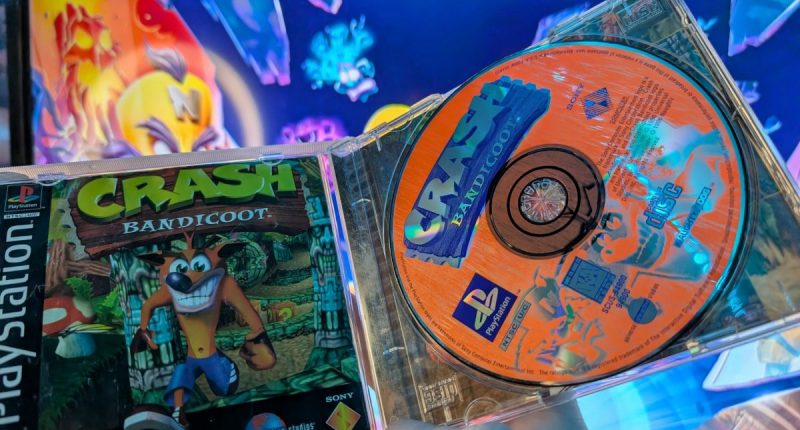
- Sony (NYSE:SONY) will stop producing physical PlayStation game discs in January 2028, moving entirely to digital distribution as digital sales now account for roughly 85 per cent of PlayStation game purchases
- The shift should boost Sony’s software margins by eliminating manufacturing and shipping costs, but it reduces consumer choice and further limits ownership rights for gamers
- The announcement strengthens expectations that the PlayStation 6 will be an all-digital console, potentially arriving during a period of rising hardware costs driven by ongoing memory shortages
- Sony stock (NYSE:SONY) last traded at US$20.72
Sony (NYSE:SONY) shares closed Thursday trading 2.5 per cent higher following the company’s announcement that it will stop producing physical discs for all new PlayStation game releases beginning in January 2028.
The stock has now gained roughly 7 per cent this week, a welcome recovery for shareholders after a difficult year that has seen Sony lose nearly 20 per cent of its value in 2026 and remain around 16 per cent below where it traded this time last year. It was just a few years ago the stock was looking at new highs and now has been steadily falling.
For investors, the move represents a major margin expansion opportunity. For consumers, however, it may be remembered as the moment PlayStation abandoned one of gaming’s most important pillars: ownership.
This article is a journalistic opinion piece that has been written based on independent research. It is intended to inform investors and should not be taken as a recommendation or financial advice.
Sony Is officially ending physical PlayStation games
In a PlayStation Blog post published on July 1, Sony Interactive Entertainment confirmed that physical game disc production for all new PlayStation titles will end in January 2028. Games released before that deadline will continue to receive physical editions, but future releases will be distributed digitally through the PlayStation Store and retail partners.
Sid Shuman, senior director of Sony Interactive Entertainment content communications, described the decision as a response to changing consumer habits.
“As consumer preferences and the broader entertainment industry continue to shift away from physical discs to digital, physical game disc production for all new games releasing on PlayStation consoles will be discontinued starting January 2028,” he wrote on the PlayStation Blog.
Sony’s justification is straightforward. According to the company’s latest financial results, approximately 85 per cent of PlayStation full-game software sales are now digital. Physical games account for only 15 per cent of purchases.
Consumers were gradually pushed toward digital
While Sony is presenting the decision as following consumer demand, it is worth noting that consumers have been steadily pushed toward digital purchases for years.
The launch of the Digital Edition PS5 offered players a cheaper entry point into the PlayStation ecosystem. However, adding Sony’s optional disc drive effectively removes much of that savings advantage. As a result, many consumers selected digital-only hardware even if they would have preferred physical media.
Convenience has also played a major role. Digital games can be purchased instantly without leaving home, pre-loaded before launch, and accessed without swapping discs. These benefits have clearly resonated with many players, helping digital purchases climb from roughly 13 per cent of PlayStation game sales during the PS4 era to nearly 80-85 per cent today.
Why investors love this move
From a greedy, I mean, investment perspective, the benefits are obvious.
Physical games require:
- Disc manufacturing
- Packaging
- Shipping
- Retail distribution
- Inventory management
Digital games eliminate nearly all of those expenses while allowing Sony to keep a larger portion of each sale.
An all-digital ecosystem also gives Sony unprecedented pricing control. Without physical copies competing at Walmart (NASDAQ:WMT), Best Buy (NYSE:BBY), Amazon (NASDAQ:AMZN), GameStop (NYSE:GME), and other retailers, Sony gains more influence over the pricing environment surrounding PlayStation software.
Investors see higher margins, lower costs, and greater control over software revenue. That’s a compelling combination for a company that has been looking for positive catalysts after a challenging year for its stock.
Why gamers are concerned
The downside is consumer choice.
Physical media has historically allowed gamers to compare prices across multiple stores, buy used copies, borrow games from friends, trade games in, and build collections that remain playable decades later.
Those options disappear in a digital-only future.
Perhaps the biggest concern is ownership.
When players buy a physical disc, they own a copy of that game. When players buy a digital game, they typically purchase a license tied to an account and storefront.
If a digital game is delisted, obtaining it becomes significantly more difficult. Titles such as Cruis’n Blast, which was recently delisted without warning, demonstrate how quickly games can effectively disappear from storefronts when licensing agreements expire. For preservationists and collectors, Sony’s decision represents another step toward a future where gamers control less of their libraries than ever before.
Physical PS5 hardware could become more valuable
One interesting side effect of Sony’s announcement is that disc-compatible PlayStation hardware may become increasingly desirable.
The standard PS5 with a built-in disc drive and Sony’s standalone disc drive accessory could see higher demand from collectors and players seeking long-term access to physical game libraries. As physical releases become limited to the next year and a half, these devices may become the preferred way to preserve access to existing disc collections.
Does this confirm an all-digital PlayStation 6?
While Sony has not announced the PlayStation 6, the January 2028 timeline strongly suggests the next generation will launch into an all-digital PlayStation ecosystem.
Industry analysts have already speculated that the timing aligns closely with the expected PS6 release window. If Sony no longer intends to manufacture game discs, there becomes little reason to include disc drive support in future systems.
The bigger concern may be cost.
Sony Interactive Entertainment president and CEO Hideaki Nishino recently stated:
“At present, however, sales are proceeding as planned, and we do not believe this has led to a decline in customer demand.”
However, market data suggests the opposite and that consumer demand may already be under pressure.
According to Circana data reported by multiple industry sources, May 2026 marked the lowest number of PlayStation consoles sold in the United States during any May since 2000. PS5 unit sales reportedly fell 58 per cent year-over-year.
Rising hardware costs aren’t going away
The timing could not be more challenging for console manufacturers.
AI data center expansion has dramatically increased demand for DRAM memory and storage components, placing upward pressure on prices across the consumer electronics market. Industry observers do not expect meaningful relief before 2028, and memory suppliers, including Micron Technology (NASDAQ:MU) have warned that tight supply conditions could persist for years.
If component costs remain elevated and Sony refuses to subsidize hardware heavily, the PlayStation 6 could become one of the most expensive mainstream consoles ever released.
A massive (64GB) opportunity for Nintendo
Sony’s retreat from physical media may create an unexpected opportunity for Nintendo (OTC Pink:NTDOF).
Nintendo remains the strongest supporter of physical retail among the major console manufacturers. Even controversial Switch 2 game-key cards maintain shelf presence and retail visibility, preserving relationships with stores and giving consumers alternative purchasing options.
As Sony embraces a fully digital future and Microsoft (NASDAQ:MSFT) reportedly moves in a similar direction, Nintendo could attract consumers who still value collecting games, trading titles, or maintaining long-term ownership of their libraries.
Greatness awaits (for subscribers)
Sony’s decision to end physical PlayStation game discs is a shareholder-friendly move that should improve software margins and reduce operating costs. It helps explain why investors reacted positively to the announcement.
But what benefits Wall Street doesn’t benefit gamers.
Consumers lose pricing competition, second-hand markets, game preservation advantages, and a degree of ownership over their libraries. Meanwhile, Sony gains greater control over distribution and pricing.
For investors, that sounds like a win.
For players, January 2028 marks the end of an era that has lasted decades.
It’s a Sony
Sony Corp. is one of the most comprehensive entertainment companies in the world, with a portfolio that encompasses electronics, music, motion pictures, mobile, gaming, robotics and financial services.
Sony stock (NYSE:SONY) closed trading 2.5 per cent higher at US$20.72 but has fallen more than 16 per cent since this time last year and is down 18 per cent from where it was at the beginning of the year.
Join the discussion: Find out what the Bullboards are saying about Sony, and check out the rest of Stockhouse’s stock forums and message boards.