

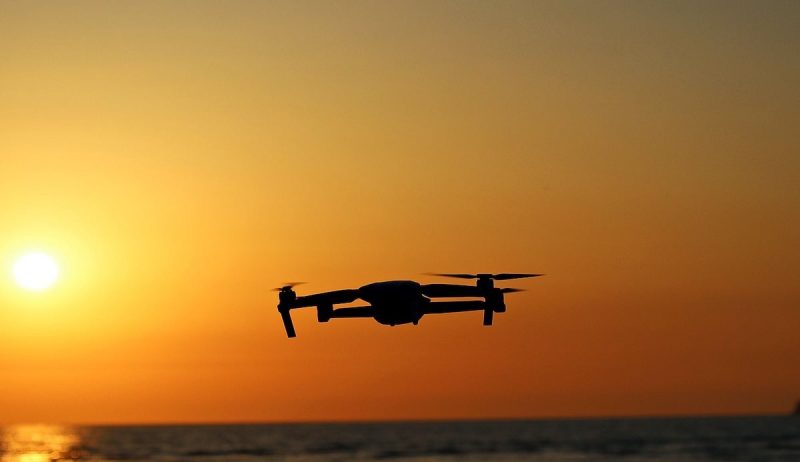
Volatus Aerospace: Breakthrough in the Domestic Market
Drones have long been more than just flying cameras. They monitor pipelines and power grids, assist fire departments during wildfires, secure borders, and provide military reconnaissance. Volatus Aerospace aims to capitalize on as many of these applications as possible. The Canadian drone specialist is evolving from a drone dealer and service provider into an integrated platform for autonomous flight systems, software, training, and defence technology.
That this strategy is more than just an attractive stock-market story is demonstrated by the most important contract in the company’s history to date. Volatus has secured a 5-year contract from the Canadian government to supply tactical ISR drone systems to the Canadian Armed Forces. ISR stands for Intelligence, Surveillance, and Reconnaissance.
An initial firm order is for 100 systems. In addition, Canada can call up to 4,900 additional units. The contract thus opens the door to a procurement path for up to 5,000 drone systems. The government framework stipulates a maximum price of CAD 5,000 per system, resulting in a theoretical total value of up to CAD 25 million. Delivery of the first tranche is scheduled to begin in the fourth quarter of 2026.
Investors should note, however, that the additional 4,900 systems are currently options only and do not constitute confirmed revenue or part of the order backlog. Whether and when Canada exercises these options is solely up to the government. Nevertheless, the contract is of enormous strategic importance. For the first time, Volatus has thus converted its qualification for the Canadian Defence Drone Initiative into a concrete order.
Moreover, the delivery will not be limited to the drones themselves. The package includes payloads, ground stations, data links, training, spare parts, maintenance, and software and firmware support. It is precisely this combination that makes the contract so attractive. Volatus not only earns revenue from the one-time sale of the hardware but can also generate additional, potentially recurring revenue through training, service, and technical support.
Volatus’s qualification in all five areas of the Defence Drone Initiative opens up further opportunities. In the future, the company will also be eligible to bid on contracts for communication systems, integration, testing, training, and new autonomous technologies. While each contract must be awarded separately, this first award gives Volatus an important reference with its own Ministry of Defence.
The stock market reacted positively. Analysts also see the contract as a potential turning point. Stifel analyst Greg MacDonald reaffirmed his “Buy” recommendation and the price target of CAD 1.00, which currently corresponds to upside of just under 60%. The expert expects Volatus to deliver the initial 100 systems this year, with potentially larger call-offs following, starting in 2027. More important than the immediate order volume, he notes, is proof that Volatus can win government defence contracts.
The latest quarterly figures, however, show that an operational breakthrough has yet to materialize. In the second quarter of 2026, Volatus generated CAD 8.4 million in revenue. Compared to the first quarter, this was a 49.5% increase, but compared to the same period last year, it marked a decline of CAD 10.6 million. This was mainly due to another defence contract worth about CAD 2.6 million, whose delivery was delayed because of supply chain issues.
The business mix showed a positive trend. Service revenue rose 59% from the first quarter, while equipment sales increased 38%. Services and training already accounted for 56% of revenue in the first half of the year. This segment is particularly attractive because it generates recurring revenue and promises higher long-term margins than the mere sale of third-party drones.
Volatus is still operating at a loss. Adjusted EBITDA was negative at CAD 4.4 million in the second quarter. The company recorded a net loss of CAD 14.1 million in the first half of the year. Operating costs rose by 48.4% as Volatus is simultaneously investing in personnel, technology, defence expertise, and its own production capacities.
Financially, the company currently has the necessary leeway to do so. At the end of June, it had CAD 59.2 million in cash, and working capital reached CAD 63.8 million. This was made possible, in part, by a capital increase of CAD 34.5 million, thereby securing the company’s expansion.
At the heart of the strategy is the facility at Montréal-Mirabel Airport, which opened in June. The approximately 53,000-square-foot facility is used for the production and integration of autonomous defence systems. The new military contract now confirms that this investment has come at the right time. In security-related tenders, Volatus can position itself as a domestic manufacturer with its own production and service base. Added to this are the company’s proprietary technologies. V-Cortex is an AI-powered flight controller with an operating system for autonomous drones. With SKYDRA, Volatus is also developing a software platform for detecting and defending against unmanned aerial vehicles. If commercialization is successful, the share of recurring and high-margin revenue could increase. In the future, Volatus aims to do more than just sell and fly drones; it also intends to generate revenue from the intelligence used to control, network, and defend against these systems.
The Canadian military contract now reduces the story’s purely speculative nature. It is the first concrete evidence that Volatus can benefit from the growing demand for sovereign drone technology. For now, the initial volume is modest, and the path to profitability is still long. However, if a significant portion of the 4,900 options are exercised and further contracts follow from the Defence Drone Initiative, 2027 could become a pivotal year for growth. For risk-conscious investors, the stock remains a speculative but extremely exciting bet on the North American drone boom, with significant upside potential.
Airbus: The Supply Chain Becomes a Top Priority
While Volatus is still building out its production base, Airbus is grappling with the consequences of its own success. Demand for commercial aircraft is enormous, with the order backlog extending over many years. As of the end of June, 9,222 commercial aircraft were in the order book. However, shortages of engines, components, and cabin interiors have long been slowing deliveries. By the end of August, Airbus had delivered 475 aircraft, up 9% from the previous year. To reach the annual target of around 870 aircraft, another 395 must be delivered in the remaining four months. That is a challenging task. A full order book is of little use if critical components do not arrive on time.
The second quarter already demonstrated how significantly higher production volumes impact profits. With revenue rising 28% to EUR 20.5 billion, adjusted operating profit increased by 54% to EUR 2.43 billion. When high fixed costs are spread across more delivered aircraft, a larger portion of each additional euro in revenue remains as profit. By 2029, Airbus aims to increase adjusted operating profit to EUR 12 to 13 billion. By comparison, the figure in 2025 was EUR 7.1 billion. A share buyback program worth EUR 5 billion underscores these ambitions. However, it remains crucial that suppliers play their part. Full order books alone do not translate into profits.
Airbus therefore intends to take greater control over critical parts. The restructuring of the struggling supplier Spirit AeroSystems serves as a blueprint. Boeing took over the larger portion, which was geared toward its own aircraft programs. Airbus secured the plants and production areas that manufacture key components for its own models.
Further acquisitions could follow in the future. This would give Airbus greater control over quality, investments, and production schedules. While this will initially cost money and tie up management resources, it could reduce dependence on financially weak suppliers. Especially with the highly sought-after A320 family, every additional aircraft delivered on time now counts.
Airbus also has an extensive defence and aerospace business. Under the project name Bromo, the group is exploring the merger of European satellite operations together with Thales and Leonardo. The potential alliance would have approximately 25,000 employees and generate about EUR 6.5 billion in revenue. The goal is to create a European counterweight to the dominant US providers.
Airbus is thus bringing civil aviation, military aircraft, satellites, and, increasingly, unmanned systems under one roof. The stock is less spectacular than Volatus, but in return offers an established business model and high visibility thanks to its well-stocked order book. For the share price to surge again, the company must get its delivery problems under control.
Analysts are optimistic: Currently, 21 banks and research firms recommend “Buy”, while only 4 analysts issue “Hold” ratings. No analysts currently recommend a “Sell”. The median price target of just under EUR 231 implies approximately 20% upside potential. However, the stock is not cheap. Estimated P/E ratios for 2026 and 2027 stand at around 27 and 23, respectively. However, given expected operating profit growth of around 19% next year, the valuation appears reasonable. For more conservative long-term investors, the Airbus stock remains an attractive addition to a portfolio.
OHB: Europe’s Bet on Independence in Space
Without satellites, modern armed forces, navigation, communication, and the precise control of autonomous systems would all grind to a halt. This is exactly where OHB comes into play. The Bremen-based group builds satellites, supplies rocket components, and manages systems from the ground. This makes OHB one of the few European stocks through which investors can directly bet on the expansion of space infrastructure.
The project pipeline is impressive. Together with Rheinmetall, OHB is bidding on a Bundeswehr project for satellite communications with a potential value of EUR 8 to 10 billion. Even winning a smaller share of the contract could significantly alter the company’s scale. Added to this is a multi-billion contract for 18 satellite platforms for the European communications network IRIS 2. By 2030, a total of 348 satellites are expected to create an independent and eavesdropping-proof alternative to networks like Starlink.
Operationally, OHB has a solid foundation. In 2025, revenue rose to EUR 1.25 billion, and operating profit reached just over EUR 125 million. The order backlog totalled EUR 3.3 billion. In the medium term, revenue is expected to climb to more than EUR 4 billion, and the operating margin is projected to reach 13%. A capital increase of about EUR 484 million will fund this expansion.
The story is not entirely without headwinds. As previously mentioned, Airbus, Thales, and Leonardo plan to bundle their satellite and space activities under Bromo. The resulting consortium would be many times larger than OHB in terms of revenue and employees and could hold advantages in major European projects. The Bremen-based group must prove that it can maintain its role as a flexible specialist alongside such a giant.
The stock’s price performance also calls for caution. The OHB share price briefly shot up from around EUR 60 to nearly EUR 680 before falling back significantly below EUR 200. The extremely low free float further amplified these swings. Following the capital increase and a partial sale by investor KKR, the freely tradable portion could now rise to just under 20%. This improves liquidity but does not prevent further volatility.
Analysts are also very confident about OHB: 8 banks and research firms recommend the stock a “Buy”, with only 1 institution rating it as “Hold”. As with Airbus and Volatus, no “Sell” recommendations currently exist. The average price target of just over EUR 300 signals further upside potential of nearly 70%. OHB thus strikes a balance between Airbus and Volatus: larger and more established than the Canadian drone specialist, but significantly more speculative than the European aircraft manufacturer. Those looking to bet on Europe’s military buildup and technological independence in space will find an interesting, albeit still volatile, stock here.
Conclusion: Three Paths to the Same Growth Market
Volatus, Airbus, and OHB cover different aspects of the same trend. Volatus provides drones, autonomous control systems, and services. Airbus stands for industrial scale, aviation, and the development of a European satellite leader. OHB offers the most direct access to Europe’s independent communications and reconnaissance infrastructure in space. Volatus holds the greatest upside potential, but also the highest risk. Airbus is the solid blue-chip stock of the trio. OHB remains an exciting specialty bet on new billion-euro contracts, though its stock performance is not for the faint of heart.
Conflict of interest
Pursuant to §85 of the German Securities Trading Act (WpHG), we point out that Apaton Finance GmbH as well as partners, authors or employees of Apaton Finance GmbH (hereinafter referred to as “Relevant Persons”) may hold shares or other financial instruments of the aforementioned companies in the future or may bet on rising or falling prices and thus a conflict of interest may arise in the future. The Relevant Persons reserve the right to buy or sell shares or other financial instruments of the Company at any time (hereinafter each a “Transaction”). Transactions may, under certain circumstances, influence the respective price of the shares or other financial instruments of the Company.
In addition, Apaton Finance GmbH is active in the context of the preparation and publication of the reporting in paid contractual relationships.
For this reason, there is a concrete conflict of interest.
The above information on existing conflicts of interest applies to all types and forms of publication used by Apaton Finance GmbH for publications on companies.
Risk notice
Apaton Finance GmbH offers editors, agencies and companies the opportunity to publish commentaries, interviews, summaries, news and the like on news.financial. These contents are exclusively for the information of the readers and do not represent any call to action or recommendations, neither explicitly nor implicitly they are to be understood as an assurance of possible price developments. The contents do not replace individual expert investment advice and do not constitute an offer to sell the discussed share(s) or other financial instruments, nor an invitation to buy or sell such.
The content is expressly not a financial analysis, but a journalistic or advertising text. Readers or users who make investment decisions or carry out transactions on the basis of the information provided here do so entirely at their own risk. No contractual relationship is established between Apaton Finance GmbH and its readers or the users of its offers, as our information only refers to the company and not to the investment decision of the reader or user.
The acquisition of financial instruments involves high risks, which can lead to the total loss of the invested capital. The information published by Apaton Finance GmbH and its authors is based on careful research. Nevertheless, no liability is assumed for financial losses or a content-related guarantee for the topicality, correctness, appropriateness and completeness of the content provided here. Please also note our Terms of use.
Stockhouse does not provide investment advice or recommendations. All investment decisions should be made based on your own research and consultation with a registered investment professional. The issuer is solely responsible for the accuracy of the information contained herein. For full disclaimer information, please click here.