

While dozens of minerals are considered critical to economic and national security, thanks to their combination of scarcity and unmatched industrial performance, few minerals, if any, are more ubiquitous across the industrial landscape than boron. Let’s paint a picture:
- In the glass industry, boron is used to produce borosilicate glass (LCD screens, solar panels, smart phones, tablets, fiber optics) and fiberglass insulation.
- In the textile industry, the metalloid is used as a fire retardant, owing to its abilities to promote charring and release water when heated.
- In the medical field, boron is key to bone health, wound healing and the absorption of certain minerals, and has also showed therapeutic benefits in prostate, cervical and lung cancer patients.
- In the agricultural field, boron is required for healthy plant development, facilitating sugar and carbohydrate production.
- In construction, it enhances the hardness of steel, is an integral part of home insolation and helps to protect wood, bricks, pipes and wires (including the fibre optic cables delivering your internet connection) from mold, fungus and insects.
- In the semiconductor industry, it helps control electrical conductivity, with researchers from MIT prizing it in the form of cubic boron as superior to silicon.
- These use-cases only scratch the surface of boron’s utility, which extends to the refrigerator and heat-resistant cookware in your kitchen, to the ceramic tiles on your floor, to the soap and shampoo by your bathtub, to the enamel lining in the tub itself.
Perhaps most urgently, boron is also an essential component across the renewable energy industry, making it a major force behind global decarbonization. Key examples include:
- Lowering energy use while improving stability and durability in lithium-ion-batteries.
- Contributing to an EV’s motor, chassis, glass, brakes and airbag to the tune of 40-50 kg per vehicle.
- Fortifying blades and drive trains in wind turbines.
- Providing glass for solar cells.
- Helping to control radiation in nuclear reactors.
- Serving as a safe and efficient storage vessel for hydrogen.
Collectively, these functions afford the mineral a starring role in the future of global industry, the green energy transition and the United Nations’ push to reach global net-zero emissions by 2050. It’s no surprise, then, that the boron market was estimated at more than US$10 billion in 2025 and is expected to grow steadily into the 2030s, propelled by the mineral’s hundreds of marketable use-cases.
That said, boron supply suffers from a major dislocation, with Rio Tinto-owned Borax in California and Turkey’s state-owned Eti Maden representing 20 per cent and 65 per cent of global supply, respectively, with a select few countries in South America distantly rounding off the top five.
This dynamic leaves the rest of the world at the mercy of an oligopoly’s pricing power when it comes to securing a reliable boron supply, with Rio Tinto’s profit margin hitting 34 per cent in 2015, according to the Australian Financial Review, Eti Maden’s profits growing by 25 times from 2004 to 2014, according to Daily Sabah, and imarc estimating boron prices at a staggering US$780 per ton in Q4 2025.
With the US Geological Survey estimating global boron reserves at only 1.1 million tons and Credit Suisse expecting demand to quintuple from 4,000 tons per year in 2020 to 50,000 tons per year by 2050, a deficit is already in place and on pace to widen over the coming years, likely pushing prices higher.
Boron’s constricted market, validated by the US and EU adding the versatile element to their official critical minerals lists, presents readers with a clear and enticing investment thesis, one where mineral projects best positioned to compete with Rio Tinto and Eti Maden, enhance economic and national security, and generate long-term shareholder value garner increasing amounts of market attention.
Boron One’s differentiated value proposition
A junior mining company squarely aligned with the diversification of global boron supply is Boron One (TSXV:BONE), market capitalization C$10.35 million, the only public company with a pure-play focus on the critical metal.
This article is disseminated in partnership with Boron One Holdings Inc. It is intended to inform investors and should not be taken as a recommendation or financial advice.
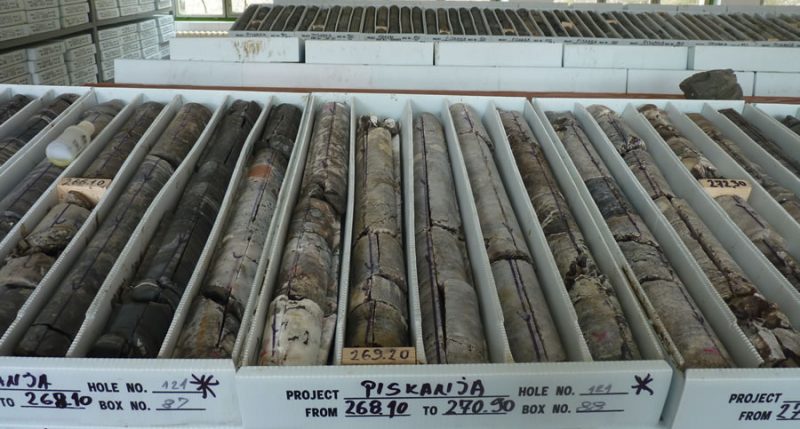
The company is striding along an early-stage, high-conviction path to boron production at its 100-per-cent owned Piskanja project in Serbia, whose world-class deposit, marked by low costs and high grades, bestow Boron One with a front-row-seat to both the renewable energy transition and the meeting of cross-industry demand.
The Piskanja project
From a bird’s eye view, the Piskanja project, located in a historical mining region 250 km south of Belgrade, benefits from a favorable business environment marked by a mining-friendly government operating under a parliamentary democracy, no restrictions on foreign asset ownership, as well as preferred trading status with the EU – with membership into the bloc currently under consideration – earning Serbia open-arms relationships with both the US and Canadian governments.
At ground level, nearby infrastructure is strong, with all-weather roads, rail, electric power and an experienced mining workforce all readily accessible, which have served Boron One well as it’s advanced the project since The Serbian Ministry of Mining and Energy awarded the company an initial exploration license in 2010. Highlight milestones include:
- Numerous mineral resource estimates, the most recent crossing the wire in 2022, delineating 1.39 million tons measured (averaging 35.59 per cent B2O3), 5.48 million tons indicated (averaging 34.05 per cent B2O3), and 284,700 tons inferred (averaging 39.59 per cent B2O3). At the imarc price quoted above, Piskanja’s resource represents more than US$5.5 billion in the ground, more than 500 times Boron One’s current market cap, placing the company’s undervaluation into stark relief.
- Piskanja further differentiates itself by hosting a high-grade resource that far outshines the boron market’s two biggest players, with Rio Tinto and Eti Maden putting up an approximately 26 per cent effort, according to Tim Daniels, Boron One’s president, who recently sat down for an interview with Stockhouse’s Ricki Lee.
- The project also bests Turkish product in terms of purity, which has been shown to contain as high as 3,800 ppm arsenic, compared to Piskanja’s only trace amounts.
- A 2022 preliminary economic assessment that yielded a post-tax net present value of C$524.9 million, including CAPEX of only C$80 million at a payback period of only 1 year. This valuation is supported by average annual production of 258,272 tons of colemanite, one of the main sources of natural boron, and 25,000 tons of boric acid, a widely used boron compound, over an estimated 16-year life-of-mine. In terms of earnings, this works out to more than C$90 million in annual EBITDA and more than C$1.2 billion in life-of-mine cash flow, with numerous leads in the broader Jarandol Basin pointing to potential resource expansion.
- Additionally, there is currently only one colemanite supplier in the world, whose monopoly over production and sales is ripe for competition, strengthening Boron One a disruptive competitive advantage.
- A 2023 feasibility study, further de-risking Piskanja’s go-to-market strategy.
- A 2025 environmental impact assessment, laying out a sustainable development pathway for the project’s multi-million-ton resource.
Piskanja’s low-cost, high-grade and large-scale resource is an ideal fit for European players keen to secure boron closer to home, with the EU entirely dependent on imports, granting the project immediate appeal that has helped it to advance along Serbia’s mine licensing process. Boron One is currently working through the second of three phases, with a focus on updating the feasibility study over the coming months, which would allow the company to enter the third and final phase and get to work on construction plans for mining and processing.
The project’s steady development has also afforded Boron One a growing partnership pipeline, including a potential multi-year commercial offtake agreement announced in March 2026, as well as a letter of intent announced in May 2025 to refurbish the nearby Pobrdje colemanite mine, which has been in operation for more than a decade, potentially offering Boron One the infrastructure it needs to rapidly expedite Piskanja’s development and path to cash flow.
This path will only be aided by a recently closed C$506,750 private placement, as well as a recently opened C$500,000-C$800,000 capital raise, to support testing and planning for future boron ore extraction, processing and sale.
A highly-capable leadership team sharpened by homegrown talent
Boron One ties its value proposition together with a leadership team that combines more than 55 years of business development and corporate finance experience with almost 100 years of mineral exploration and development experience, the latter almost entirely focused on the Serbian market. Let’s briefly introduce the team:
- Tim Daniels has been President and Director of Boron One since 1996, bringing to the table a directly applicable mix of management, financing and strategic planning skills earned over a more than 30-year career, during which he has raised more than $200 million in capital.
- Blake Fallis, Chief Financial Officer, has been active in public and private company financing, investor relations and strategy for more than 25 years, including as a licensed stockbroker for a Canadian-based investment firm.
- James Wallis, Director and Mine Development Manager, has built a more than 40-year track record in mineral exploration and mine development, having held senior management positions across the world for the likes of Noranda, Kerr Addison, US Borax and Amax, among others. Wallis has been based in Belgrade since 1996.
- Dusan Podunavac, Director and Piskanja’s Project Manager, has served over more than 26 years of increasing responsibility at the Geological Survey of Serbia, including as Senior Geologist, Technical Director and General Manager, gaining transferrable experience conducting mining feasibility studies, cash-flow analysis, project financing, mining and environmental engineering studies, in addition to mine planning, construction and remediation work.
- Finally, Vladan Milosevic, Director, has served as Department Chief for Mineral Processing at Serbia’s Institute for Technology of Nuclear and Other Mineral Raw Materials since 1997. He has also worked as a project manager on numerous commercial mining projects in Serbia, including the Veliki Krivelj flotation plant, the Cerovo Cementacija 1- South copper deposit and the Tenka 3 Majdanpek copper mine.
With proven leaders at the helm, a mining project housing a globally relevant resource and a multi-year development track record de-risking the company’s path to giving Rio Tinto and Eti Maden a run for their money, discerning readers will rightly wonder about how Boron One’s robust investment thesis has been reflected in its stock price and what this relationship suggests about return expectations moving forward.
An undervalued critical minerals leader in the making
Given Boron One’s high-conviction path to market, reinforced by a commodity with diversified demand, a multi-billion-dollar resource backed by economic studies, as well as the potential for near-term cash flow as Piskanja’s permitting process continues to progress, Boron One stock’s 55 per cent loss since 2021 should be making bells and whistles go off in value investors’ ears, urging them to run the company through due diligence.
Those that undertake this analysis, as we’ve intimated in this article, will encounter a company with the data-driven potential to become a major boron market player, whose active advancement of a resource that outweighs known global reserves, subject to financing and consistent development milestones, positions it for a monumental revaluation.
So, while the broader investing public has left Boron One for dead, cutting the stock in half during the company’s most pronounced period of development, perhaps unnerved, as most retails investors might be, by allocating into a pre-revenue operation, you can now see the light through the trees, whose reliance on boron, as is the case across the industrial landscape, makes it one of the most important critical minerals for our time.
Join the discussion: Find out what investors are saying about this junior mining stock on the Boron One Holdings Inc. Bullboard and make sure to explore the rest of Stockhouse’s stock forums and message boards.
Stockhouse does not provide investment advice or recommendations. All investment decisions should be made based on your own research and consultation with a registered investment professional. The issuer is solely responsible for the accuracy of the information contained herein.
For full disclaimer information, please click here.