

Merck & Co.: Keytruda Patent Expiration Forces Action
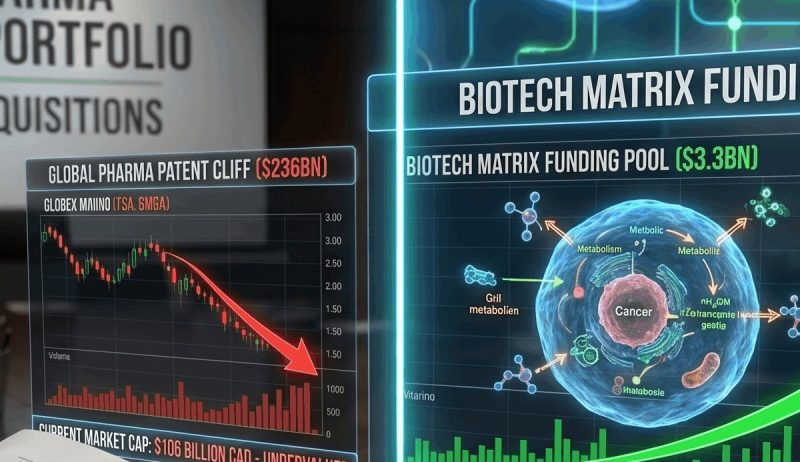
US industry leader Merck & Co. dominates cancer therapy with the immune checkpoint inhibitor Keytruda, but faces a major operational challenge. The company’s top-selling drug generated record revenue of USD 29.5 billion in 2024, accounting for nearly half of the group’s total revenue. With the core patents for this blockbuster set to expire in the US in December 2028, cash flows are at risk of eroding. To secure market share, management is implementing a lifecycle strategy and split the company into two divisions this past spring. In the first quarter of 2026, Merck increased revenue by 5% to USD 16.29 billion but reported a temporary GAAP net loss due to one-time M&A-related write-downs.
Revolution Medicines Doubles Survival Time for Pancreatic Cancer
Revolution Medicines focuses exclusively on developing a proprietary pipeline of RAS(ON) inhibitors to eliminate genetic cancer drivers. The drug candidate Daraxonrasib can be taken orally and achieved a unique result in a Phase 3 trial. The drug doubled the median overall survival of previously treated patients with ductal adenocarcinoma of the pancreas to 13.2 months. This clinical success in the fight against aggressive pancreatic cancer triggered a roughly 40% jump in the company’s share price on the capital markets, temporarily boosting its market capitalization to USD 33 billion. Although the clinical stage does not yet generate product revenue, Revolution Medicines is regarded as a potential game-changer in the fight against cancer. Given its high market capitalization, Revolution Medicines is no longer a classic “all-or-nothing biotech” company. This biotech high-flyer could even emerge as an attractive acquisition target in the future.
Vidac Pharma: Why the Warburg Effect Is a Significant Lever
The British-Israeli biotech company Vidac Pharma is developing “first-in-class therapies” that specifically target the “Achilles’ heel” of cancer metabolism. The mechanism of action is based on separating the enzyme hexokinase 2 from the mitochondrial VDAC pores to suppress the hyperglycolytic Warburg effect in cancer cells and thereby re-trigger programmed cell death, which is shut off in cancer cells. Last week, Vidac Pharma announced the successful completion of patient recruitment for the European Phase 2b trial of the drug candidate VDA-1102 for the treatment of actinic keratosis, an early stage of non-melanoma skin cancer. The trial in Germany is evaluating the drug over a 12-week period using imaging techniques. Initial data could be published as early as this fall.

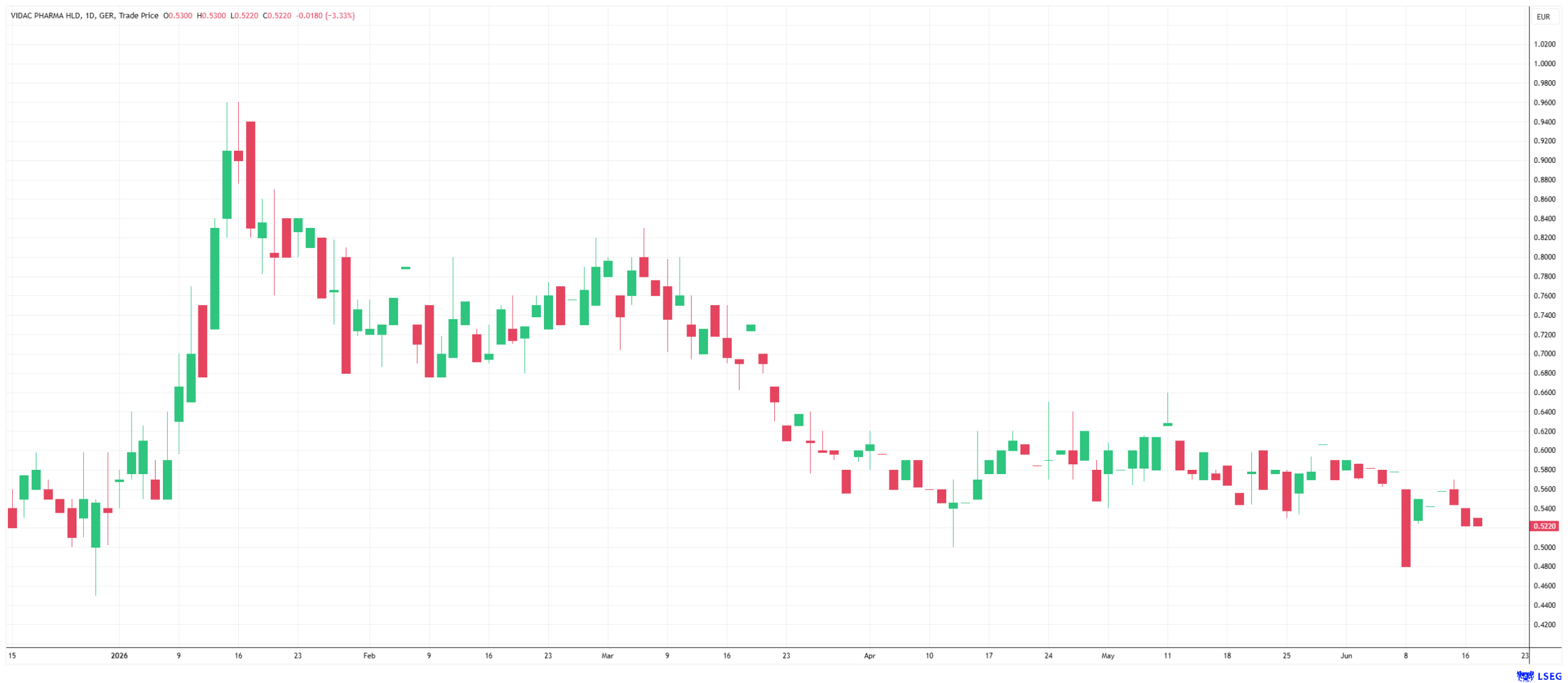
In addition to the topical ointment, the company presented promising data for the subcutaneous formulation Almavid™, which successfully penetrated the blood-brain barrier in a pediatric compassionate-use case. Vidac continues to expand beyond oncology and has launched a preclinical in vivo program for psoriasis, as psoriasis lesions also exhibit significant overexpression of hexokinase 2. Management secured global patent protection by receiving a “Notice of Allowance” from the Canadian Patent Office in May, meaning Vidac now holds seven patent families worldwide.
Conclusion: Cellular Metabolism as a Promising Approach – Complementary Therapies in Demand
According to Evaluate, the global pharmaceutical market is projected to grow to over USD 1.7 trillion by 2030, with oncology considered the fastest-growing segment. The focus is increasingly shifting toward therapies that complement existing standard treatments. Vidac’s approach appears ideally suited for this. In preclinical three-dimensional organoid models of human liver cancer, the combination of Vidac’s candidate VDA-1275 with standard chemotherapeutic agents demonstrated strong synergistic effects: the cisplatin dose required to inhibit cancer cell viability by 50% could be reduced by up to 95%. Vidac must therefore be considered a potential acquisition target, as its approach—acting at the level of cellular metabolism—can enhance the efficacy of existing checkpoint inhibitors such as Keytruda. Things are happening at Vidac Pharma, and the stock could have further upside potential. Upcoming corporate announcements from Vidac, as well as developments at pharmaceutical giants like Merck or biotech high-flyers like Revolution Medicines, could bring the company further attention.

Conflict of interest
Pursuant to §85 of the German Securities Trading Act (WpHG), we point out that Apaton Finance GmbH as well as partners, authors or employees of Apaton Finance GmbH (hereinafter referred to as “Relevant Persons”) may hold shares or other financial instruments of the aforementioned companies in the future or may bet on rising or falling prices and thus a conflict of interest may arise in the future. The Relevant Persons reserve the right to buy or sell shares or other financial instruments of the Company at any time (hereinafter each a “Transaction”). Transactions may, under certain circumstances, influence the respective price of the shares or other financial instruments of the Company.
In addition, Apaton Finance GmbH is active in the context of the preparation and publication of the reporting in paid contractual relationships.
For this reason, there is a concrete conflict of interest.
The above information on existing conflicts of interest applies to all types and forms of publication used by Apaton Finance GmbH for publications on companies.
Risk notice
Apaton Finance GmbH offers editors, agencies and companies the opportunity to publish commentaries, interviews, summaries, news and the like on news.financial. These contents are exclusively for the information of the readers and do not represent any call to action or recommendations, neither explicitly nor implicitly they are to be understood as an assurance of possible price developments. The contents do not replace individual expert investment advice and do not constitute an offer to sell the discussed share(s) or other financial instruments, nor an invitation to buy or sell such.
The content is expressly not a financial analysis, but a journalistic or advertising text. Readers or users who make investment decisions or carry out transactions on the basis of the information provided here do so entirely at their own risk. No contractual relationship is established between Apaton Finance GmbH and its readers or the users of its offers, as our information only refers to the company and not to the investment decision of the reader or user.
The acquisition of financial instruments involves high risks, which can lead to the total loss of the invested capital. The information published by Apaton Finance GmbH and its authors is based on careful research. Nevertheless, no liability is assumed for financial losses or a content-related guarantee for the topicality, correctness, appropriateness and completeness of the content provided here. Please also note our Terms of use.
Stockhouse does not provide investment advice or recommendations. All investment decisions should be made based on your own research and consultation with a registered investment professional. The issuer is solely responsible for the accuracy of the information contained herein. For full disclaimer information, please click here.