
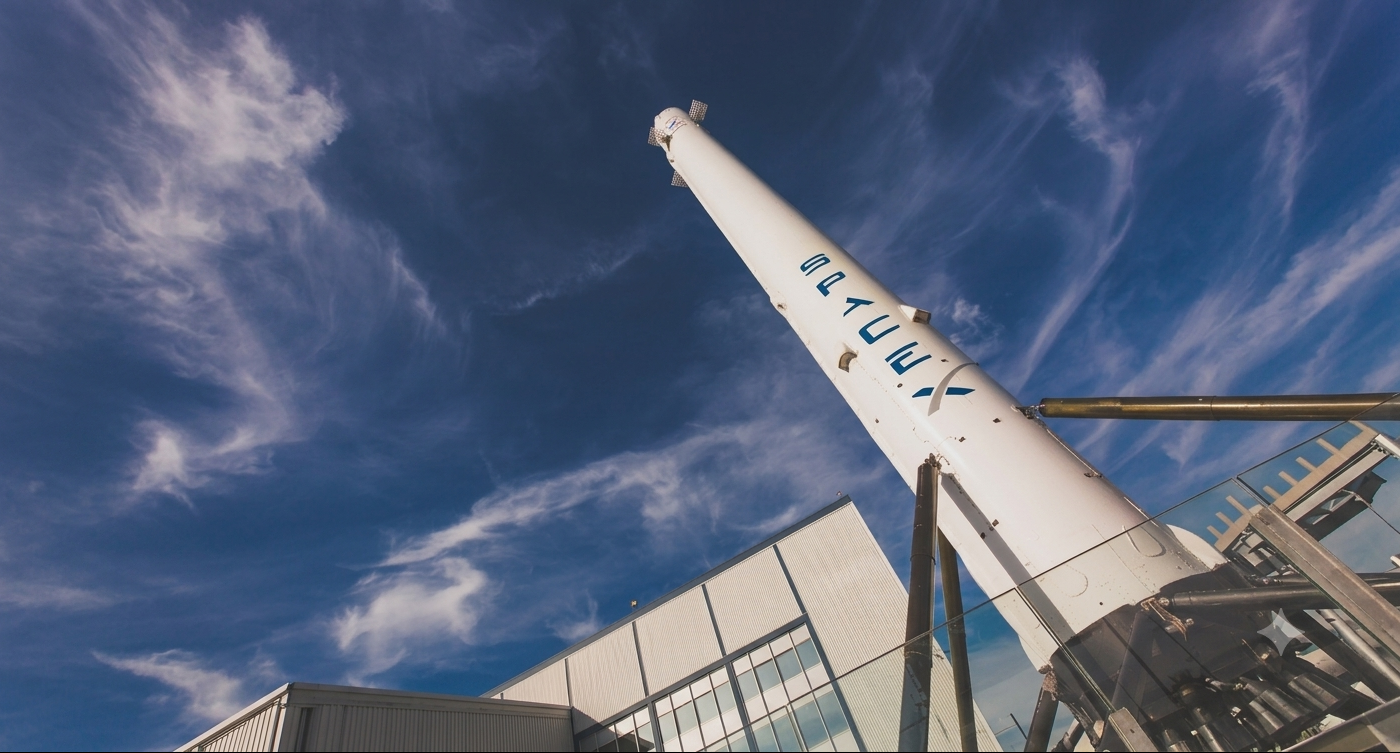

- Curious investors should take note that SpaceX is a tale of two companies—the profitable, revenue-generating Starlink satellite network and the capital-intensive, speculative Starship program—ensuring that their IPO investment theses account for the latter’s considerable cash burn.
- To avoid the animal spirits of day-one trading, wait for the initial media frenzy to subside, allowing the market to establish a rational price floor based on financial disclosures rather than speculative headlines.
- You can also protect your capital by dollar-cost averaging or by indirect exposure through diversified ETFs, all while risk-adjusting your investment for how the stock’s performance is tethered to a founder whose brilliance is balanced by personal volatility.
Elon Musk’s Space Exploration Technologies, better known as SpaceX, is the ultimate market white whale, having built up investor enthusiasm for years as it racked up multi-billion-dollar satellite internet and rocket launch contracts across the world, while promising to take us out of this world through hypersonic travel and by establishing the first colony on Mars.
This article is a journalistic opinion piece which has been written based on independent research. It is intended to inform investors and should not be taken as a recommendation or financial advice.
Now, on the eve of its reportedly US$1.75 trillion initial public offering (IPO), Wall Street’s hype machine is in full force to extract as many of your hard-earned dollars as possible, hoping that you will equate SpaceX’s abundance of catchy headlines with a safe entry point for an initial investment, failing to realize the dual reality of the company’s massive long-term potential and high likelihood of pronounced short-term volatility befitting the largest IPO in history.
To survive the blastoff, investors require a strategy rooted in reality, not YOLO or FOMO. To that end, here is a down-to-earth, 5-step guide to investing in the SpaceX IPO.
1. Separate Starlink’s cash from Starship’s dreams
Before putting dry powder to work, consider how SpaceX encompasses two distinct businesses on opposite sides of the valuation spectrum.
The first, Starlink, provides a satellite broadband network serving millions of customers, including global military forces, whose consistent profitability and revenue growth make it the real-world anchor for the IPO.
The second business, Starship, focuses on rockets and deep-space exploration, including the aforementioned plan to expand humanity into Mars, representing the more idealistic, speculative and capital-intensive part of the company that promises to shape the future instead of being determined by it.
Given that Starship burns billions in cash every year, enough to make SpaceX currently unprofitable overall, investing in it certainly can’t be characterized as a fundamentally sound idea, much less at a premium, until economies of scale allow it to cut costs and contribute on the income statement.
2. Ignore the frenzy
When SpaceX finally hits the public market, media coverage will peak and the listing price of US$135 will likely be eclipsed, at least for a while, as investors herd in and gobble up as many shares as they can.
Institutions and insiders will enjoy first dibs, capitalizing on lower cost-bases, while retail investors will have to contend with the broader market’s animal spirits, whose tendency to drive prices to irrational heights has been shown to make day-one IPO purchases a losing proposition.
Be patient and watch as the space stock cools off from the initial hype, settles into the reality of having to regularly disclose its financial results and finds its price floor before deploying any capital.
3. Adjust your risk through indirect exposure
Instead of waiting for the IPO and exclusively buying SpaceX shares, investors can get a piece of the action through more diversified proxy vehicles already exposed to the company. These include:
- Stack Capital Group (TSX:STCK), a holding company invested in some of the most attractive private businesses active today, including Canva and OpenAI. Its US$8 million stake in SpaceX is expected to surpass US$100 million in value on IPO day, with management determined to keep the shares on its books for the long haul.
- The Baron First Principles ETF (NYSE:RONB), which focuses on businesses with significant growth potential backed by durable competitive advantages. The portfolio holds about a US$38 million position in SpaceX, plus a US$200 million position in Tesla.
- The ERShares Private-Public Crossover ETF (NASDAQ:XOVR), whose combination of venture capital innovation and a policy-capped investment approach promises to democratize pre-IPO access without the high fees or burdensome lock-up periods associated with private investing. Its investment in SpaceX, valued at just over US$300 million, is the largest position in its portfolio at more than 14 per cent.
Investors may also want to consider SpaceX’s ecosystem of engineering firms, specialized component manufacturers and critical mineral suppliers, which stand to benefit from robust top-line growth, should the company usher in the commercial space boom it is heralding.
4. Invest in tranches
If you decide to buy SpaceX stock directly after the IPO, there’s no reason to allocate all of your capital at once, as the market will need a few quarters of results, or perhaps longer, to properly reach a consensus valuation.
This makes dollar-cost averaging, as well as buying the dip, appropriate measures to maintain your discipline as insiders cash in on their windfalls, unscrupulous retail investors throw caution to the wind and over-trade and Musk and co. figure out the most efficient way to communicate SpaceX’s growth plans to the broader investing public.
By investing into stretches of pessimistic sentiment, as well as into growth, you remove emotion from the equation and prevent yourself from buying at the absolute top or bottom of the market.
5. Price in Musk’s mayhem
For all intents and purposes, investing in SpaceX is an investment in Elon Musk, who not only owns a majority of the shares but stands as the face and chief innovative force behind the company.
Unfortunately for investors, his brilliance is divided across multiple ventures, including X and Tesla, leaving only limited attention for each of them.
This worry is compounded by Musk’s propensity for off-the-cuff and often insensitive public statements, which constantly threaten to derail partnership discussions and capital raising efforts.
While a rational investor would always prefer a by-the-book founder who keeps profitable growth and shareholder value creation front-and-centre, SpaceX investors are left to contend with someone likely to move markets in unpredictable ways.
Before investing, ask yourself if you’re comfortable with the higher risk for regulatory scrutiny, personal setbacks or shifts in Musk’s focus, all of which will directly impact the SpaceX stock price.
Takeaway
While the SpaceX IPO already has its place reserved in the history books, prudently investing in it calls for separating engineering marvels from sound financial assets.
This means that a long-term holding period and follow-on buy decisions should be justified by cash flow growth, paired with rising revenue, as the hype dies down and investors put the company through the wringer of their due diligence processes.
Join the discussion: Find out what investors are saying about this space stock on the SpaceX Corp. Bullboard and make sure to explore the rest of Stockhouse’s stock forums and message boards.