

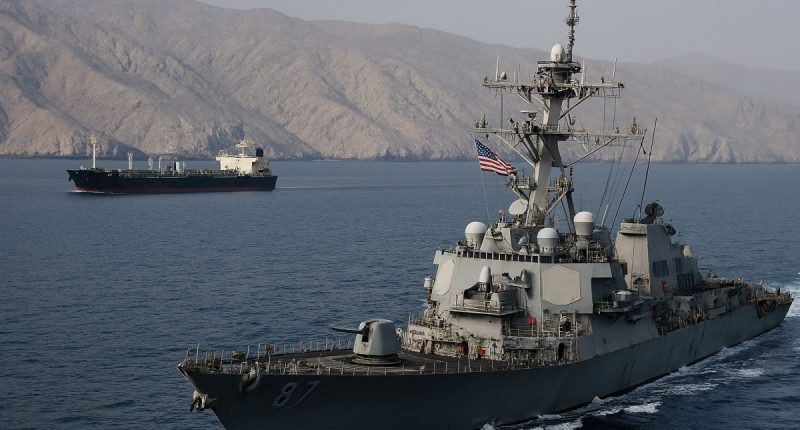
- The U.S. Navy began enforcing a blockade affecting the Strait of Hormuz after U.S.–Iran peace talks collapsed, escalating tensions around one of the world’s most important energy shipping routes
- Oil prices surged above US$100 per barrel, as traders priced in the risk of supply disruptions through a passageway that handles about one‑fifth of global oil flows
- Global stock markets turned volatile, with energy stocks rising while broader indexes wavered amid renewed inflation and growth concerns
- Investors are refocusing on inflation and interest rates, as sustained higher energy prices could delay central bank rate cuts and pressure economic growth
Global financial markets opened the week on edge after the United States confirmed it has begun enforcing a naval blockade affecting vessels entering and leaving the Strait of Hormuz, a critical chokepoint for the global energy trade. The move followed the collapse of weekend peace negotiations between U.S. and Iranian officials, sharply escalating tensions in an already volatile Middle East conflict.
The Strait of Hormuz, which connects the Persian Gulf with the Arabian Sea, is one of the world’s most strategically important waterways. Roughly 20 per cent of global oil shipments and a significant share of liquefied natural gas exports pass through the narrow channel. Any disruption to shipping there has historically had outsized effects on energy prices, inflation expectations, and broader financial markets.
This article is a journalistic opinion piece that has been written based on independent research. It is intended to inform investors and should not be taken as a recommendation or financial advice.
Oil prices surge past US$100 again
Crude oil reacted swiftly to the announcement. Brent crude futures climbed above US$100 per barrel, while U.S. West Texas Intermediate also breached the US$100 mark in early trading, as energy traders priced in the risk of supply disruptions and higher transportation costs. Analysts noted that while oil inventories remain adequate in the short term, the geopolitical risk premium has expanded sharply.
The energy move reversed part of the decline seen last week, when optimism around possible diplomacy had briefly cooled prices. Market participants said uncertainty surrounding the duration and enforcement scope of the blockade will remain a key driver of price volatility in the days ahead.
Stocks mixed as investors weigh inflation risks
Equity markets showed a muted but cautious reaction, reflecting a balance between geopolitical anxiety and expectations that the situation could still de‑escalate. U.S. stock futures swung between gains and losses overnight, with declines in transportation and consumer discretionary shares partly offset by strength in energy stocks and select defensive sectors.
European and Asian markets traded lower overall, though losses were generally limited to around 1 per cent in major benchmarks. Market strategists said that compared with earlier weeks of the conflict, positioning is less reactive, suggesting investors have partially adapted to persistent geopolitical uncertainty.
Still, traders warned that sustained oil prices above $100 could have broader consequences. Higher fuel costs threaten to push transportation expenses, manufacturing inputs, and consumer prices higher at a time when inflation has already proven stubborn.
Renewed focus on inflation and interest rates
The spike in energy prices has revived concerns that inflation could remain elevated longer than policymakers anticipate. U.S. Treasury yields rose modestly, reflecting expectations that central banks may need to keep interest rates higher for longer if energy-driven inflation feeds through to core prices.
Federal Reserve officials have recently signaled caution on the pace of future rate cuts, citing upside risks to inflation. Analysts said the Hormuz blockade adds another complication to the monetary policy outlook, particularly if energy markets remain volatile into the summer.
The U.S. dollar strengthened against a basket of major currencies, benefiting from its traditional role as a safe-haven asset during periods of geopolitical stress. Gold prices, meanwhile, were mixed, with gains limited by the stronger dollar.
Diplomatic efforts stall, uncertainty remains
The blockade follows the breakdown of U.S.–Iran talks held over the weekend in Islamabad, which had raised hopes of a temporary ceasefire or shipping agreement. According to U.S. officials, negotiations ended without progress after disagreements over Iran’s nuclear program and maritime security conditions.
President Donald Trump confirmed the naval action late Sunday to media, warning that vessels complying with Iran’s demands for tolls or transit controls would not be granted safe passage. Iranian officials, in turn, have claimed that their forces maintain operational influence over the waterway, escalating fears of miscalculation or confrontation.
Several European governments have called for restraint and renewed diplomacy, while energy-importing nations in Asia are closely monitoring shipping conditions. No major supply interruptions have yet been confirmed, but insurers and shipping firms have reportedly begun reassessing risk premiums for transiting the region.
Market outlook
For investors, the immediate focus is on whether the blockade becomes a prolonged feature of the conflict or a short-lived bargaining tactic. Analysts caution that while markets have shown resilience so far, a sustained disruption at Hormuz could amplify volatility across equities, bonds, and commodities.
In the near term, energy markets and inflation data are expected to dominate trading sentiment, alongside any diplomatic signals that suggest de‑escalation or further escalation. Until clarity emerges, investors are likely to remain cautious, balancing geopolitical risk against still-strong corporate fundamentals and earnings expectations.
Join the discussion: Find out what the Bullboards are saying about the Oil and Gas sector, then check out Stockhouse’s stock forums and message boards.
Stockhouse does not provide investment advice or recommendations. All investment decisions should be made based on your own research and consultation with a registered investment professional. The issuer is solely responsible for the accuracy of the information contained herein. For full disclaimer information, please click here.