

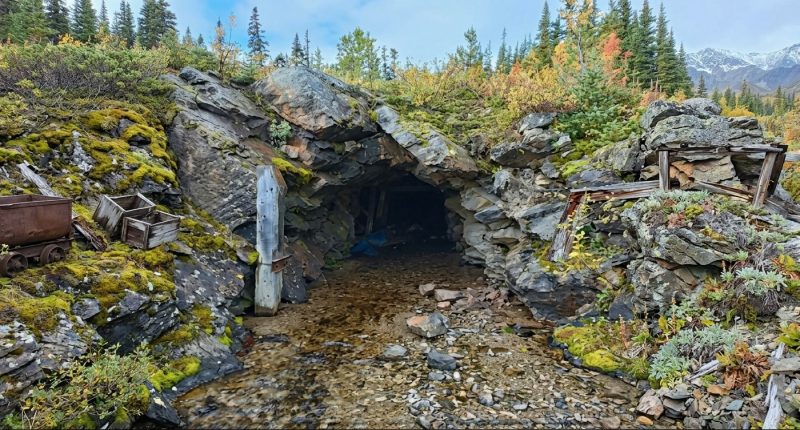
The price of silver has nearly tripled over the past five years, while multiplying almost six times over the past two decades, recently trading at US$60 per ounce, substantiating the value proposition behind why investors make it a permanent part of their portfolios:
- A multi-generational history as a hedge against inflation, currency devaluation and geopolitical instability, reliably preserving long-term purchasing power.
- Strong industrial demand, playing an essential role as an electrical conductor within solar panels, electric vehicles and high-end electronics, such as computers, smartphones and data center infrastructure, offering diversification beyond gold’s inextricable link to economic sentiment.
- Scarcity based in a growing supply-demand deficit, now entering its sixth-straight year, with the current differential standing at 67 million ounces, reflecting only marginal production growth.
That being said, owning physical silver has its drawbacks. It’s cumbersome and a security risk to store. Selling it requires a trip to the pawn shop or shipping it away to a third-party service at a hefty commission. The metal also produces no cash flow, marrying the spot price to the push and pull of supply and demand – as evidenced by silver’s virtually flat return from the early 1980s to the early 2000s – without the benefit of a business’ operating leverage to propel long-term value creation.
This article is disseminated in partnership with Walker Lane Resources Ltd. It is intended to inform investors and should not be taken as a recommendation or financial advice.
An efficient way around these limitations is to buy silver mining stocks, which both track the spot price and hold the potential to foster value beyond its fluctuations, as leadership delivers on growth milestones and generates positive news flow.
For an added margin of safety, investors can also be strategic with their due diligence, restricting themselves to stocks whose valuations fall well short of their assets’ development upside, granting them a strong case for undervaluation, positioning investors to benefit from both silver demand and a potentially exponential re-rating.
Look beyond bullion with Walker Lane Resources
A junior miner that strongly embodies our thesis is Walker Lane Resources (TSXV:WLR), market cap C$2.95 million, whose edge to capitalize on the returns gap between physical silver and silver stocks stems from its presence in the underexplored Rancheria belt in Yukon and British Columbia.
The growth-stage exploration company’s two projects in the belt, Silver Hart and Amy, share its carbonate replacement deposit (CRD)-style mineralization, which is formed by hydrothermal fluids replacing carbonate host rocks, granting it geological similarity to several highly prospective land packages:
- Coeur Mining’s nearby and robustly mineralized Silvertip mine, one of the highest-grade silver-zinc-lead projects in the world, which we’ll discuss later on.
- The Santa Eulalia district in Mexico, boasting centuries of production and grades reaching up to 770 grams per ton (g/t) silver.
- The Leadville district in Colorado, USA, which yielded more than 240 million ounces of silver through 1963, in addition to significant gold, copper, zinc and lead production.
These analogues support Rancheria’s potential to evolve into a high-grade, multi-deposit district, granting Walker Lane’s market-tested leadership team, dominated by geologists with more than a century of collective experience – including specializations in CRDs – an abundance of data to demonstrate why Silver Hart and Amy have what it takes to be torchbearers for the district and foster long-term shareholder value.
The Silver Hart project
The Silver Hart project, located in the Yukon, hosts several high-grade deposits estimated in 2026 at 4.32 million ounces of silver, 9.9 million pounds of lead and 84.7 million pounds of zinc inferred, with all known mineralization starting at surface, making it amenable to open-pit mining.

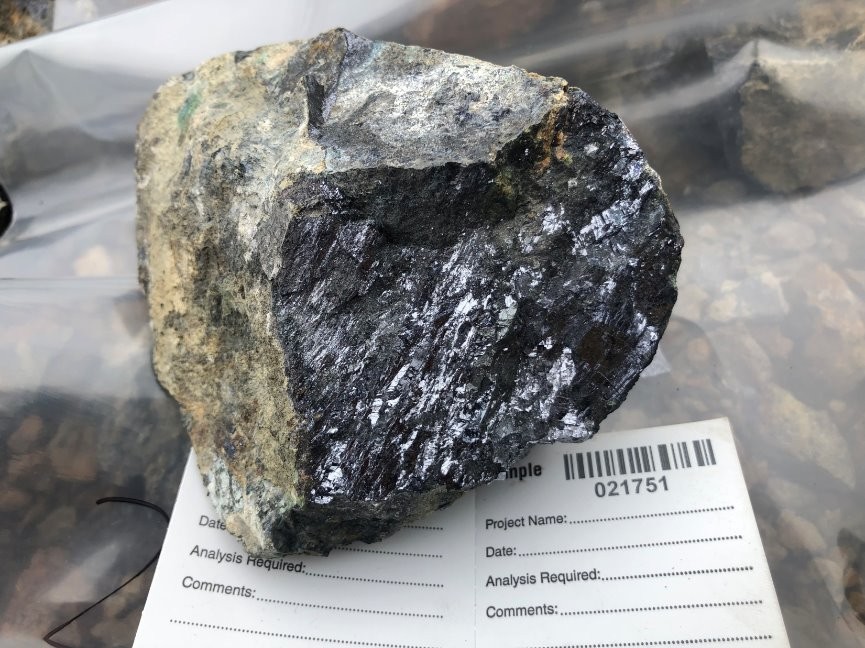
The sizeable resource, using base-case prices of only US$23.30 per ounce of silver, US$1,892 per ton of lead and US$2,505 per ton of zinc, places its in-situ value at more than US$1 billion at current spot prices, a figure that renders Walker Lane’s current market cap a deep-value entry point.
Leadership intends to de-risk Silver Hart by deploying ore-sorting technologies to transform the deposits into small-scale, cash-flowing, open-pit mines within the next five years. Key pillars supporting this development scenario include:
- Sensor-based ore sorting, a proven technology with decades of market validation, where particles of waste dilution rock are quickly separated from mined material based on color, x-ray analysis and electromagnetic induction, among other measurements, improving grades while significantly reducing costs and environmental impact compared to chemical-based methods.
- Low capital expenditures, with leadership estimating that it could take as little as C$15 million to get the first deposit to market at an initial capacity of 250-300 tons per day (tpd).
- A nearby third-party processing facility, sidestepping the need for an in-house mill.
Walker Lane has undertaken a preliminary metallurgical and ore sorting analysis, with results expected imminently, and will soon kick off engineering and environmental studies to support a 2027 development application.
Concurrently, the company is working towards a permit for an exploration and 3,000-5,000-metre drilling program at Silver Hart, planned to break ground before the end of the year, to delineate an initial open pit and upgrade the resource to the measured and indicated categories.
Crews will focus most on the highly-prospective TM zone, where trenching yielded grades up to 1,140 g/t silver, 6.34 per cent lead and 0.64 per cent zinc, as well as the Blue Heaven claims, where 2022 trenching at the Golden Cross zone hit as high as 1,500 g/t silver, 49.8 per cent lead and 8.5 per cent zinc, plus 10.5 per cent manganese, the latter an established indicator of CRD-style mineralization on the property.
That said, all Silver Hart deposits remain open along strike and down dip, supported by numerous mineral occurrences and anomalies yet to be drill tested, making them strong candidates for Walker Lane’s small-scale mining model.
The Amy project
Walker’s Lane undervaluation is reinforced by a second promising asset in the Rancheria silver district, the 950-acre Amy project, whose high-grade deposit, historically estimated at 79,849 tons grading 367 g/t silver, 2.8 per cent lead and 6 per cent zinc, coincides with a geochemical anomaly over 4 km in strike length, with an adjacent sediment-intrusive contact making the project an ideal setting for CRD-style mineralization.

Amy resides only 8 kilometres from Coeur’s Silvertip mine, whose resource is estimated at 57.6 million ounces of silver, 1.2 billion pounds of lead and 685.5 million pounds of zinc measured and indicated, plus 11.4 million ounces of silver, 134.7 million pounds of lead and 272.6 million pounds of zinc inferred, with both projects sharing the same structural corridor, suggesting they may be part of a larger, district-scale mineralized system. Acting on this potential, Coeur has negotiated a right of first refusal to buy the property (see slide 16 of the latest investor deck).
Historical exploration work in support of this sibling thesis includes two adits, from the 4,200 and 4,450-foot levels, which where thoroughly examined from the 1960s to the 1980s through trenching and 3,000 m of drilling, intersecting a mineralized zone with more than 170 m of strike responsible for the historical resource estimate cited above. Mineralization remains open in all directions.
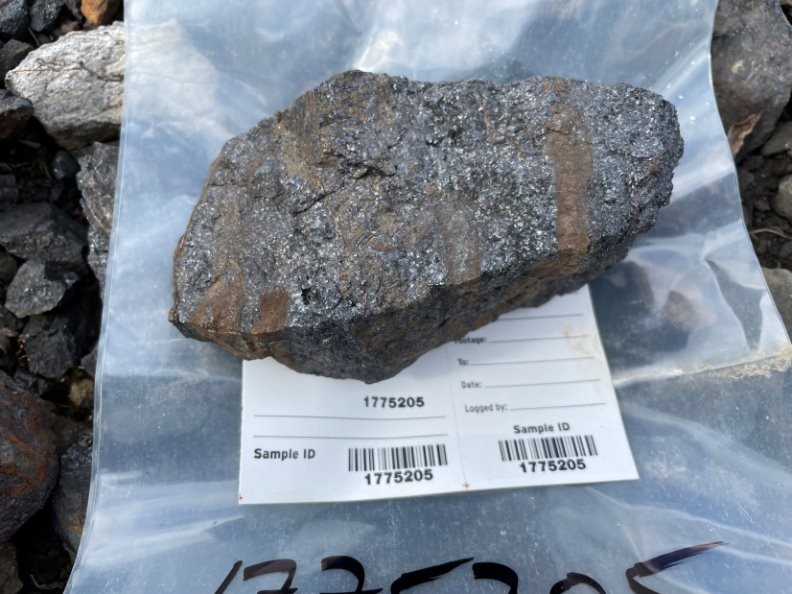
Recent exploration backing up Amy’s robust pedigree includes detailed mapping completed by Walker Lane identifying parallel veins with a strike length of up to 2.7 km. This is in addition to surface and dump samples returning up to 4,010 g/t silver, 54.98 per cent lead and 7.6 per cent zinc, plus traces of antimony, further substantiating the presence of a large, high-grade CRD system.
Looking ahead, Walker Lane expects to receive a permit to drill Amy in the near term, allowing it to test surface mineralization at depth, initially around the pair of historical adits, with eyes on putting together an updated resource estimate. The company’s work coincides with Coeur Mining’s recent shift at Silvertip from exploration – the main focus over the past few years – to actively considering a potential restart.
A bargain for the data-driven investor
As we’ve shown in this article, Walker Lane has a lot going for it.
Silver’s demand tailwind is one of the most robust across the commodity sector, supported by increasing awareness of the inverse relationship between inflation and fiat currency.
The Amy and Silver Hart projects’ high-grades, historical resources and underexplored land packages lend optimism to further development, offering shareholders compelling catalysts to leverage silver demand into differentiated returns through upcoming drilling programs.
Additionally, Silver Hart’s low-cost development strategy puts it on a near-term path to revenue generation and potential profitability, which would set the company apart from its predominantly pre-revenue peers.
Be this as it may, the company’s data-driven value proposition, in the hands of leadership de-risked through robust technical experience, has been left for the taking, with the stock losing almost half of its value since inception in March 2025, last trading at C$0.135, perhaps reflecting Trump-induced geopolitical tension, elevated interest rate media coverage in the post-COVID era, or the ninja-level of meticulousness required to run a junior miner through due diligence compared to a cash-flowing company.
Regardless of the underlying causes of undervaluation, the market is clearing the way for investors who recognize Walker Lane’s reasons for conviction to take a stake and sit back, as leadership leverages the flexibility of a tight 21.83 million shares outstanding towards the harvesting of exploration upside for years to come.
Join the discussion: Find out what investors are saying about this junior mining stock on the Walker Lane Resources Ltd. Bullboard and make sure to explore the rest of Stockhouse’s stock forums and message boards.