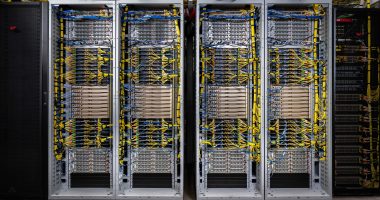
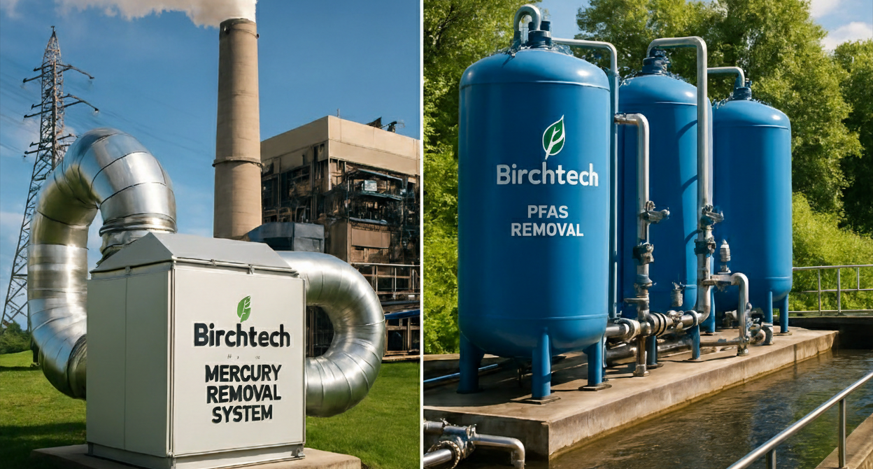

The US green energy transition, while making clear and substantial strides, will rely on fossil fuels for decades to come as infrastructure slowly shifts towards sustainability.
This article is disseminated in partnership with clean technology company Birchtech Corp. It is intended to inform investors and should not be taken as a recommendation or financial advice.
Coal is a prime example, with coal-fired plants accounting for 16 per cent of domestic power in 2023, a figure expected to decrease but remain significant into 2050 and beyond, highlighting how utilities across the US vary widely in terms of how they process the fuel source, often leading to mercury overexposure in the air and an increased potential for serious health risks. These include:
- Damage to the nervous system, most notably in young children, hindering memory, motor skills and cognitive function.
- Increased risk of heart disease and high blood pressure.
- Developmental delays, brain damage and other birth defects in fetuses exposed during pregnancy.
Mercury’s multitude of dangers led the US Environmental Protection Agency (EPA) to institute the Mercury and Air Toxics Standards (MATS) in 2012, which facilitated an 86 per cent drop in domestic mercury emissions by 2017. That said, MATS rollbacks under the Trump administration covering 68 coal-fired power plants are threatening to ramp up emissions in a bid to support AI data center demand, putting hundreds of communities and thousands of lives at risk.
This dynamic is creating a pressing need for tailored emissions-mitigation solutions to balance US environmental and technological leadership.
Introducing Birchtech
A clean air specialist rising to the task of mitigating mercury emissions from US coal-fired power plants is Birchtech (TSX:BCHT), market capitalization C$107.78 million, a Texas-based company developing and deploying activated carbon technologies that have been playing an active role in a more sustainable future since 2008.
The small-cap company, positioned for long-term growth thanks to environmental tailwinds, a profitable business and an ongoing expansion into water purification, all of which we’ll discuss in this article, is eyeing an NYSE American listing in 2026 to take its abilities to safeguard North American communities and generate shareholder value to the next level, with the clean technology stock returning 41.58 per cent year-over-year and 144.55 per cent since 2023, besting the TSX Index’s 31.46 per cent and 63.31 per cent efforts, respectively.
Birchtech’s SEA mercury emissions-reduction technology
Birchtech’s patented Sorbent Enhancement Additive (SEA) technology, the company’s solution to reducing mercury emissions stemming from rising demand for coal-based electricity, is a two-part system demonstrated to help coal-fired power plants meet EPA regulations at lower costs and greater efficiency than competitors. Here’s a brief breakdown:
- Part 1 involves the injection of a halide mixture directly into a boiler to oxidize elemental mercury.
- Part 2 engages a back-end sorbent injection system using activated carbon to neutralize the toxic substance.
The clean technology, developed in the early 2000s in collaboration with the US Department of Energy, has grown to process about 31 tons or 7 per cent of US annual coal consumption, according to US Energy Information Administration data and 2023 company estimates, and is protected by 35 patents to date reflecting more than US$65 million in R&D spending.
SEA’s cost advantage, enabled by Birchtech’s focus on customization based on fuel and boiler types, delivers consistent, more than 30 per cent margins and has put the air business on pace for US$18 million in estimated 2025 revenue, generated through product sales, consulting services and licensing agreements, with a run-rate set to ramp up to ~US$40 million by the end of 2026.
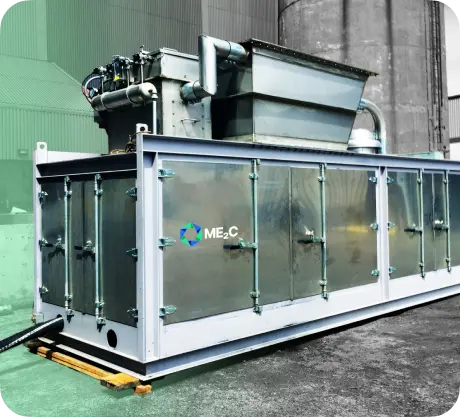
As detailed in Birchtech’s latest investor presentation, this projection is in addition to a value-added IP enforcement strategy, which seeks to close the gap between SEA’s 7 per cent market share and the estimated 40 per cent of US coal-fired power plants illegally deploying variations of the technology, with the company having secured a substantial US$37 million in income from legal claims and licensing agreements to date.
The company estimates a further US$78 million in ill-gotten gains to be returned to its coffers over the near term, contingent on a final decision on a 2019 patent infringement case, with a 2024 lawsuit against two remaining defendants still pending in the Southern District of Iowa.
This litigation income, not counting a growing pipeline of lawsuits and ongoing discussions with infringing power plants, will serve to expedite Birchtech’s expansion into water purification, exposing investors to differentiated technology that ensures the clean delivery of a commodity synonymous with life itself.
Birchtech’s forever chemicals removal technology
If you’ve never head of Perfluoroalkyl and Polyfluoroalkyl Substances, succinctly known as forever chemicals or PFAS, you’ve likely benefitted from their widespread utility, owing to their unmatched resistance to environmental degradation, including thousands of applications spanning food packaging, stain-resistant clothing and non-stick cookware, without realizing that their propensity to leak into the soil, water and air they are so apt at repelling is one of the most pressing environmental dangers of our time.
This is because exposure to PFAS can bring forth an equally wide range of health problems, among them a weakened immune system, decreased fertility and low birth weight, liver and metabolism disruptions, and an increased risk of cancer, with a report from the Centers for Disease Control and Prevention finding that 97 per cent of Americans have PFAS in their blood, and 2025 EPA data estimating that 172 million people across the country depend on drinking water that tested positive for PFAS.
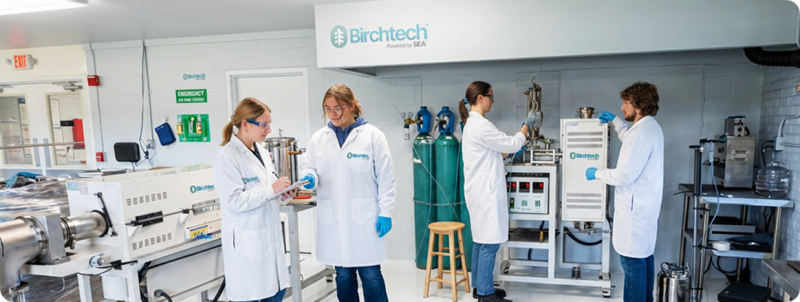
Recognizing these risks, the EPA instituted new PFAS regulations in 2024 that will levy significant fines on water utilities that fail to engage in mandated sampling by 2027 and/or achieve full compliance by 2029, with compliance costs estimated at US$1.5-US$3.8 billion annually and US$1 billion in funding available through the Infrastructure Investment and Jobs Act to help states implement PFAS testing and treatment of their public water systems.
The EPA’s new regulations coincide with the institution’s recognition of granular activated carbon (GAC) as a best available technology to control PFAS contamination in drinking water, driven by its unmatched efficiency, scalability and cost-effectiveness, bolstering expectations of 2.5x-4x GAC usage growth – see slide 14 of Birchtech’s investor presentation – driven by an increasing number of states, currently standing at more than 50 per cent, to have passed PFAS regulations.
It’s against this high-demand backdrop that Birchtech is stepping up to the plate with an end-to-end PFAS water treatment services suite designed to help governments and operators get ahead of EPA regulations and ensure that the basic right of electricity doesn’t come at exorbitant environmental cost.
Birchtech’s initial announcement on the expansion hit the wire in October 2024, setting the stage for a business divided into three essential offerings tailored to municipal and industrial clients:
- Design centers for analytical & carbon development focused on creating activated carbon solutions, optimized for utility, accuracy and affordability, anchored by two world-class facilities ready to deliver comprehensive analytics:
- A Rapid Small-Scale Column Testing (RSSCT) centre in Grand Forks, North Dakota, capable of forecasting full-scale GAC performance, making it one among a select class of US providers able to conduct automated rapid lab-scale tests comparably effective to costlier in-field pilot tests.
- A lab-scale thermal reactivation testing centre in State College, Pennsylvania, equipped to evaluate municipalities’ ability to integrate reactivated carbon into their public water purification systems.
- Water treatment solutions, including supply of virgin and reactivated GAC and other media, a tier of the Birchtech platform built to provide customized, integrative treatment options, supported by on-site assessment, design and oversight, with an unwavering focus on cost-effectiveness. Supported by a 2,000-ton feedstock agreement expected to generate up to US$7 million in revenue, leadership is confident in posting 50 per cent gross margins on GAC products.
- Reactivation services, both regional and on-site, which will allow clients to validate the environmental and cost benefits of reactivated carbon versus virgin carbon through expert analysis, increasing operational efficiency and sustainability while potentially reducing lifecycle costs for utilities by between 30-50 per cent, representing a significant competitive advantage to help Birchtech stand out in the water purification marketplace. Planning and permitting for a full-scale reactivation facility is well underway, with the company expected to break ground in 2026 and unlock US$50 million in revenue capacity upon commissioning.
Birchtech’s vertically integrated offering, backed by provisional patents and a robust client pipeline, including an initial US$900,000 deal with a mid-Atlantic power utility announced in October 2025, is expected to reflect a high-margin, recurring revenue business over the coming quarters, outperforming legacy suppliers thanks to its reactivation component and better aligning the company’s path to long-term growth with profitability and shareholder value creation.
The clean technology company ties its air and water purification value proposition together by placing a bespoke leadership team in the driver’s seat, whose strong alignment with shareholders at 21 per cent insider ownership, coupled with robust expertise in coal utilities, PFAS testing, water treatment, activated carbon technologies and mercury emissions capture technologies, adds conviction in the planned NYSE uplisting – for which a reverse stock split came into effect in December – and its expected unlocking of newfound levels of liquidity, enterprise value, as well as institutional and retail investor awareness, as detailed by Richard MacPherson, Birchtech’s Founder, President and Chief Executive Officer, in a recent interview with Stockhouse’s Ricki Lee on the company’s bright future prospects.
A lull in market sentiment reveals a value play
Despite the clean technology stock’s aforementioned outperformance of the TSX, shares are about flat since Birchtech announced its expansion into commercial water treatment in 2024, failing to reflect expected growth in high-margin revenue, in addition to air business revenue being forecasted to more than double in 2026 and an infusion of legal income approximately four times higher than the US$18.4 million in average annual revenue the company collected in 2023-24.
The broader market’s misguided pessimism, doubtlessly due to risk-off sentiment presently plaguing the global economy, given fallout from US tariffs, the country’s recent attack on Venezuela and threats of annexing Greenland, as well as major ongoing wars in Ukraine and the Middle East, opens the door for value investors to recognize Birchtech’s numerous reasons for conviction and build a position before what the data suggests to be a precipitous re-rating, grounded in the cost-effective services and ensuing profitability required to set a solid floor under the share price.
With Birchtech repaying US$13.1 million in debt in 2024, clearing its balance sheet of outstanding debt, and improving its net income from a loss of US$1.3 million in Q4 2024 to a US$800,000 gain in Q3 2025, the company has already generated considerable momentum towards this re-rating, with eyes on surpassing the US$32.3 million it earned in 2016 – immediately before the discovery of SEA’s widespread infringement – propelled by differentiated clean technology, the financial flexibility of having only 19.4 million shares outstanding and the tailwind encompassed by the world’s rapidly accelerating shift towards sustainability to keep climate change at bay.
Join the discussion: Find out what investors are saying about this clean technology stock on the Birchtech Corp. Bullboard and make sure to explore the rest of Stockhouse’s stock forums and message boards.
Stockhouse does not provide investment advice or recommendations. All investment decisions should be made based on your own research and consultation with a registered investment professional. The issuer is solely responsible for the accuracy of the information contained herein.
For full disclaimer information, please click here.