
The Problem Nobody Saw Coming
The news went largely unnoticed in early April. Japanese suppliers of a critical semiconductor gas, tungsten hexafluoride, warned their South Korean customers that they would no longer be able to maintain deliveries starting this summer. The reason lies in Beijing. China has massively restricted the export of tungsten to Japan. Those who need the gas are suddenly left out in the cold.
When comparing this to the well-known helium shortage, the scale of the problem becomes clear. Helium can be sourced from the US or Russia. With tungsten, viable alternatives outside China are limited. China controls a good 80% of global production. Until now, anyone wanting the metal could hardly get around the Middle Kingdom.
557% Price Surge With No End in Sight
The export controls hit a market that had been artificially suppressed for decades. Subsidies from Beijing kept prices low. Then, starting in February 2025, everything changed. Licenses became scarce, and exports plummeted. The price of ammonium paratungstate (APT), the standard raw product, skyrocketed more than fivefold within a year.
Even experienced commodities analysts no longer speak of a cyclical price surge, but rather of a structural revaluation. For the first time in 30 years, the market is breathing freely, and the air is thin.
Two Fronts, One Gap
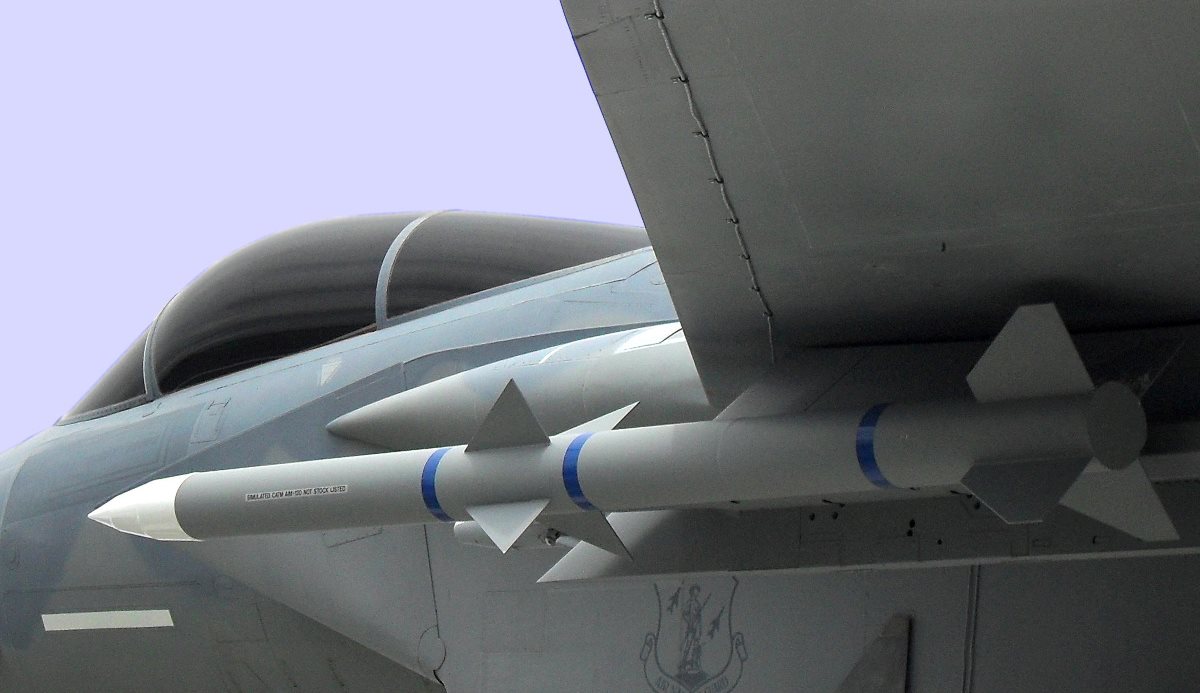
The current shortage is having an impact in two directions. First, there is the defense sector. Tungsten is one of the hardest metals in the world. It pierces tanks, cools rocket nozzles, and serves as a counterweight in guided missiles. The Army has fired so much tungsten-containing ammunition in recent months that strategic reserves have shrunk alarmingly. An industry expert summed it up: Demand from the military sector is depleting stockpiles faster than new mines can supply them.
On the other hand, the semiconductor industry faces a little-known but existential problem. Tungsten hexafluoride is a process gas that is indispensable in any modern 3D NAND factory. A memory chip has 200 layers, so tungsten must be applied 200 times. South Korea, home to the world’s largest memory manufacturers, sources a quarter of its needs from Japan. It is precisely these shipments that are now hanging in the balance.
The Quiet Winners in South Korea
While buyers struggle to find alternatives, a clear pattern is emerging. Local producers of tungsten hexafluoride, such as SK Specialty or Foosung, can still import their material, but at prices that have more than doubled. The cost wave continues unabated.
Switching to new suppliers is typically a process that takes many months in chip manufacturing. Some manufacturers are now drastically shortening this phase or skipping it entirely. This shows just how intense the pressure really is.
Sangdong: The Long Shadow Becomes Reality
Amid this chaos, Almonty Industries has achieved a position that sounded like a pipe dream just two years ago. The Sangdong mine in South Korea, once the world’s largest tungsten deposit, resumed production in December 2025. The first ore shipment arrived at the processing plant, and commercial production is underway. The facility is designed to process 640,000 tons of ore per year, and a second expansion phase is set to double capacity by 2027. At that point, this single site would cover around 40% of total non-Chinese tungsten demand.
The strategy behind this is simple: due to China’s monopoly, the West is desperately seeking alternatives. Sangdong is the answer.
Production on Three Continents
The company is not reliant on a single asset. In addition to South Korea, the historic Panasqueira Mine in Portugal has been producing tungsten continuously for over 130 years. It is a stable source of cash flow in a tight market. In the US, a project in Montana, the Gentung–Browns Lake Tungsten Project, is in the starting blocks, with a capacity of around 140,000 MTU annually. Added to this is a molybdenum deposit in Korea on the Sangdong property, which ranks among the highest-grade in the world.
Management has deliberately opted against middlemen, against dilutive streaming deals, and against cheap upfront payments. The motto is direct sales to customers, fixed margins, and no cap on upside. Those who have focused on quick headlines in recent years may have doubted this approach. The current market situation proves management right.
What Analysts Are Seeing Now
The major research firms have long recognized the potential and have continuously raised their price targets in recent weeks. Bank of America has issued a “Buy” recommendation with a price target of USD 20.00.
Cantor Fitzgerald went a step further with USD 25.80, as did DA Davidson with USD 25.00. Both firms emphasize that the company has made the leap from project developer to operational producer. B. Riley Securities cited USD 17.00, and GBC USD 20.89. Analysts highlighted the company’s strong cash position, the secured purchase contracts, and the timing, which could hardly be better. The key question is no longer whether, but how quickly the ramp-up will succeed.
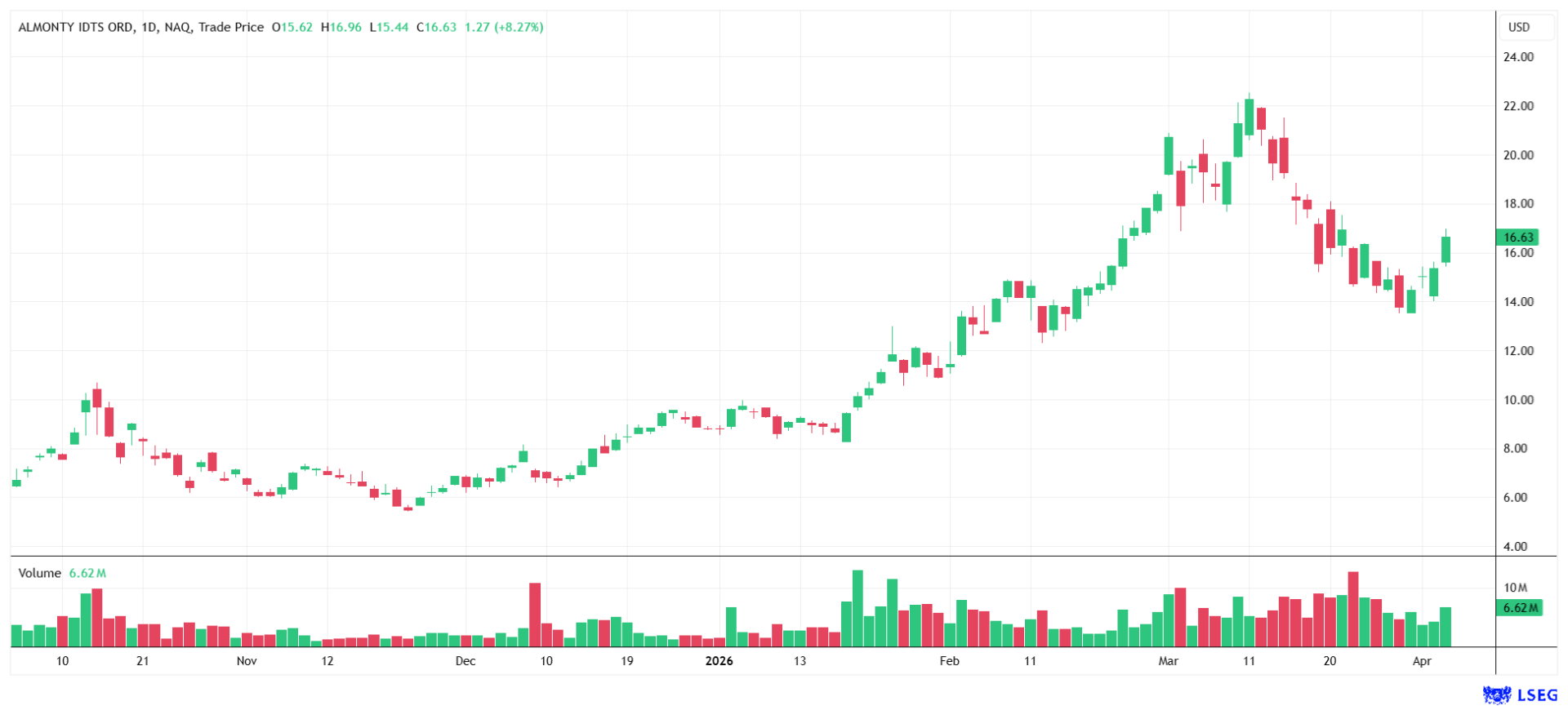
The stock is currently trading at USD 16.63 on the NASDAQ.
Tungsten is moving out of the shadows as supply constraints and geopolitical dynamics reshape the market. As China tightens the reins on exports and demand from the defense and chip industries rises, a historic window of opportunity is opening for suppliers outside the Middle Kingdom. Companies such as Almonty Industries that built up capacity early enough now hold the upper hand. The coming quarters will show how quickly the ramp-up succeeds. The course has been set.
Conflict of interest
Pursuant to §85 of the German Securities Trading Act (WpHG), we point out that Apaton Finance GmbH as well as partners, authors or employees of Apaton Finance GmbH (hereinafter referred to as “Relevant Persons”) currently hold or hold shares or other financial instruments of the aforementioned companies and speculate on their price developments. In this respect, they intend to sell or acquire shares or other financial instruments of the companies (hereinafter each referred to as a “Transaction”). Transactions may thereby influence the respective price of the shares or other financial instruments of the Company.
In this respect, there is a concrete conflict of interest in the reporting on the companies.
In addition, Apaton Finance GmbH is active in the context of the preparation and publication of the reporting in paid contractual relationships.
For this reason, there is also a concrete conflict of interest.
The above information on existing conflicts of interest applies to all types and forms of publication used by Apaton Finance GmbH for publications on companies.
Risk notice
Apaton Finance GmbH offers editors, agencies and companies the opportunity to publish commentaries, interviews, summaries, news and the like on news.financial. These contents are exclusively for the information of the readers and do not represent any call to action or recommendations, neither explicitly nor implicitly they are to be understood as an assurance of possible price developments. The contents do not replace individual expert investment advice and do not constitute an offer to sell the discussed share(s) or other financial instruments, nor an invitation to buy or sell such.
The content is expressly not a financial analysis, but a journalistic or advertising text. Readers or users who make investment decisions or carry out transactions on the basis of the information provided here do so entirely at their own risk. No contractual relationship is established between Apaton Finance GmbH and its readers or the users of its offers, as our information only refers to the company and not to the investment decision of the reader or user.
The acquisition of financial instruments involves high risks, which can lead to the total loss of the invested capital. The information published by Apaton Finance GmbH and its authors is based on careful research. Nevertheless, no liability is assumed for financial losses or a content-related guarantee for the topicality, correctness, appropriateness and completeness of the content provided here. Please also note our Terms of use.
Stockhouse does not provide investment advice or recommendations. All investment decisions should be made based on your own research and consultation with a registered investment professional. The issuer is solely responsible for the accuracy of the information contained herein. For full disclaimer information, please click here.