
Investors tapped into oil and gas’s long-term staying power, backed by established infrastructure, strong consumer and industrial demand, not to forget a leading share of the global energy market, can optimize their exposure by being strategic about where they apply their due diligence, focusing on opportunities where the need for a reliable energy supply is especially pressing.
The island nation of New Zealand certainly fits this bill, whose natural gas market, entirely dependent on domestic production, has been progressively tightening from output of 415 million m³/month in 2017 to 215 million m³/month in 2025, leaving the country at risk when its majority renewables-based power system faces seasonal complications. The most recent example here, the 2024-2025 droughts, spiked gas prices up to US$25 per thousand cubic feet (mcf) and required curtailments from large industrial players.
This article is disseminated in partnership with New Zealand Energy Corp. It is intended to inform investors and should not be taken as a recommendation or financial advice.
While the government is considering the construction of a new liquified natural gas (LNG) import facility to restore its buffer during weather-compromised stretches, it would only be operational by the end of 2027 or early 2028, and would come at significant taxpayer costs – about US$600 million, according to Reuters – well beyond what it would take to ramp up domestic production, as we’ll explore later in this article.
New Zealand’s oil market is under a similar systemic risk, seeing as the country is a net importer, with a trade deficit of more than 140,000 barrels per day in 2025 and proven reserves covering less than 1 year of consumption, according to data from Worldometer, and virtually all domestic production destined for export due to no refining capacity since the closure of the Marsden Point refinery in 2022, all of which highlights the need for stronger domestic production to reinforce national security.
With global energy demand pointed decidedly up and to the right propelled by population growth, industrialization, as well as the proliferation of AI and the data centers underlying it, the vulnerability of New Zealand’s oil and gas industry represents a robust opportunity for domestic explorers, developers and producers to step up to the plate and bolster energy self-sufficiency.
Introducing New Zealand Energy
A micro-cap producer addressing Kiwi energy independence head on, both operationally and by name, is New Zealand Energy (TSXV:NZ), with a current market cap C$23.74 million. Producing approximately 350 barrels of oil equivalent per day (boe/d), the company’s portfolio of oil, gas, and gas-storage assets provides a strong foundation for the potential of significant production growth and long-term shareholder value creation.
When it comes to the driving forces behind this growth, the company hosts 5.50 billion cubic feet (bcf) in proved and probable gas reserves at its 50-per-cent-owned Tariki project, discussed in the next section, which it’s currently selling into the market at 3.2 million cubic feet per day (mmcf/d) gross or 1.6 mmcf/d net to the company.
This is in addition to numerous producing oil wells across the portfolio, spanning the Waihapa, Ngaere and Copper Moki fields, yielding about 150 barrels per day (bbl/d) net with tangible potential for long-term growth.
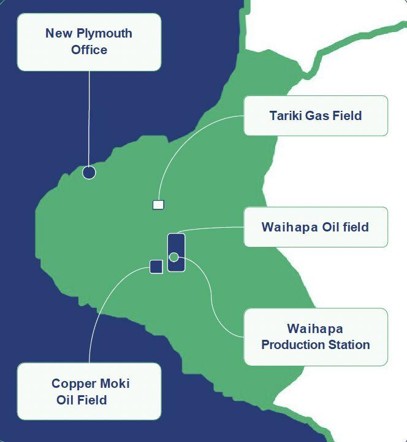
The company pairs these commodities with owned-and-operated, pipeline-connected assets in the Taranaki Basin, host to virtually all production within the country, including two ~50 km pipelines, a 50 per cent ownership stake in the Waihapa Production Station (WPS), and connectivity with the Port of Taranaki that could be used to transport LNG onshore, aligning with the government’s aforementioned import plans.
Backed by a reliable gas price premium, reflecting New Zealand’s depleting production and lack of imports, as well as higher oil prices because of Middle East conflict, New Zealand Energy turned profitable in Q3 2025 and expects to remain so once Q4 results hit the wire, building upon a business that is presently cash-flow neutral, earning as much as it’s paying out to work over wells across its portfolio.
This sets a solid foundation for the company’s near-term plan to ramp up production and cash flow and pass on the benefits of scale to its investor base, with leadership confident about continued improvements on the income statement throughout 2026.
The Tariki gas project
The most important asset underpinning New Zealand Energy’s growth plans is its Tariki gas project covering the PML 38138 license, which is held in a 50-50 joint venture with L&M Energy. Based on spot natural gas prices of NZ$14 per mcf quoted in the company’s May 4th update – among the highest in the world – Tariki’s 5.50 bcf in estimated reserves are valued at more than US$46 million in the ground, or more than twice the company’s market cap, with the land package benefiting from a long history of past production. Case in point, from 1996-2008, the Tariki-1 well yielded 49.5 bcf gas and 1.8 million bbl oil with more than 85 per cent of available hours in production.
Now in the hands of New Zealand Energy and building on this proven production history, the Tariki field is once again contributing gas into New Zealand’s energy market. Through ongoing field optimization and development initiatives, management is working to unlock additional reservoir potential, with production expected to reach 8 mmcf/d gross, or 4 mmcf/d net (709 boe/d), by early 2027. This positions Tariki as a key driver of future growth and value creation for the company.
Early results have been encouraging. The Tariki 1A well delivered a stabilized flow rate of 3 mmcf/d over a 96-hour period and is now tied into the Waihapa Production Station, located just 14 km away, with gas being sold into the market. According to slide 10 of the company’s latest investor presentation, Tariki 1A is expected to average more than 1 mmcf/d in 2026, while also generating approximately 50 barrels of condensate for every mmcf of gas produced.
The Tariki 5A well also demonstrated strong reservoir performance, achieving a stabilized flow rate of 1.5 mmcf/d over a 48-hour period. While the well is currently undergoing optimization work ahead of being tied into sales, management expects it to contribute between 0.6 and 1.0 mmcf/d of production in 2026. Together, these wells are expected to play a key role in supporting New Zealand Energy’s targeted production growth through 2027.
The Tariki gas storage project
New Zealand Energy plans to optimize monetization at Tariki through a planned gas storage facility, targeting initial storage capacity of about 5 bcf, with eyes on stabilizing the country’s energy supply and long-term energy security.
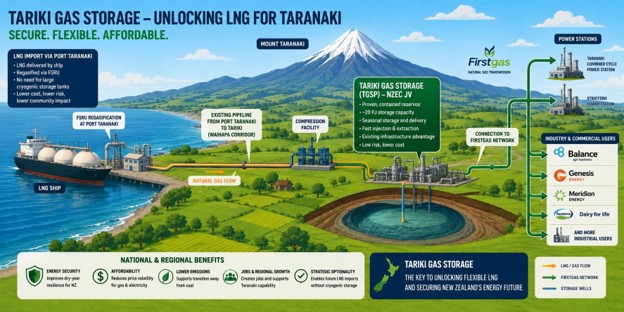
To this end, the company and L&M Energy signed a non-binding memorandum of understanding with Genesis Energy, one of New Zealand’s top energy producers, setting a framework for technical studies, commercial negotiations and project development to potentially reach a final investment decision on the facility and get it off the ground.
The parties are in the midst of initial engineering work to better define optimal storage capacity, operating pressures, as well as injection and withdrawal rates, while concept studies are also underway covering surface facilities, compression and operational configuration, paving a path to demonstrate project value and strengthen the case for Genesis taking an ownership stake and becoming a long-term partner.
New Zealand Energy plans to take an incremental approach to facility injection and extraction capacity, divided into three 25 mmcf/d stages, with each stage entailing capital costs of about C$30 million, and the first stage set to be operational within 18 months after an investment decision.
“You get about a NZ$10-$12 swing between summer and winter gas prices in New Zealand,” Toby Pierce, director and chief executive officer, stated in an interview with Stockhouse. “The way we see it, at 50 per cent of that swing and at 2.5 bcf net to the company, that works out to about NZ$50 million in revenue per year from the gas storage business alone.”
That figure works out to C$41.3 million, well ahead of New Zealand Energy’s C$23.74 million market cap, shedding light on its robust undervaluation thesis as it pursues development across the Tariki land package, whose petroleum mining license recently received a five-year extension from New Zealand Petroleum & Minerals, granting it a new expiration date of July 20, 2031.
New Zealand Energy has applied for external funding for its gas storage facility, including NZ$20-90 million from the Government of New Zealand’s NZ$200 million Kānoa Gas Security Fund, and is in discussions with the government about the facility aiding in the reinforcement of a strategic gas reserve, to be drawn on during times of distress, though these remain in the preliminary stage.
A future glimmering with black gold
While Tariki production and gas storage will shoulder value-creation efforts in 2026 and 2027, the company expects the majority of revenue and profit growth through the end of the decade to stem from its Waihapa/Ngaere and Copper Moki fields, which have tested for a significant amount of oil at high rates that bode well for multiple planned step-out and exploration wells.
Stabilized rates at these fields stand at approximately 300 boe/d gross (150 boe/d net), with workovers holding the potential to triple output or more by 2027, which Pierce characterized as a straightforward process, positioning operations to generate incremental cash flow over the coming years supported by a deal with Monumental Energy (TSXV:MNRG), who will cover oil-based capital expenditures in exchange for 75 per cent of net revenues until it’s paid back, and 25 per cent thereafter.
Recent standout examples of New Zealand Energy harvesting oil production upside through behind-pipe and bypassed pay intervals in existing wells include:
- Completing perforations at the Ngaere-1 well, where oil and gas immediately began to flow, producing 580 bbls oil within the first six hours of operation and more than 3,000 bbls to date, stabilizing at about 120 bbls/d. The well, which recovered workover costs within the first weeks of operation, targets the Mount Messenger Formation, a proven production zone acting as the primary reservoir for the adjacent Cheal oil field, which has generated 12 million bbls to date.
- The company continued its pursuit of strategic Mount Messenger production growth through the Ngaere-2 well, where initial flush production surpassed 2,500 bbls oil, followed by a stable, unstimulated flow rate of about 300 bbl/d only 4 km away from the WPS.
- New Zealand Energy’s latest glimpse into the exponential potential of its budding oil business stems from the Waihapa H1 well, where initial production following workover activities yielded a stabilized oil and gas flow rate of 553 bbls/d over a 24-hour period, with commodities being transported to the WPS only 100 m away for processing and sale.
- See slide 11 of the investor deck for a full breakdown of the 2026 activity plan.
Concurrently, the company is engaged in debottlenecking activities to relieve transportation capacity constraints from the WPS to downstream infrastructure, keen to increase production levels from existing wells and better prepare itself for the fruits of planned step-out and exploration wells as they come online.
A leadership team optimized for synergy
New Zealand Energy’s multi-pronged value proposition is kept on the straight-and-narrow thanks to a leadership team stacked with oil and gas experience, including ample work on the ground in New Zealand, making them ideally qualified to usher the company along the full market cycle. Let’s meet them now:
- Toby Pierce, Director and Chief Executive Officer, brings more than 30 years of energy and natural resources experience to the board room, including specializations in operations, strategy and capital markets, as well as a track record of fostering growth through asset development. He previously served as CEO of TAG Oil (TSXV:TAO).
- Robert Bose, Director and Executive Chairman, CFA, spent more than 17 years in Scotiabank’s (TSX:BNS) Global Investment Banking Group and is currently the President of Sintana Energy (TSXV:SEI) and a principal at Charlestown Capital Advisors.
- Mike Adams, director, has more than 37 years of experience in the upstream oil and gas industry, during which time he has revitalized late-life assets and driven value-creation for projects across the world. To date, Adams has contributed to the production of more than 500 million bbls oil and 4 trillion cubic feet of gas, representing more than US$2 billion in asset value.
- Bill Treuren, director, adds 35 years of experience in New Zealand’s upstream oil and gas industry, serving in senior engineering and project management roles with some of the country’s major upstream and midstream companies.
Now that we’ve made our way through New Zealand Energy’s well-rounded operations, from strong commodity tailwinds, to prospective assets, to industry-tested leadership, we must turn our attention to how the broader market has responded to the seeds the company has planted for future value creation.
A market-validated value play
While micro-cap stocks often trade in obscurity, with low trading volume, limited analyst coverage and elevated perceived risk weighing on valuation, New Zealand Energy continues to trade at a significant discount to the underlying value of its assets, with its share of Tariki reserves and the projected revenue of the gas storage project combining for more than twice its current market cap, paving the way for considerable share price appreciation as new wells and well workovers flow into the WPS.
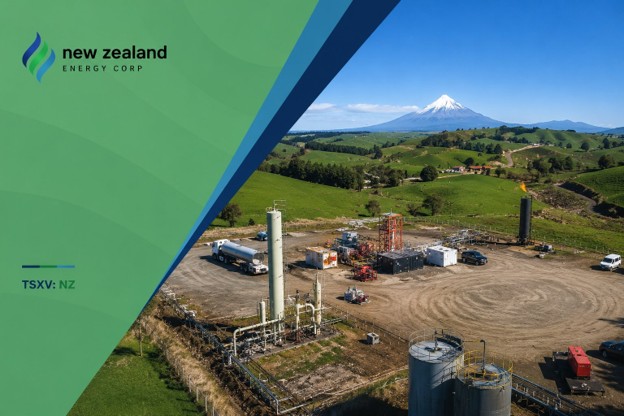
All this is to say that contingent on New Zealand’s historically high gas prices keeping steady and the price of oil remaining elevated, with Deloitte predicting as much through 2026, the company deserves high conviction when it comes to growing and optimizing production.
Propelled by a tight 60.02 million shares fully diluted, New Zealand Energy has several potential near-term catalysts, including an application in progress to extend its Ngaere permit to the west, where substantial gas exploration opportunities have been mapped. Continued execution across these initiatives could bring greater market recognition to the company’s growth strategy and expanding asset base.
Join the discussion: Find out what investors are saying about this micro-cap energy stock on the New Zealand Energy Corp. Bullboard and make sure to explore the rest of Stockhouse’s stock forums and message boards.