


- Investors are closely watching the August 19 Canada-U.S. trade deadline, as new tariffs or a last-minute deal could drive significant market volatility
- Lumber and auto stocks, including West Fraser, Canfor, Magna, and Linamar, are among the companies most exposed to changes in cross-border trade policy
- Alcohol producers, railways, and transportation firms could also see share price swings as negotiations affect trade flows and economic activity
- A successful agreement could trigger a relief rally in trade-sensitive sectors, while new tariffs may put pressure on earnings expectations and investor sentiment
With a major Canada-U.S. trade deadline arriving on Wednesday, August 19, investors are increasingly focusing on which companies could be most affected if negotiations break down or, alternatively, if a last-minute agreement is reached. Recent reports suggest Canadian and U.S. negotiators remain far apart on several key issues, including automobiles, dairy, alcohol, and other trade restrictions. The proposed U.S. tariffs could affect nearly US$20 billion worth of Canadian exports, creating significant uncertainty for a wide range of industries.
For traders and long-term investors alike, the coming days could create volatility and opportunity. Here are five sectors and stocks worth watching.
This article is a journalistic opinion piece that has been written based on independent research. It is intended to inform investors and should not be taken as a recommendation or financial advice.

1. Lumber and forestry: A direct trade-war play
Few industries have a longer history of trade disputes between Canada and the United States than lumber. The latest tariff threats have once again put forestry stocks in the spotlight, with analysts warning that Canada’s wood products sector could face additional pressure if tariffs are expanded or maintained.
West Fraser Timber
West Fraser (TSX:WFG) is one of North America’s largest lumber producers, with operations on both sides of the border. While its U.S. footprint provides some protection from trade disruptions, investor sentiment toward the company often moves with developments in lumber tariffs and housing-related trade policy.
If a deal is reached before Wednesday, West Fraser could benefit from renewed confidence in cross-border trade. However, further deterioration in relations could add pressure to pricing and export volumes.
Canfor
Canfor (TSX:CFP) faces many of the same challenges as West Fraser. The company’s exposure to U.S. markets makes it particularly sensitive to tariff changes and trade negotiations. A negative outcome could weigh on earnings expectations, while a surprise agreement could spark a relief rally among forestry stocks.
Investment theme
The forestry sector may represent one of the clearest “headline trades” this week. Positive negotiations could send shares higher, while a breakdown could quickly reverse sentiment.
2. Automotive manufacturing: The largest remaining sticking point
Automobiles remain one of the most contentious issues in negotiations between Ottawa and Washington. According to reports, discussions surrounding vehicle tariffs remain unresolved, and Canadian negotiators reportedly view current U.S. proposals as inadequate.
Magna International
Magna (TSX:MG) is one of the world’s largest automotive suppliers and is deeply integrated into the North American manufacturing ecosystem. Its parts move across borders multiple times before ending up in finished vehicles, making efficient trade relations critical.
Because of this supply-chain integration, Magna’s stock is often viewed as a barometer for broader North American automotive health. Any tariff relief could be viewed as a meaningful positive catalyst.
Linamar
Linamar (TSX:LNR) has significant exposure to automotive production and industrial manufacturing. As with Magna, trade restrictions that increase costs or create uncertainty could pressure margins and future growth expectations.
U.S. auto giants
While not Canadian companies, Ford (NYSE:F), General Motors (NYSE:GM) and Stellantis (NYSE:STLA) all maintain extensive Canadian production and supplier networks. Any disruption to trade between the two countries can increase costs and complicate manufacturing logistics.
Investment theme
Many investors believe the automotive sector could experience some of the largest moves if an agreement is reached because so much uncertainty has already been priced into the industry.

3. Alcohol and beverage companies: A political flashpoint
Alcohol has become an unexpectedly important issue in the broader trade dispute. U.S. officials have repeatedly cited Canadian restrictions on American alcohol sales as part of their justification for additional tariffs, while Canadian provinces previously removed numerous American products from store shelves in response to earlier U.S. measures.
Andrew Peller
As one of Canada’s largest wine producers, Andrew Peller (TSX:ADW.A) could be directly impacted by any tariffs affecting the wine industry. The sector has already faced challenges from inflation, changing consumer habits, and weather-related disruptions. Additional trade barriers could create further uncertainty.
Corby Spirit and Wine
Corby’s (TSX:CSW.A) large presence in the Canadian alcohol market means investors may pay close attention to any agreement involving liquor sales, distribution, or provincial restrictions.
Investment theme
This is a smaller sector than autos or forestry, but because it sits at the center of a politically sensitive negotiation, shares could see outsized reactions to policy announcements.
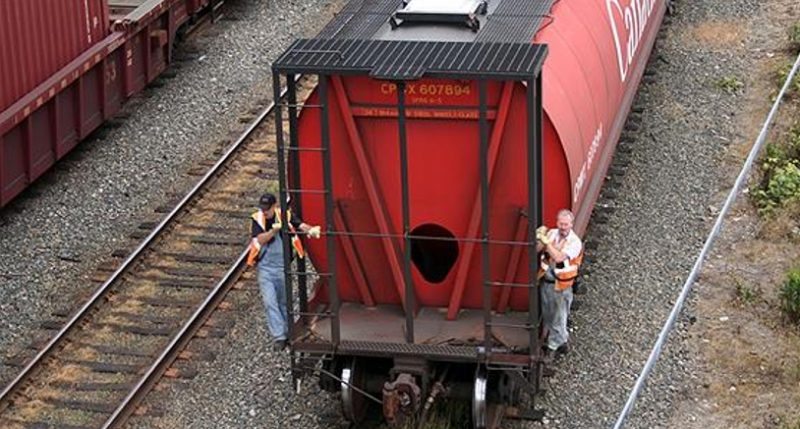
4. Railways and transportation: Following the flow of trade
When cross-border trade slows, transportation companies often feel the effects quickly. Railways move everything from automobiles and lumber to industrial products and agricultural goods, making them indirect beneficiaries or victims of changing trade conditions.
Canadian National Railway
CN’s (TSX:CNR) extensive network links Canadian producers with U.S. markets. Any reduction in trade volumes could impact shipment growth and investor sentiment.
Canadian Pacific Kansas City
CPKC (TSX:CP) is uniquely positioned due to its network connecting Canada, the United States, and Mexico. Investors often view the company as a proxy for North American trade activity.
Investment theme
Transportation stocks may not experience the same dramatic headline risks as individual manufacturers, but they often provide a broader measure of economic activity and trade flows. A successful deal could improve outlooks for freight demand across North America.

5. Industrials and construction materials
The reported tariff list includes products such as cement and furniture, sectors that may not receive as much media attention as autos or lumber but could still experience meaningful economic impacts.
While many direct cement producers operating in Canada are not publicly traded, several engineering and industrial companies could be affected indirectly through changes in business investment, infrastructure spending, and construction activity.
WSP Global
As one of the world’s largest engineering and consulting firms, WSP’s (TSX:WSP) results are influenced by infrastructure and development projects throughout North America.
AtkinsRéalis
Formerly SNC-Lavalin, AtkinsRéalis (TSX:ATRL) has broad exposure to engineering, construction, and infrastructure projects that can be influenced by economic confidence and investment trends.
Investment theme
These are less direct tariff plays than forestry or autos, but they can provide exposure to the broader economic impacts that trade disputes often create.
Final thoughts: Which stocks could move the most?
If markets receive a positive surprise before Wednesday’s deadline, the strongest relief rallies may occur in the sectors where uncertainty is highest:
- Magna International (MG)
- Linamar (LNR)
- West Fraser Timber (WFG)
- Canfor (CFP)
- Canadian National Railway (CNR)
- Canadian Pacific Kansas City (CP)
Conversely, if negotiations collapse and tariffs move forward as planned, these same stocks could face short-term downside pressure as investors reassess earnings expectations and cross-border trade risks. Reports suggest negotiators are still actively working toward an agreement, but significant differences remain heading into the final days before the deadline.
For investors looking to trade the headlines this week, these five sectors may offer some of the clearest windows into how the market expects the Canada-U.S. trade story to unfold.
Join the discussion: Find out what the Bullboards are saying on Stockhouse’s stock forums and message boards.