


Bayer: Agricultural Division with a Clear Roadmap Through 2029
On September 2, Bayer explained to investors how its agricultural division is set to grow through 2029. The Leverkusen-based company plans to generate an additional EUR 3.5 billion in revenue by 2024, assuming constant exchange rates and a constant portfolio, along with a clean EBITDA margin in the mid-20s. The insecticide Plenexos is expected to reach peak sales of around EUR 500 million by the mid-2030s, the herbicide Icafolin around EUR 750 million, and the Preceon Smart Corn System will also contribute. Of the targeted EUR 1 billion in Clean EBITDA, EUR 380 million has already been achieved annually. If the launch is successful, the cash flow target could come within reach.
On August 4, the company released its second-quarter figures. The agricultural division generated sales of EUR 4.910 billion, up 3.5% after adjusting for exchange rates and portfolio effects. EBITDA before special items rose 30.2% to EUR 902 million. Operations are going well. Bayer confirmed its outlook and now expects net financial debt to be between EUR 29 and 30 billion instead of EUR 32 to 33 billion—according to media reports, partly due to Apollo’s entry into the long-acting contraception market. The Group’s free cash flow was minus EUR 371 million, and net financial debt stood at EUR 33.647 billion. There is still work to be done to plug the gaps.
In the Biologicals segment, Bayer aims to achieve a leading global role through partnerships and is not relying on a single partner. The Leverkusen-based company has been collaborating with Boston-based Ginkgo Bioworks since 2017 and extended the partnership through October 31, 2025. Among other things, the collaboration focuses on microbes designed to fix nitrogen and supplement synthetic fertilizers; Bayer holds the commercialization rights. On June 10, 2026, the Group entered into an agreement with Aphea.Bio to develop new bioinsecticides. It also has a licensing and collaboration agreement in place with MustGrow Biologics for its pre-registered mustard-derived biocontrol product TerraMG™. If approval is granted, this could open up an additional business segment for Bayer alongside seeds and traditional crop protection.
MustGrow Biologics: Bayer Pays First Milestone
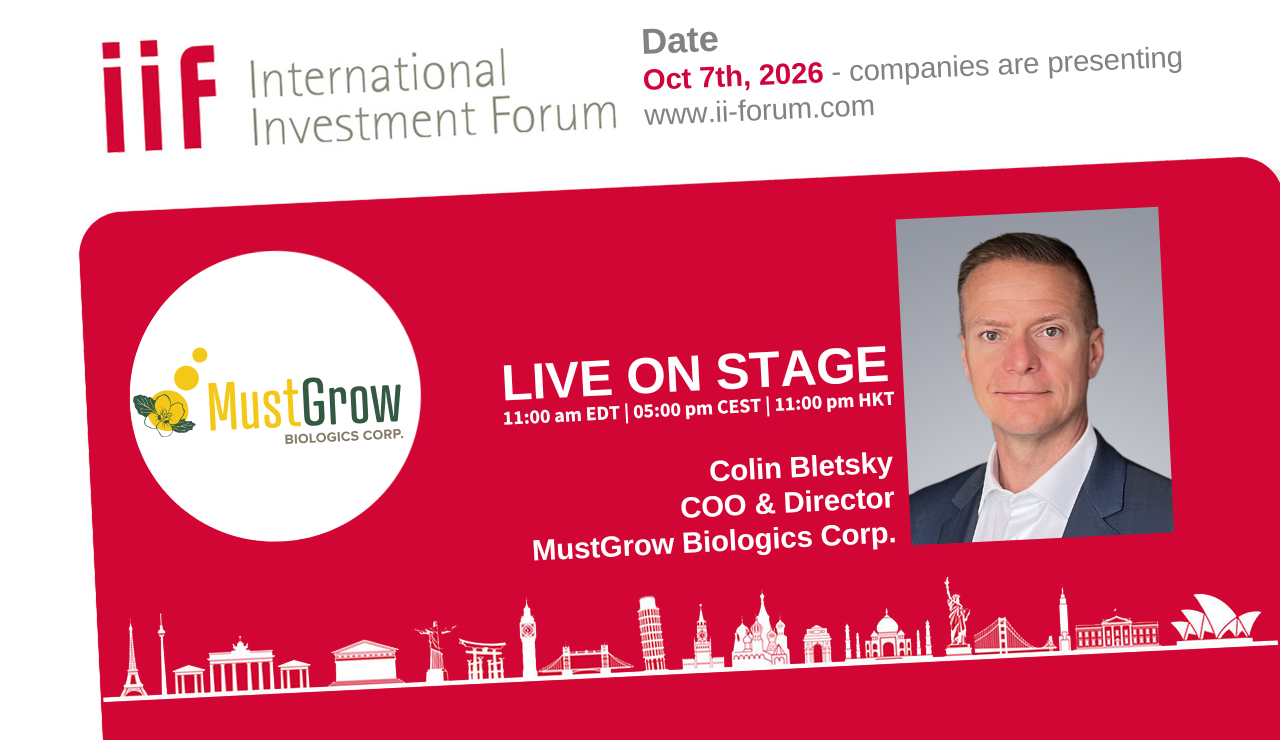
On August 21, MustGrow Biologics received its first milestone payment from Bayer under the December 2023 licensing and commercialization agreement for the biological crop protection product TerraMG™. The amount remains confidential. The agreement grants Bayer exclusive rights to develop and commercialize MustGrow’s mustard-derived biological active ingredients for soil treatment across Europe, the Middle East and Africa (EMEA). The Leverkusen-based company will fully fund and manage all regulatory submissions, field development and trials. MustGrow estimates the total value of the collaboration, including the upfront payment, milestones, and development work, at around USD 35 to USD 40 million over 5 to 7 years. It is therefore not just about payments to MustGrow. If further technical milestones are achieved, additional payments could follow, while sales could also generate royalty income.
On August 27, MustGrow reported its second-quarter financial results, posting a net profit of CAD 0.4 million from continuing operations. This marks a significant turnaround from the CAD 0.9 million loss reported during the same period last year, driven entirely by the recognition of CAD 1.4 million in upfront licensing revenues. Cash on hand as of June 30 stood at CAD 4.4 million. This means MustGrow is in the black for the quarter, and the partnership with Bayer appears to be gaining momentum.
In addition, MustGrow is already selling its registered biofertility product TerraSante™ in the US. Through August 15, revenue from TerraSante™ totaled CAD 0.9 million, a 46% increase over total sales for all of 2025. The organic soil product, which is registered in the US, is thus performing well. Management expects this strong growth to continue through 2027.
Furthermore, the product’s gross profit margins are projected to improve significantly as MustGrow transitions its distribution logistics from air freight to sea shipping. At that point, the margin should return to the 25–30% range. If the technical collaboration with Bayer proceeds as planned, a second milestone could follow in 2027. The company is also targeting positive cash flow for 2027.
BASF: Agricultural Division on Track for a Standalone IPO
On September 14, BASF appointed Citi, Deutsche Bank, Goldman Sachs and JPMorgan as coordinators for the planned initial public offering (IPO) of its agricultural division. It is set to list as a European Company in Frankfurt, with the goal of being ready by mid-2027, provided market conditions are favorable. A final decision has not yet been made. About 80% of the global business is already structured within separate subsidiaries that operate on their own corporate planning system. If the move is successful, investors could trade the Ludwigshafen-based agricultural division directly as an independent security in the future.
On September 24, the division followed up with details on how it will be structured starting January 1, 2027. Global governance will be strengthened so that decisions in local operations are made more quickly and closer to the customer. Leta LaRush will lead the US business starting October 1. The core remains the Crop Systems approach—that is, products and services as a comprehensive solution from seed to harvest. The foundation is broad: in 2025, the division generated EUR 9.6 billion in revenue and invested EUR 990 million in research. This could give the IPO a boost.
On September 9, BASF extended its partnership with the International Rice Research Institute (IRRI). The first phase of the study showed that alternating flooding and draining in direct-seeding significantly reduces methane emissions and water consumption without reducing yields. Now, both organizations are investigating the effects on soil health, carbon sequestration and biochar. The field trials are focused on the Philippines. Management plans to elaborate on the strategy on November 24 at the Capital Markets Day. Then it may become clear how much room sustainable solutions will have in the company’s future independent portfolio.
The agricultural sector is undergoing a realignment, with biologicals gaining increasing prominence. Bayer has set out its strategy through 2029, but to achieve its targets, it must further reduce its debt. If successful, partners such as MustGrow Biologics could benefit. MustGrow has received the first milestone payment from Bayer and reported a quarterly profit. The company could qualify for another payment in 2027 if it achieves the required technical milestones. Its second product, TerraSante™, is already selling strongly in the US. Meanwhile, BASF is preparing its agricultural division for an IPO, but a date for the initial public offering has not yet been set. More details are expected at the company’s Capital Markets Day on November 24.
Conflict of interest
Pursuant to §85 of the German Securities Trading Act (WpHG), we point out that Apaton Finance GmbH as well as partners, authors or employees of Apaton Finance GmbH (hereinafter referred to as “Relevant Persons”) currently hold or hold shares or other financial instruments of the aforementioned companies and speculate on their price developments. In this respect, they intend to sell or acquire shares or other financial instruments of the companies (hereinafter each referred to as a “Transaction”). Transactions may thereby influence the respective price of the shares or other financial instruments of the Company.
In this respect, there is a concrete conflict of interest in the reporting on the companies.
In addition, Apaton Finance GmbH is active in the context of the preparation and publication of the reporting in paid contractual relationships.
For this reason, there is also a concrete conflict of interest.
The above information on existing conflicts of interest applies to all types and forms of publication used by Apaton Finance GmbH for publications on companies.
Risk notice
Apaton Finance GmbH offers editors, agencies and companies the opportunity to publish commentaries, interviews, summaries, news and the like on news.financial. These contents are exclusively for the information of the readers and do not represent any call to action or recommendations, neither explicitly nor implicitly they are to be understood as an assurance of possible price developments. The contents do not replace individual expert investment advice and do not constitute an offer to sell the discussed share(s) or other financial instruments, nor an invitation to buy or sell such.
The content is expressly not a financial analysis, but a journalistic or advertising text. Readers or users who make investment decisions or carry out transactions on the basis of the information provided here do so entirely at their own risk. No contractual relationship is established between Apaton Finance GmbH and its readers or the users of its offers, as our information only refers to the company and not to the investment decision of the reader or user.
The acquisition of financial instruments involves high risks, which can lead to the total loss of the invested capital. The information published by Apaton Finance GmbH and its authors is based on careful research. Nevertheless, no liability is assumed for financial losses or a content-related guarantee for the topicality, correctness, appropriateness and completeness of the content provided here. Please also note our Terms of use.
Stockhouse does not provide investment advice or recommendations. All investment decisions should be made based on your own research and consultation with a registered investment professional. The issuer is solely responsible for the accuracy of the information contained herein. For full disclaimer information, please click here.