


The International Energy Agency estimates that, within the next decade, copper demand will outgrow supply, with the world on pace for a 30-40 per cent shortfall by 2035, and it’s no surprise, given the global rush to secure reliable domestic supply and maximize exposure to the broad array of technologies copper enables. The most essential include:
- Electric vehicles, which can use as much as 80 kg of copper per vehicle for motors, batteries and internal wiring.
- Solar panels, which contain about 5.5 tons of copper per MW.
- Wind turbines, which contain multiple tons of copper per unit.
- Electrical grids, with annual demand expected to double from 5 tons in 2020 to 40 tons in 2040.
- This is in addition to copper’s multitude of other industrial applications from jewelry, to construction, to cryogenics.
The IEA concludes that government policy is the key catalyst to expediting copper project development and keeping the green energy transition on track with the United Nations’ (U.N.) goal of net-zero global emissions by 2050.
Governments could not only shorten the timeframe from exploration to production, which can take more than 15 years, but also diversify global copper supply, with the U.N. estimating that China imports about 60 per cent of all copper ore and commands more than 45 per cent of refining. The Communist nation’s restrictions on rare earth exports, also key to the energy transition, make it an unreliable partner.
This supply-crunch setup has the price of copper sitting near a 10-year high, trading at US$4.80 per pound as of September 24, showing clear signs of upward momentum for copper-rich nations to capitalize on.
China’s chief economic rival, the United States, is the most significant new entrant in the quest for copper, following president Trump’s executive order to accelerate domestic critical mineral production in March 2025, and copper’s addition to the government’s official list of critical materials in August, making the metal’s outsized role to U.S. national security more apparent than ever and clearing the way for explorers, developers and producers to step up to the plate.
Introducing Highland Copper
A U.S.-based explorer and developer that should be on any micro-cap investor’s radar is Highland Copper (TSXV:HI), market capitalization C$95.78 million, whose pair of multi-billion-pound copper projects in the state of Michigan – Copperwood and White Pine North – are positioned to become meaningful contributors to the U.S. supply chain.
This article is disseminated in partnership with copper miner Highland Copper Company Inc. It is intended to inform investors and should not be taken as a recommendation or financial advice.
The copper miner is focused on development and eventual production, driven by collaboration with local communities and exceeding environmental standards, guided by a high-conviction leadership team fit to transform potential into shareholder value. Here’s a quick introduction:
- Chief Executive Officer, Barry O’Shea, brings more than 15 years in mining finance, including stints at New Gold and the now acquired Fiore Gold.
- Chair Stephen Hicks offers decades of experience in Michigan-based project development.
- Project Director, Wynand van Dyk, adds 30 years of experience in mining, metallurgy and capital projects from design to construction to commissioning. Highlight tenures include De Beers, Hatch, Itafos and Lonmin Platinum, the latter subsequently acquired by Sibanye-Stillwater.
- The supporting team is well rounded across metallurgy, corporate law, finance, mining engineering and corporate development with tenures at top names Rio Tinto, Barrick, Newmont, Fortis and Major Drilling Group International.
In more than capable hands, Highland is on a path to a construction decision at its flagship Copperwood project in H1 2026, which is expected to produce about 30,000 tons of copper per year, representing about 2 per cent of U.S. demand, as estimated by Visual Capitalist. Let’s take a closer look at the project to pinpoint why management is prioritizing development.
The Copperwood project
Copperwood’s fully permitted underground mine, located on Michigan’s Western Upper Peninsula, is estimated to contain 1.8 billion pounds of copper measured and indicated and 1.9 billion pounds in inferred resources.
The 100-per-cent-owned project, permitted for construction, yielded a 2023 feasibility study detailing an after-tax net present value (8 per cent discount rate) of US$168 million, initial capital costs of US$391 million and a payback period of only 3.5 years at US$4 copper. Operations would average the 30,000-ton figure for 10.7 years, in addition to 106,966 ounces of silver per year. At US$5 per pound of copper, the after-tax NPV triples to US$507 million, representing strong leverage to changes in the copper price.
Backed by resolutions of support from all townships within Gogebic County and numerous neighboring communities, plus US$50 million in potential grant funding from the State of Michigan, up to US$250 million in potential debt financing from the Export-Import Bank of the United States, a robust inferred resource to upgrade over the coming years, as well as secured permitting, Copperwood’s short-term path to production makes it a strategic first project to maximize shareholder leverage to the global copper tailwind.
Copperwood’s updated process plant flow sheet
Management most recently substantiated Copperwood’s untapped value with a metallurgical testing program in Q1 2025, which succeeded in optimizing proposed plant operations and increasing copper recovery rates, while reducing expected power consumption and capital and processing costs. Glencore Technologies, developer of the Jameson Cell ultrafine flotation technology to be deployed at Copperwood, is prepared to offer a performance guarantee for the copper recovery estimate.
The metallurgical program, a key step in phase-1 engineering, helped the copper miner take meaningful strides towards finalizing design criteria for the plant, mine, as well as tailings and water management. Here’s a breakdown:
- Management unlocked efficiency by optimizing the project’s process circuit, adopting a mill-float-mill-float (MF2) flowsheet, including a de-sliming stage prior to the secondary milling stage, facilitating the rejection of up to 25 per cent of primary rougher tailings, yielding energy savings of between 10 and 13.7 per cent compared to Copperwood’s 2023 feasibility study,
- The copper miner also achieved substantial improvements with the process’ reagent scheme, reducing expected operating costs from US$6.50 (2023 feasibility study) to US$5.49 per ton milled at a higher score for environmental, health and safety.
Test work under these new parametres, supported by Glencore’s proven technology in over 140 copper projects worldwide, delivered average copper recoveries of up to 87.6 per cent at a concentrate grade of 25 per cent copper – up from 86 per cent and 25 per cent in the feasibility study – all while lowering costs and reducing environmental footprint, paving a clear path to improved project economics.
As phase-1 engineering finalizes in September 2025, the copper miner has its sights set on completing lock-cycle tests, which are a better approximation of real-world conditions, in Q4 2025, while it ramps up community engagement and progresses towards final process design criteria ahead of phase-2 of the detailed engineering program, which is expected to run into Q2 2026, enhance Copperwood’s value proposition and further justify a construction decision.
White Pine North project
Copperwood is only half of Highland’s production story, with its nearby 34-per-cent-owned White Pine North project, under joint venture with 66-per-cent owner Kinterra Copper, expected to deliver average payable copper production of 93.5 million pounds and 1.2 million ounces of silver per year over a mine life of 21.8 years, as per a 2023 preliminary economic assessment (PEA).
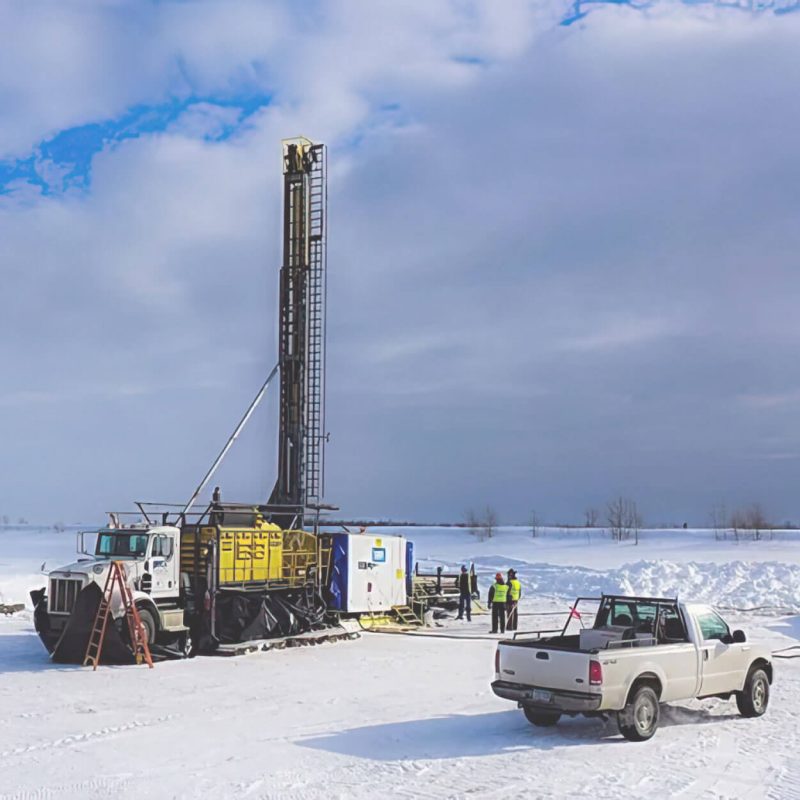
The PEA assigns the project an US$821 million after-tax net present value (discounted at 8 per cent), with initial capital costs of US$615 million and a payback period of only 3.5 years at US$4 copper.
As environmental studies continue through 2025, Highland and Kinterra are focused on the near-term catalysts of permitting submissions, a pre-feasibility study and a resource update to continue de-risking White Pine North’s value proposition.
A copper stock with significant re-rating potential
Given that Highland Copper stock is up by just over 40 per cent since announcing Copperwood’s 2023 feasibility study and White Pine’s PEA, despite both substantiating significantly expanded resources, and the price of copper adding almost 20 per cent over the period to date, it’s safe to say that the broader market has yet to key into the copper miner’s multi-billion-dollar opportunity to supercharge the U.S. supply chain.
This is likely because of the developed risk-tolerance required to hold micro-cap mining stocks, whose pre-revenue operations can undergo wide share price swings, calling for thorough due diligence on the part of investors to make sure businesses are worth holding over the long term.
But as we’ve established, when put under the analytical microscope, Highland stands up to scrutiny, combining bespoke leadership, large-scale projects and data-driven prospectivity into high-conviction exposure to rising copper prices, plus strong price/NAV re-valuation potential.
Our thesis is only strengthened by Highland’s numerous institutional investors, including Orion Mine Finance (28 per cent), Condire Investors (16 per cent) and Osisko Gold Royalties (6 per cent), whose seasoned research teams de-risk retail participation in the copper miner’s commitment to disciplined development.
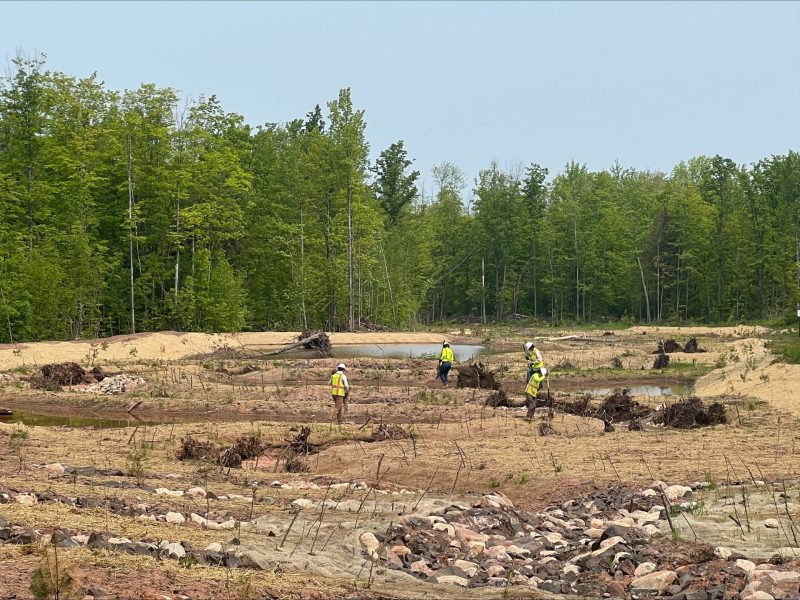
Look for this commitment, most recently highlighted by an early site preparation and environmental mitigation program at Copperwood in September, to add momentum through more development milestones towards a construction decision in 2026.
Join the discussion: Find out what investors are saying about this copper miner on the Highland Copper Company Inc. Bullboard and check out the rest of Stockhouse’s stock forums and message boards.
Stockhouse does not provide investment advice or recommendations. All investment decisions should be made based on your own research and consultation with a registered investment professional. The issuer is solely responsible for the accuracy of the information contained herein. For full disclaimer information, please click here.