
- President Trump threatened to impose a 50 per cent tariff and “decertify” Canadian-made aircraft, accusing Canada of refusing to certify U.S.-built Gulfstream jets
- The legality and feasibility of such “decertification” is unclear, as aircraft certification authority rests with the FAA, not the presidency
- Bombardier (TSX:BBD.A) responded by stressing its large U.S. workforce and FAA-certified operations, urging a quick resolution to avoid disruptions to North American air travel
- Bombardier stock (TSX:BBD.A) last traded at C$249.21
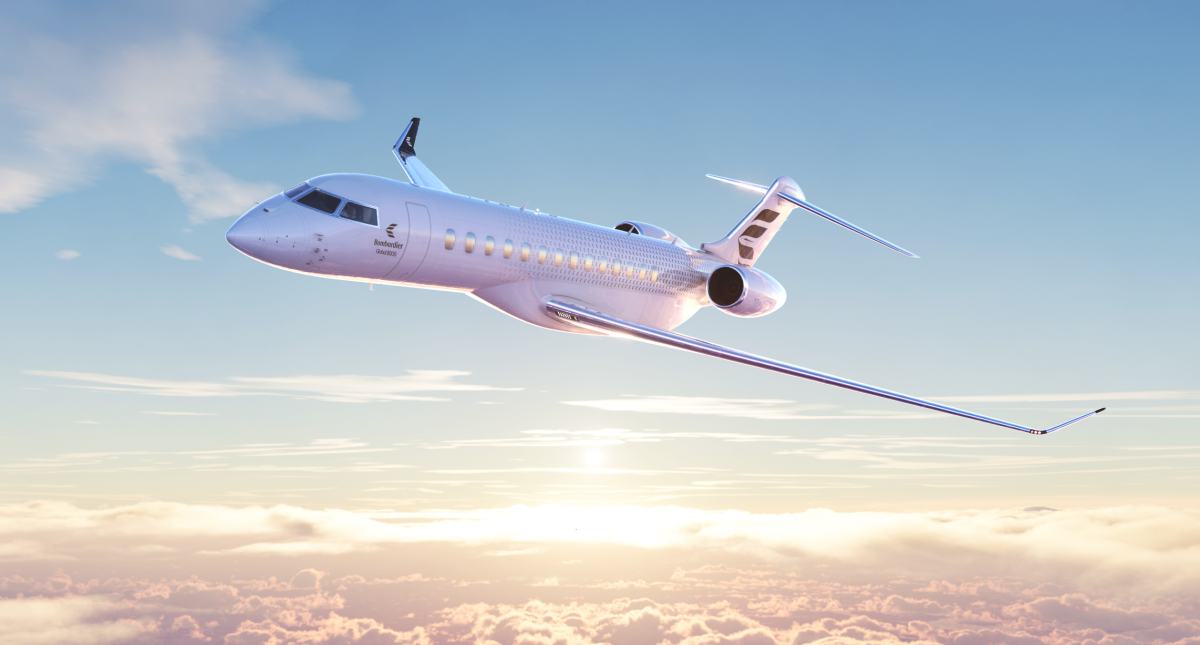
U.S. President Donald Trump escalated trade tensions with Canada on Thursday, threatening to impose a 50 per cent tariff on Canadian aircraft sold into the United States and to “decertify” Canadian‑made planes, including Bombardier’s (TSX:BBD.A) Global Express series. The warning came in a post on Trump’s social media platform, Truth Social, where he accused Ottawa of blocking the certification of several U.S.-built Gulfstream business jets.
In his post, Trump asserted that Canada had “wrongfully, illegally, and steadfastly refused to certify” the Gulfstream 500, 600, 700, and 800—jets he described as among “the most technologically advanced airplanes ever made.” As retaliation, he said the United States would “decertify” Bombardier Global Express aircraft and “all aircraft made in Canada” unless Canadian regulators approve the Gulfstream models.
Trump added that Canada was effectively prohibiting Gulfstream sales through the same certification process and warned that if the situation were not “immediately corrected,” he would impose a 50 per cent tariff on any Canadian aircraft sold into the U.S.
Uncertainty over what “decertifying” means
The meaning of “decertification” remains unclear. Under U.S. law, the Federal Aviation Administration (FAA)—not the president—controls aircraft certification, and certifications are typically revoked only for safety reasons. The FAA is currently led by a Trump appointee.
More than 150 Bombardier Global Express jets are registered in the U.S., and thousands of Canadian-built jets—from business aircraft to commercial regional jets—operate in U.S. airspace daily. According to Bloomberg, more than half of Bombardier’s global fleet of 5,200 aircraft operate in the United States, and roughly two‑thirds of Bombardier’s sales come from U.S. customers, compared to about 3 per cent from Canada. A White House official told Reuters that Trump was not suggesting decertifying Canadian-built planes already in operation, limiting the threat to new aircraft only.
Bombardier responds
In a statement, Bombardier said it had “taken note of the post from the President of the United States” and was in contact with the Canadian government. The company emphasized its deep U.S. economic footprint, noting that it employs more than 3,000 people across nine major U.S. facilities and supports thousands of jobs through 2,800 American suppliers. Bombardier added that its aircraft and technicians are fully certified to FAA standards and that the company is actively investing in U.S. expansion, including a recent growth announcement in Fort Wayne, Indiana.
“Thousands of private and civilian jets built in Canada fly in the U.S. every day. We hope this is quickly resolved to avoid a significant impact to air traffic and the flying public,” the company said.
Broader trade and aviation implications
The dispute comes amid increasingly strained U.S.–Canada relations, with both sides trading criticism over trade policy and market access. Analysts and aviation experts have questioned whether Trump has the authority to unilaterally decertify aircraft for non‑safety reasons, calling the idea unprecedented in modern aviation regulation.
Aviation industry specialists warn that such a move—if implemented—could disrupt business aviation, regional airline operations, cross‑border travel, and aerospace supply chains, given the deep integration of U.S. and Canadian aircraft manufacturing.
For now, neither Transport Canada nor the FAA has indicated that any certification changes are imminent, and how does Boeing (NYSE:BA) get a free pass? Yes, that’s a rhetorical question.
About Bombardier
Bombardier builds jets for businesses, governments and militaries around the world. The company’s customers operate a fleet of more than 5,200 aircraft supported by 10 service facilities across six countries. Manufacturing activities are based in Canada, Mexico and the United States.
Bombardier stock (TSX:BBD.A) last traded at C$$249.21 and has added 186.89 per cent year-over-year.
Join the discussion: Find out what investors are saying about this aviation stock on the Bombardier Inc. Bullboard and make sure to explore the rest of Stockhouse’s stock forums and message boards.
Stockhouse does not provide investment advice or recommendations. All investment decisions should be made based on your own research and consultation with a registered investment professional. The issuer is solely responsible for the accuracy of the information contained herein.
For full disclaimer information, please click here.