

Rheinmetall: Autonomous Systems as a New Mainstay
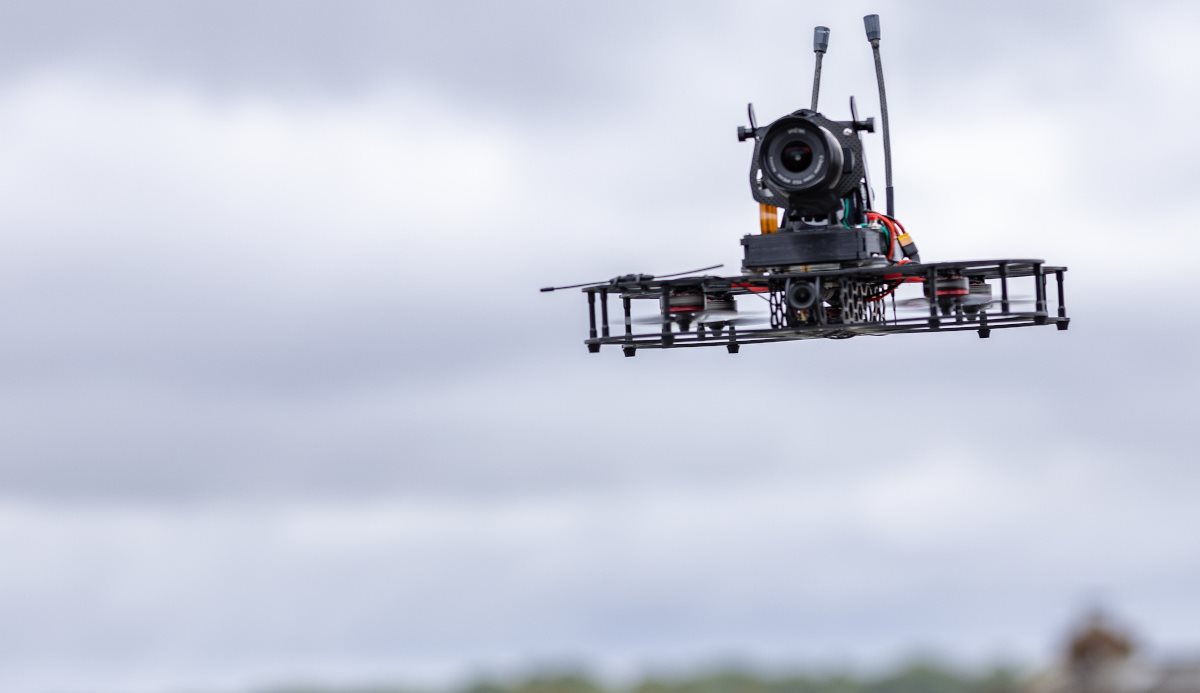
Rheinmetall is aggressively driving the development of unmanned aerial vehicles. The FV-014, an autonomously operating kamikaze drone with a 100 km range, received a billion-euro framework contract from the German Armed Forces in April. Series production is set to begin later this year. At the same time, the LUNA NG reconnaissance drone has been operating in Ukraine for months, gaining combat experience. With the Auterion software platform, the group aims to establish a unified operating system for drones from various manufacturers. Added to this are satellite-based radar reconnaissance in the Lower Rhine region and new partners, such as Anduril, for European drone projects. Rheinmetall increasingly sees itself as a systems provider for autonomous air, land, and space operations.
The group is making a definitive exit from the automotive supplier business. Its Power Systems division is being sold to Munich-based industrial holding company Aequita for EUR 350 million. The transaction is expected to close by the end of 2026, with approximately 6,200 employees transferring to the new owner. Shortly before the announcement, Romania placed a EUR 5.7 billion defence package order, including 298 Lynx infantry fighting vehicles, Skyranger air defence systems, and naval vessels. Production is to take place primarily on-site, with the first deliveries scheduled for 2028. At the same time, the US subsidiary is investing USD 41 million across six facilities to expand capacity for American programs such as the XM30 combat vehicle. In addition, a EUR 500 million bond offering with a 3.375% coupon was oversubscribed several times over.
In the first quarter, revenue rose by only 8% to EUR 1.94 billion, falling significantly short of market expectations. Operating profit, however, increased by 17%, and the margin improved to 11.6%. Free cash flow turned negative at EUR -285 million due to high inventory levels. This is the flip side of a bulging order book. The order backlog grew to EUR 73 billion, up 31%. Management reaffirms the annual revenue forecast of EUR 14–14.5 billion, with a margin of around 19%. The challenge will be to quickly convert the full pipeline into cash without being derailed by geopolitical glimmers of hope. The stock is currently trading at around EUR 1,212.40.
Volatus Aerospace: From Pipeline Inspector to Defence Supplier
Anyone in the drone industry who focuses solely on hardware is missing the real issue. Many companies can build aircraft, but hardly any operate them reliably on a commercial scale. This is precisely where Volatus has positioned itself, with 28 manned aircraft, over 100 drones, and 1.7 million km of annual pipeline monitoring. This operational foundation delivers recurring revenue and practical experience that pure developers lack. In 2025, revenue stood at around CAD 34 million, a 26% increase. The Board of Directors is now strengthening its ranks with Catherine Loubier, a former senior advisor to a Canadian premier. She brings excellent Canada-US networks to the table and represents Investissement Québec. This signals growing institutional support. On June 5, the company completed a bought-deal financing that brought CAD 34.5 million into the coffers. The new shares were issued at CAD 0.65.
The recently signed memorandum of understanding with the UCan Brave Tech Centre, a Canadian-Ukrainian defence innovation organization, is more than a symbolic gesture. The objective is to bring combat-proven defence technologies developed and tested in Ukraine—from C-UAS to reconnaissance systems—to Canada for validation, integration, and scaling. Volatus is contributing its Mirabel manufacturing facility, which has an annual production capacity equivalent to approximately CAD 250 million in revenue, as well as its system integration expertise. This represents an important first step toward a transatlantic defence technology partnership. Companies that gain access to real-world operational insights without being directly involved in a conflict may enjoy a significant strategic advantage. The key question for investors is how quickly these collaborative efforts can translate into tangible contracts and recurring streams.
Participation in Phase II of the US Drone Dominance Program, with a total volume of USD 1.1 billion, is also exciting. Volatus is qualified for the “Long Range Strike” category with a single-use attack drone. In this round, contracts worth at least USD 300 million for 30,000 systems will be awarded. The fixed price is USD 4,500 per long-range unit. The competition involves practical flight tests. Those who pass will secure orders for up to 8,000 units. The strict supply chain rules—prohibiting the use of components from non-allied countries—play into Volatus’s hands, given its Canadian-European base. Whether the company wins the contract will be determined this summer during the Gauntlet tests. The stock is currently trading at around CAD 0.66.
Lockheed Martin: Autonomy, Contracts, Capabilities
Lockheed Martin is driving the development of unmanned, AI-driven platforms. This is a strategic lever that investors should not overlook. With the Multi-Domain Combat Control (MDCX) software, operators can control drone swarms from a single platform, across all manufacturers. The legendary Skunk Works unit is testing autonomous aerial combat on the X-62A VISTA and has already integrated AI into the F-35 cockpit. Added to this are Sikorsky’s Nomad drone family and ground-based autonomous HIMARS variants. These technologies address the growing need for defensible, manpower-saving systems. This is a future market that could transform Lockheed from a pure hardware supplier into a software and data provider.
In early June, Lockheed secured a multi-billion-dollar contract. Canada is procuring 26 HIMARS rocket launchers worth approximately USD 2.6 billion. The package includes ammunition as well as a ten-year industrial support program for domestic suppliers. The order is part of a wave of NATO partners modernizing their artillery. The war in Ukraine has dramatically highlighted the value of mobile precision systems. For Lockheed, this means further utilization of production lines for GMLRS and Precision Strike Missiles. The Missiles & Fire Control segment thus remains a reliable driver of the business.
Also in early June, Lockheed demonstrated a successful interception of an attack drone. The system combined Fortem radars with a GRIZZLY launcher and a JAGM guided missile. Such capabilities are in high demand since drones have played a major role in conflicts in the Middle East and Ukraine. At the same time, the company is expanding its production capacity. A roughly 8,000 sqm factory for THAAD interceptors and the Next Generation Interceptor is being built in Alabama. The investment is part of a USD 9 billion program through 2030, driven by sustained high demand. Currently, a share costs around USD 523.76.
The new era of warfare belongs to autonomous systems. Rheinmetall is expanding its defence ecosystem with kamikaze drones and a software platform, but is struggling with negative cash flow. Volatus Aerospace aims to translate combat experience from Ukraine into scalable, series-produced products and is qualified for multi-billion-dollar US drone programs. Lockheed Martin is combining AI-driven swarm technology with multi-billion-dollar HIMARS contracts and massively expanding its production capacity. Companies like these three, which focus early on unmanned systems, operational excellence, and software integration, are positioning themselves for the most profitable defence cycle since the Cold War.
Conflict of interest
Pursuant to §85 of the German Securities Trading Act (WpHG), we point out that Apaton Finance GmbH as well as partners, authors or employees of Apaton Finance GmbH (hereinafter referred to as “Relevant Persons”) currently hold or hold shares or other financial instruments of the aforementioned companies and speculate on their price developments. In this respect, they intend to sell or acquire shares or other financial instruments of the companies (hereinafter each referred to as a “Transaction”). Transactions may thereby influence the respective price of the shares or other financial instruments of the Company.
In this respect, there is a concrete conflict of interest in the reporting on the companies.
In addition, Apaton Finance GmbH is active in the context of the preparation and publication of the reporting in paid contractual relationships.
For this reason, there is also a concrete conflict of interest.
The above information on existing conflicts of interest applies to all types and forms of publication used by Apaton Finance GmbH for publications on companies.
Risk notice
Apaton Finance GmbH offers editors, agencies and companies the opportunity to publish commentaries, interviews, summaries, news and the like on news.financial. These contents are exclusively for the information of the readers and do not represent any call to action or recommendations, neither explicitly nor implicitly they are to be understood as an assurance of possible price developments. The contents do not replace individual expert investment advice and do not constitute an offer to sell the discussed share(s) or other financial instruments, nor an invitation to buy or sell such.
The content is expressly not a financial analysis, but a journalistic or advertising text. Readers or users who make investment decisions or carry out transactions on the basis of the information provided here do so entirely at their own risk. No contractual relationship is established between Apaton Finance GmbH and its readers or the users of its offers, as our information only refers to the company and not to the investment decision of the reader or user.
The acquisition of financial instruments involves high risks, which can lead to the total loss of the invested capital. The information published by Apaton Finance GmbH and its authors is based on careful research. Nevertheless, no liability is assumed for financial losses or a content-related guarantee for the topicality, correctness, appropriateness and completeness of the content provided here. Please also note our Terms of use.
Stockhouse does not provide investment advice or recommendations. All investment decisions should be made based on your own research and consultation with a registered investment professional. The issuer is solely responsible for the accuracy of the information contained herein. For full disclaimer information, please click here.