

Almirall Focuses on Precision in Dermatology and Forges Alliances
The Spanish dermatology specialist Almirall demonstrates that European pharmaceutical companies, too, can hold their own among the international leaders. Rather than spreading itself too thin across countless projects, the Catalan company consistently focuses on inflammatory skin diseases and modern biologics. Recent financial results show this strategy is paying off. In fiscal year 2024, Almirall increased net revenue by 10.2% to EUR 985.7 million, generated operating EBITDA of EUR 192.6 million, and invested EUR 124.2 million, exactly 12.6% of revenue, in research and development. In the following year, revenue climbed further to EUR 1.11 billion, with a stable R&D ratio of 12.5%. The main revenue driver is the biologic Lebrikizumab, which neutralizes the inflammatory cytokine IL-13. Following regulatory approvals, the company is rolling out the antibody in key markets such as Germany, Austria, the United Kingdom, and Spain, while its licensing partner, Eli Lilly, handles overseas sales. At the same time, however, Almirall is facing margin pressure, as expanding distribution channels and costly Phase 3 regulatory extensions for young children tie up financial resources. To avoid falling behind the competition, the company is advancing its own pipeline candidates—such as the triple-signal-pathway inhibitor ALM27134, now in Phase 2—and is also securing market share in the treatment of actinic keratosis with tirbanibulin, though this requires funding field studies.
AstraZeneca Focuses on Major Platforms
Among the industry’s major players, the British-Swedish conglomerate AstraZeneca demonstrates how cutting-edge translational research can be scaled up to an industrial level. With its long-term strategy, management aims to bring twenty novel drugs to market by the end of the current decade. As part of its roadmap, AstraZeneca is targeting annual revenue of USD 80 billion by 2030, having recently achieved revenue well over USD 50 billion. Crucial to these plans are massive research complexes such as the Discovery Centre in Cambridge, UK, and the campus in Gothenburg, Sweden. Nevertheless, AstraZeneca is also grappling with the typical challenges of modern cell therapies: autologous CAR-T procedures are extremely costly and time-consuming to produce, and they regularly fail to penetrate the dense protective barriers of solid tumors. To solve these problems, researchers are genetically engineering the body’s own T cells to target the immunosuppressive cytokine TGF-beta or, through the acquired company Neogene Therapeutics, are using TCR-T constructs to attack intracellular targets. At the same time, AstraZeneca is advancing cellular CAR-T platforms for complex autoimmune diseases such as lupus erythematosus. These innovative therapies require significant capital and complex logistics.
Vidac Pharma Reverses the Metabolism of Cancer Cells
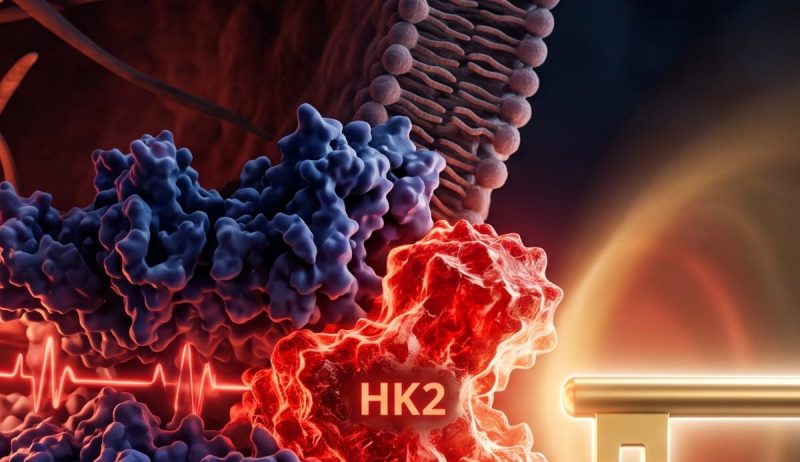
While industry giants are investing billions in existing platforms, the biotech company Vidac Pharma is taking a more radical approach. The research team is tackling a phenomenon that has fascinated experts since the days of German researcher and Nobel laureate Otto Warburg—cancer cells behave like parasites in the body. They completely switch their metabolic engine and burn vast amounts of sugar to grow faster. Normally, a kind of “biological emergency brake” ensures that severely damaged cells die on their own. In tumors, however, a specific enzyme bypasses this protective mechanism. The enzyme migrates to the cell’s powerhouses, docks there at a tiny gate, and directly diverts energy. At the same time, it locks this gate shut like a wedge. As a result, the body’s own signals for programmed cell death can no longer get through, and the cancer cell becomes virtually immortal.

This is exactly where Vidac Pharma’s active ingredient comes into play: it acts like a precise molecular lockpick. The molecule breaks the bond between the enzyme and the cellular gate. As soon as the enzyme is pushed aside, the tumor’s uncontrolled sugar rush collapses. The gate reopens, the cell receives its natural self-destruction signals, and dies in a controlled manner. Because healthy body cells use different molecular building blocks and do not block these gates in the first place, the therapy targets only the diseased tissue. In a controlled Phase 2a clinical trial, the topical ointment VDA-1102 reduced the number of skin lesions in high-risk patients with actinic keratosis, a precursor to non-melanoma skin cancer, by a median of 64.6% compared to a placebo. Crucially for patients: the agonizing, inflammatory skin damage associated with common standard therapies was completely absent. The European follow-up study to validate the data is already underway, after the Wuppertal-based study centre Centroderm began the treatment in February 2026 and completed recruitment of all 39 participants in June 2026.
Pipeline Potential and Promising Alliances at Vidac Pharma
The range of applications for Vidac Pharma’s drug platform by no means ends with skin cancer or its precursor lesions. The drug VDA-1275 offers the most exciting potential for future partnerships. This novel chemical compound is currently undergoing preclinical testing against colorectal, lung, and liver tumors. Laboratory findings show that the compound transforms tumor-promoting M2 macrophages into cytotoxic M1 cells and stimulates the formation of protective CD8 memory cells. Furthermore, in three-dimensional organoid models of human liver tumors, the compound drastically reduced the required dosage of established cytostatic drugs such as cisplatin. Given such synergies, Vidac Pharma is an exciting company that could partner with many larger biotech firms or pharmaceutical conglomerates. Almirall could serve as a model; with its EUR 300 million mRNA partnership with Etherna and its AI agreement with Absci worth up to USD 650 million, Almirall has demonstrated how even a mid-sized company can make a big splash by collaborating with partners.

Conflict of interest
Pursuant to §85 of the German Securities Trading Act (WpHG), we point out that Apaton Finance GmbH as well as partners, authors or employees of Apaton Finance GmbH (hereinafter referred to as “Relevant Persons”) may hold shares or other financial instruments of the aforementioned companies in the future or may bet on rising or falling prices and thus a conflict of interest may arise in the future. The Relevant Persons reserve the right to buy or sell shares or other financial instruments of the Company at any time (hereinafter each a “Transaction”). Transactions may, under certain circumstances, influence the respective price of the shares or other financial instruments of the Company.
In addition, Apaton Finance GmbH is active in the context of the preparation and publication of the reporting in paid contractual relationships.
For this reason, there is a concrete conflict of interest.
The above information on existing conflicts of interest applies to all types and forms of publication used by Apaton Finance GmbH for publications on companies.
Risk notice
Apaton Finance GmbH offers editors, agencies and companies the opportunity to publish commentaries, interviews, summaries, news and the like on news.financial. These contents are exclusively for the information of the readers and do not represent any call to action or recommendations, neither explicitly nor implicitly they are to be understood as an assurance of possible price developments. The contents do not replace individual expert investment advice and do not constitute an offer to sell the discussed share(s) or other financial instruments, nor an invitation to buy or sell such.
The content is expressly not a financial analysis, but a journalistic or advertising text. Readers or users who make investment decisions or carry out transactions on the basis of the information provided here do so entirely at their own risk. No contractual relationship is established between Apaton Finance GmbH and its readers or the users of its offers, as our information only refers to the company and not to the investment decision of the reader or user.
The acquisition of financial instruments involves high risks, which can lead to the total loss of the invested capital. The information published by Apaton Finance GmbH and its authors is based on careful research. Nevertheless, no liability is assumed for financial losses or a content-related guarantee for the topicality, correctness, appropriateness and completeness of the content provided here. Please also note our Terms of use.
Stockhouse does not provide investment advice or recommendations. All investment decisions should be made based on your own research and consultation with a registered investment professional. The issuer is solely responsible for the accuracy of the information contained herein. For full disclaimer information, please click here.