
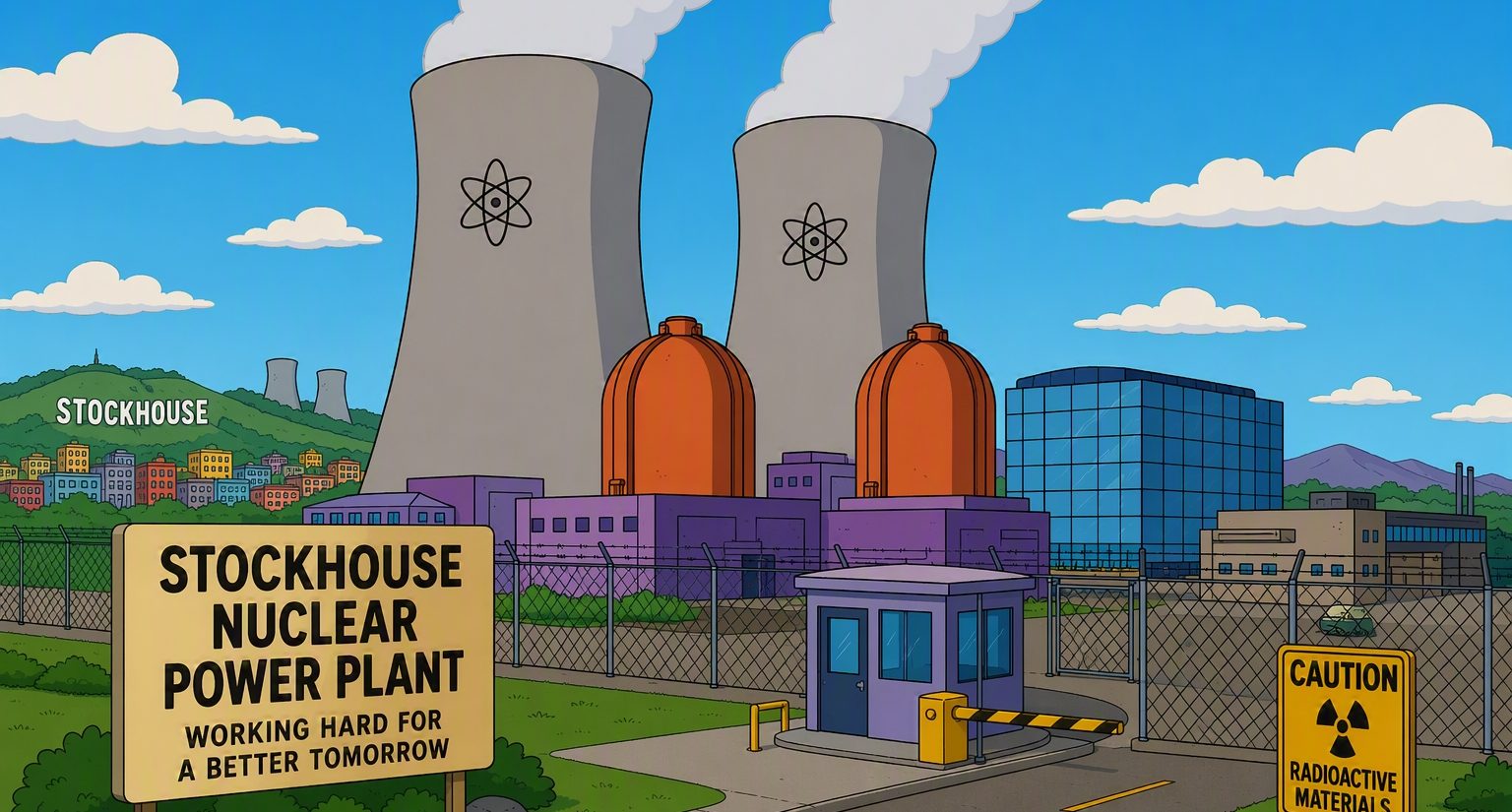

- AI data centres are driving a surge in electricity demand, increasing interest in reliable 24/7 nuclear power generation
- Small modular reactors could make nuclear projects faster and less expensive to build, though the technology still faces commercialization hurdles
- Investors are watching companies such as Constellation Energy, Cameco, and GE Vernova as potential beneficiaries of a nuclear industry revival
- Government support and energy security concerns are strengthening the case for nuclear power as countries seek dependable, low-carbon sources of electricity
For much of the past two decades, nuclear energy appeared to be a declining force in the global power market. High construction costs, regulatory hurdles, and public concerns following incidents such as Fukushima led many investors to view nuclear power as a mature industry with limited growth prospects. Today, however, a new set of economic and geopolitical realities is forcing both policymakers and corporations to reconsider that assumption.
The combination of rapidly growing electricity demand from artificial intelligence (AI), increasing concerns about energy security, and advancements in small modular reactor (SMR) technology has sparked renewed interest in nuclear energy. While significant challenges remain, the sector is once again emerging as a serious long-term investment theme.
AI Is creating a new demand shock
One of the most important catalysts behind nuclear’s resurgence is the explosive growth of AI and data centres.
According to the International Energy Agency (IEA), global electricity consumption from data centres is expected to rise dramatically over the coming decade as AI applications become more widespread. Data centres already consume hundreds of terawatt-hours of electricity annually, and demand is expected to continue growing as cloud computing and AI workloads expand.
The challenge is that AI infrastructure requires more than just large amounts of electricity. It needs power that is available around the clock. While renewable sources such as solar and wind continue to expand rapidly, their intermittent nature can complicate efforts to meet constant demand from hyperscale data centres.
This article is a journalistic opinion piece that has been written based on independent research. It is intended to inform investors and should not be taken as a recommendation or financial advice.
As a result, technology companies are increasingly exploring partnerships with nuclear providers. The IEA notes that agreements between data centre operators and SMR developers have grown substantially, highlighting nuclear energy’s potential role as a reliable source of low-carbon baseload power.
For investors, this represents a potentially important shift. Instead of relying solely on utilities and government demand, nuclear projects may increasingly benefit from direct support from some of the world’s largest technology companies.
Energy security is back on the agenda
Beyond AI, energy security has become a major policy priority.
The geopolitical disruptions of recent years exposed weaknesses in global energy supply chains and highlighted the risks of overreliance on imported fuels. Governments across North America, Europe, and Asia have responded by emphasizing domestic energy production and grid resilience.
Nuclear power offers several advantages in this environment. Nuclear plants operate continuously, require relatively small amounts of fuel compared with fossil-fuel generation, and can provide stable electricity regardless of weather conditions. These characteristics have led many governments to include nuclear energy in long-term energy security and decarbonization strategies.
This policy support is important because government backing has historically been one of the key determinants of success in the nuclear industry. Long permitting timelines and large capital requirements often make public-sector involvement necessary.
The promise of small modular reactors
Perhaps the most closely watched development is the emergence of small modular reactors.
Traditional nuclear plants are multi-billion-dollar projects that can take a decade or more to complete. Cost overruns and delays have plagued many new builds, limiting investor enthusiasm.
SMRs aim to address these issues by using standardized designs and factory-built components that can be assembled more efficiently than conventional reactors. Developers argue that this modular approach could shorten construction timelines, lower costs, and reduce project risk.
The technology is not yet proven at large commercial scale, and many projects remain in development. However, momentum is building. Governments, utilities, and technology companies are increasingly supporting SMR programs, while several designs are moving through licensing and regulatory processes.
If SMRs can deliver on their promises, they could significantly expand the addressable market for nuclear power beyond traditional utility-scale projects.
Three stocks investors are watching
Constellation Energy (NASDAQ:CEG) operates the largest nuclear fleet in the United States, making it one of the most direct ways to gain exposure to renewed interest in nuclear generation. The company has benefited from growing demand for carbon-free electricity and has actively explored opportunities linked to advanced reactor technologies and AI-driven power demand.
Constellation Energy Corp. stock (NASDAQ:CEG) opened trading roughly 3 per cent higher at US$263.26.
While utilities generate the electricity, uranium producers supply the fuel. Cameco (NYSE:CCJ) is one of the world’s largest uranium mining companies and stands to benefit if reactor construction, life extensions, and fuel demand increase globally. A sustained nuclear revival would likely support long-term uranium demand, placing companies such as Cameco in a favourable position.
Cameco Corp. stock (NYSE:CCJ) opened trading around 2 per cent higher at US$126.49.
Through GE Hitachi Nuclear Energy, GE Vernova (NYSE:GEV) is developing the BWRX-300 SMR, one of the most closely monitored reactor designs in North America. Multiple utilities and industry partners have selected or expressed interest in the technology, making GE Vernova a notable player in the advanced nuclear ecosystem.
GE Vernova stock (NYSE:GEV) opened about 7 per cent lower at US$1,021.02, but it is trading more than 50 per cent higher than where it was when the year began.
The risks remain significant
Despite growing enthusiasm, investors should recognize that a nuclear renaissance is far from guaranteed.
New reactor projects remain expensive, regulatory approval processes can take years, and public opinion toward nuclear power remains mixed in some regions. SMRs, while promising, have not yet demonstrated widespread commercial viability. Competition from rapidly declining renewable energy costs and advances in battery storage could also limit the market opportunity for nuclear energy in certain jurisdictions.
Additionally, many nuclear-related stocks have already experienced substantial gains as investor sentiment has improved. Expectations may now be running ahead of actual project deployment timelines.
You have the power
Nuclear power’s outlook appears stronger today than it has in years. The convergence of AI-driven electricity demand, growing energy security concerns, and advances in small modular reactor technology has created conditions that could support renewed industry growth.
Whether this becomes a true nuclear renaissance remains uncertain. However, for investors willing to look beyond short-term headlines, the sector offers exposure to several powerful long-term trends. If reliable, carbon-free electricity becomes increasingly valuable in an AI-powered world, nuclear energy could play a much larger role in the global energy mix than many expected just a few years ago.
Join the discussion: Find out what the Bullboards are saying about independent power producers and check out Stockhouse’s stock forums and message boards.