

HPQ Silicon: A Stock with Potential
HPQ Silicon offers cutting-edge battery technology and hydrogen potential in a single stock. CEO Bernard Tourillon made this clear during his presentation at the IIF digital investor conference. And anyone who watches the presentation should at least add the stock to their watchlist, if not to their portfolio right away.
The Canadian technology company is currently transitioning from the research phase to commercialization. After about ten years of development work, the company is focusing on three business areas: silicon anode materials for batteries, fumed silica, and autonomous hydrogen systems. The strategy aims to reduce risk through multiple growth drivers and pave the way for the first significant revenues.
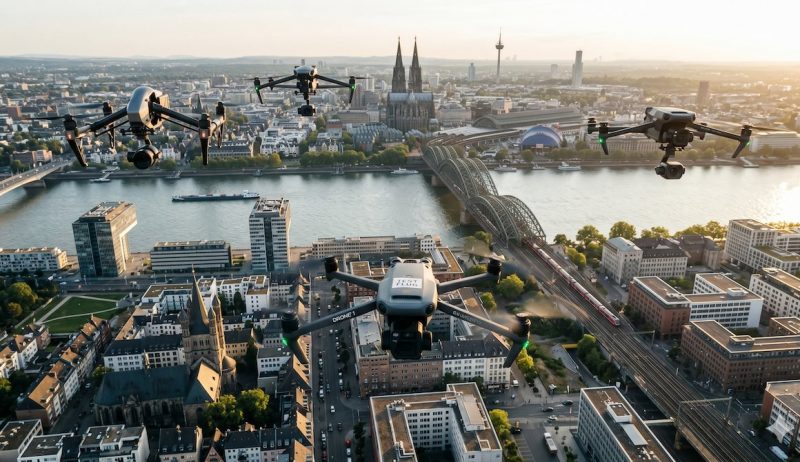
The development of silicon anode materials for lithium-ion batteries is particularly advanced. HPQ has manufactured its own 18650 and 21700 battery cells and compared them directly with the most powerful graphite solutions. According to the company, the latest generation achieved energy values of over 7,000 mAh, making it one of the highest results reported to date. HPQ’s drone battery has a capacity of 15,900 mAh and a total energy of 457 Wh, weighing just 1.16 kg. Compared to conventional drone batteries, the HPQ product delivered a performance increase of 23% to 36%. The commercialization of silicon anode materials is, incidentally, supported by a CAD 3 million government grant. Initially, a production line with an annual capacity of 2 tons will be established, which will later be expanded to 50 tons. This would enable the production of materials for up to 40 million battery cells per year. Industry interest appears high. According to management, numerous non-disclosure agreements have been signed with potential customers and partners following the latest test results.
A second growth driver is the technology developed jointly with PyroGenesis for the production of pyrogenic silicon dioxide. While conventional methods require several energy- and capital-intensive process steps, HPQ converts quartz directly into the end product. This is expected to drastically reduce investment costs and enable decentralized production. Following successful laboratory tests, the company is now in the pre-commercialization phase. A letter of intent with Evonik Industries is considered a major milestone. The German chemical giant has already evaluated the technology. According to HPQ, the market has a potential of around USD 2.6 billion and high barriers to entry.
The third pillar is the hydrogen division. Here, HPQ is focusing on hydrolysis and aims to offer mobile hydrogen production systems. The solution is intended to enable off-grid energy supply, heat generation, and water treatment. The company cites mining camps, remote communities, military applications, and, in the future, hydrogen-powered drones as potential areas of application. According to management, several projects are in advanced discussions, and additional government funding is being explored.
https://youtu.be/V6FO2uPdQLI?si=krfrV3gpZFo5xt5e
Rheinmetall: Partnership in the US
Is Rheinmetall’s recovery already over? In recent weeks, it looked like a turnaround was underway for the stock of Germany’s largest defence contractor. After a months-long correction to just over EUR 1,100, the share price rose to EUR 1,300 within two weeks. But this week, the stock is heading toward testing its annual low. Yet just last week, Deutsche Bank had reaffirmed its “Buy” recommendation with a price target of EUR 2,100. This confirms that defence stocks currently lack momentum despite global conflicts and tensions.
Even a collaboration in the world’s largest defence market is failing to generate positive momentum. Rheinmetall and Harbinger have entered into a strategic partnership to develop autonomous and unmanned ground vehicles (UGVs) for the US military. The goal is to provide cost-effective and rapidly deployable robotic solutions for combat, logistics, and supply missions. Rheinmetall will combine its experience in integrating military vehicle systems with Harbinger’s autonomous hybrid-electric platform. The initial focus is on autonomous tactical wheeled vehicles, resupply solutions for contested areas, and robotic platforms for the US Army’s “manned-unmanned teaming” initiatives.
The partners see the combination of hybrid propulsion, drive-by-wire technology, and advanced autonomy as an opportunity to deliver high-performance, yet affordable, robotic systems in large quantities. Thanks to their low noise and thermal signatures as well as long operational endurance, the vehicles are expected to be particularly suitable for military operations while also better protecting soldiers through remote-controlled or autonomous missions. Both companies are focusing on development and production in the US and plan to launch their first joint demonstrations as early as this summer, as well as pursue prototype programs for the US Department of Defence.
DroneShield: Contract from the US
DroneShield also reports from the US. The Australian drone defence specialist has secured a framework contract worth up to AUD 24.9 million to support the US Joint Interagency Task Force 401 (JIATF-401). The Joint Interagency Task Force 401 (JIATF-401) is the US Department of Defence’s central organization for coordinating measures against drone threats. It supports both the US Armed Forces and allied nations in the rapid procurement and deployment of modern drone defence technologies.
An immediate order of AUD 19.3 million was placed under the framework agreement. DroneShield will supply mobile and stationary drone defence systems. Of the fixed order volume, at least AUD 10 million is expected to be recognized as revenue in the current fiscal year, with the remainder in 2027.
DroneShield CEO Angus Bean views the contract as further evidence of the growing global demand for drone defence systems. In particular, military facilities, government agencies, and operators of critical infrastructure are increasingly seeking solutions that are both rapidly deployable and suitable for long-term airspace surveillance. JIATF-401 coordinates the procurement of modern anti-drone technologies for the US Armed Forces and allied nations. For DroneShield, the contract strengthens its position in the important US market and underscores growing confidence in the company’s ability to deliver scalable, mission-ready counter-drone solutions.
The stock reacted to the news yesterday with a brief intraday gain of around 2%. At EUR 1.93, it is currently trading at the same level as at the beginning of the year. In October 2025, however, the share was still trading above EUR 3.60.
HPQ is exceptionally well-positioned with its three business segments. If the positive news flow continues, significantly higher prices should be possible this year. The defence sector is currently generally running out of steam. Both Rheinmetall and DroneShield likely need very large orders to drive their shares into a sustained rally.
Conflict of interest
Pursuant to §85 of the German Securities Trading Act (WpHG), we point out that Apaton Finance GmbH as well as partners, authors or employees of Apaton Finance GmbH (hereinafter referred to as “Relevant Persons”) may hold shares or other financial instruments of the aforementioned companies in the future or may bet on rising or falling prices and thus a conflict of interest may arise in the future. The Relevant Persons reserve the right to buy or sell shares or other financial instruments of the Company at any time (hereinafter each a “Transaction”). Transactions may, under certain circumstances, influence the respective price of the shares or other financial instruments of the Company.
In addition, Apaton Finance GmbH is active in the context of the preparation and publication of the reporting in paid contractual relationships.
For this reason, there is a concrete conflict of interest.
The above information on existing conflicts of interest applies to all types and forms of publication used by Apaton Finance GmbH for publications on companies.
Risk notice
Apaton Finance GmbH offers editors, agencies and companies the opportunity to publish commentaries, interviews, summaries, news and the like on news.financial. These contents are exclusively for the information of the readers and do not represent any call to action or recommendations, neither explicitly nor implicitly they are to be understood as an assurance of possible price developments. The contents do not replace individual expert investment advice and do not constitute an offer to sell the discussed share(s) or other financial instruments, nor an invitation to buy or sell such.
The content is expressly not a financial analysis, but a journalistic or advertising text. Readers or users who make investment decisions or carry out transactions on the basis of the information provided here do so entirely at their own risk. No contractual relationship is established between Apaton Finance GmbH and its readers or the users of its offers, as our information only refers to the company and not to the investment decision of the reader or user.
The acquisition of financial instruments involves high risks, which can lead to the total loss of the invested capital. The information published by Apaton Finance GmbH and its authors is based on careful research. Nevertheless, no liability is assumed for financial losses or a content-related guarantee for the topicality, correctness, appropriateness and completeness of the content provided here. Please also note our Terms of use.
Stockhouse does not provide investment advice or recommendations. All investment decisions should be made based on your own research and consultation with a registered investment professional. The issuer is solely responsible for the accuracy of the information contained herein. For full disclaimer information, please click here.