

Daimler Truck: Strong quarter, clear message to Brussels
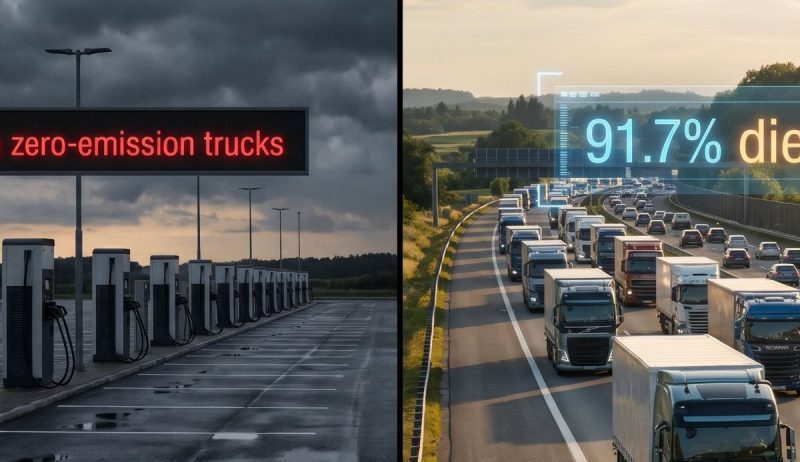
Daimler Truck recorded strong growth in the third quarter of 2026. Revenue in the industrial business rose 20% to EUR 11.6 billion, while adjusted Group EBIT increased 73% to EUR 1.124 billion. The adjusted return on sales in the industrial business improved to 9.1%, up from 6.2% in the previous year. The quarter was driven primarily by North America, where adjusted EBIT rose from EUR 257 million to EUR 691 million. Sales of electric trucks, by contrast, declined. CEO Karin Rådström attributes this to the lack of charging and hydrogen infrastructure and describes the looming penalties as a threat to the company’s survival. If the necessary conditions are not in place by 2030, she wants more time and lower penalties; the industry has been calling for a three-year postponement since the IAA in September. The regular review of the EU rules is due in the third quarter of 2027. Patience is also needed for hydrogen trucks: Cellcentric, the fuel cell joint venture with Volvo, plans to begin large-scale production in Weilheim an der Teck around 2030.
Nel: Revenue dip, but fuller order books
Norwegian electrolyser manufacturer Nel shows how slowly the hydrogen business is getting off the ground – and where progress is being made. In the third quarter, revenue from customer contracts fell by 63% to NOK 112 million, while the net loss stood at NOK 141 million. The main drag was the alkaline division, whose revenue fell 91% to NOK 23 million. The PEM segment, by contrast, grew 65% to NOK 89 million and accounted for 97% of the order intake of NOK 253 million. The order backlog increased by 34% within a year to NOK 1,314 million. This includes orders from Collins Aerospace totalling around USD 20 million for submarine oxygen supply systems to be delivered in 2027 and 2028. Cash stood at NOK 1,078 million at the end of the quarter, compared with NOK 1,757 million a year earlier. CFO Officer Kjell Christian Bjørnsen has been leading Nel on an interim basis since November 1; Morten Holum, previously head of Hexagon Purus, will take over by May 1, 2027 at the latest.
dynaCERT: Retrofit rather than replace
dynaCERT is moving into precisely the gap between expensive electric trucks and the lack of hydrogen infrastructure. With HydraGEN™, the Canadian company offers a retrofit and upgrade solution for used and new diesel internal combustion engines across a wide range of applications. Operators need to buy neither a new engine nor new equipment, keeping the investment correspondingly low. Yet dynaCERT is more than a hydrogen producer: electrolysis, which produces hydrogen and pure oxygen from distilled water while the engine is running, accounts for only around a third of the system. Added to this is expertise in engine thermodynamics and tuning to the specific application, with its load curves and engine speeds. This forms the basis for customer-specific projects, including large engines. As the hydrogen is consumed immediately, neither a refuelling network nor onboard storage is needed.
According to the company, the effect starts in the combustion chamber: the diesel burns more completely, fuel consumption falls, and with it emissions of pollutants and CO₂. Depending on the unit, engine size and application, savings of up to 10% are possible, according to dynaCERT. For large engines, the figure is typically 3 to 5%, and for smaller ones, an average of 5 to 8%. To put this in context, dynaCERT notes that engine manufacturers invest millions to reduce fuel consumption by 1 to 2%. For standard applications such as heavy-duty Class 8 trucks, installation requires little effort, while large units and customer-specific solutions require more preparation. Depending on the usage profile, such as annual mileage, payback periods of 1.5 to 2 years are possible. HydraGEN™ also holds a General Operating Permit (ABE) from the German Federal Motor Transport Authority.

dynaCERT: From pilot project to series order
Vietnam shows how the technology is reaching the market. Following successful pilot installations, dynaCERT received an initial series order from a Vietnamese truck logistics company in June 2026. Further pilot projects and installations are now underway there, including with an international port operator, in waste management and in the oil and gas sector. In France, the distribution partner also reported a repeat order from an existing customer. The HydraLytica™ telematics platform records engine data and fuel consumption and is intended to form the basis for carbon credits under a methodology approved by Verra. In addition, the company holds a 15% stake in electrolyser developer Cipher Neutron.
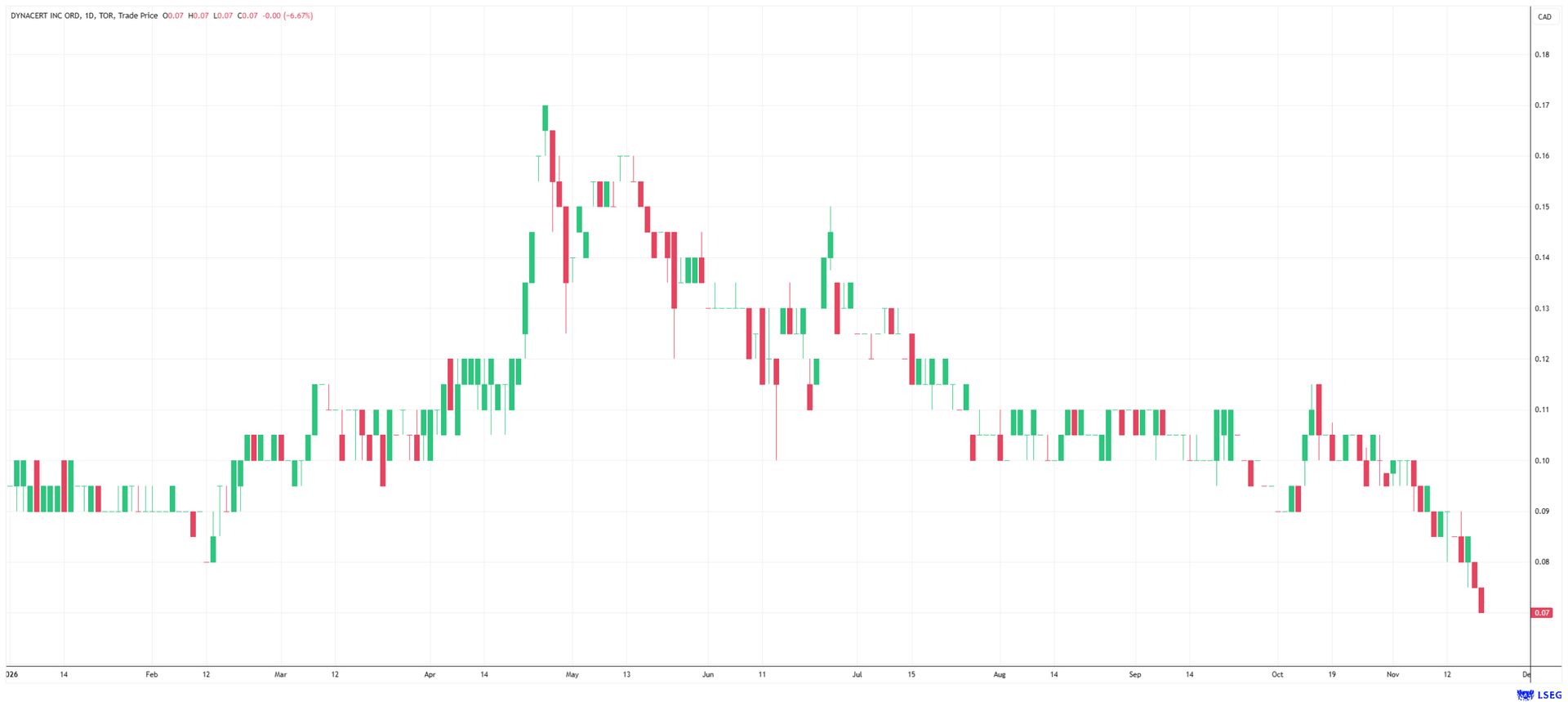
The latest quarterly figures show the progress, but also the distance the company still has to cover. In the third quarter, revenue rose by 54% to CAD 0.305 million. Manufacturing costs were still higher than revenue, but the gap narrowed significantly compared with the same quarter of the previous year. The quarterly loss amounted to CAD 2.82 million, compared with CAD 1.96 million in the previous year. Expansion has so far been financed through the capital markets: in June 2026, dynaCERT raised CAD 5 million through convertible bonds, while equity remains negative. In October, the company also extended the maturity of a CAD 1 million convertible bond until October 2027.

Conclusion: Retrofitting as a bridge for Europe’s diesel fleets
Diesel trucks will remain on Europe’s roads longer than politically planned. Daimler Truck is earning well from this and is banking on more time for the CO₂ rules, while Nel is laying the foundations for the coming years with PEM orders. dynaCERT offers a solution for precisely this transition period that requires neither new engines nor new infrastructure. The key now will be how quickly pilot projects such as those in Vietnam turn into recurring series orders. Investors should monitor news from dynaCERT closely. Partnerships of a certain critical size could immediately breathe new life into the shares.

Conflict of interest
Pursuant to §85 of the German Securities Trading Act (WpHG), we point out that Apaton Finance GmbH as well as partners, authors or employees of Apaton Finance GmbH (hereinafter referred to as “Relevant Persons”) may hold shares or other financial instruments of the aforementioned companies in the future or may bet on rising or falling prices and thus a conflict of interest may arise in the future. The Relevant Persons reserve the right to buy or sell shares or other financial instruments of the Company at any time (hereinafter each a “Transaction”). Transactions may, under certain circumstances, influence the respective price of the shares or other financial instruments of the Company.
In addition, Apaton Finance GmbH is active in the context of the preparation and publication of the reporting in paid contractual relationships.
For this reason, there is a concrete conflict of interest.
The above information on existing conflicts of interest applies to all types and forms of publication used by Apaton Finance GmbH for publications on companies.
Risk notice
Apaton Finance GmbH offers editors, agencies and companies the opportunity to publish commentaries, interviews, summaries, news and the like on news.financial. These contents are exclusively for the information of the readers and do not represent any call to action or recommendations, neither explicitly nor implicitly they are to be understood as an assurance of possible price developments. The contents do not replace individual expert investment advice and do not constitute an offer to sell the discussed share(s) or other financial instruments, nor an invitation to buy or sell such.
The content is expressly not a financial analysis, but a journalistic or advertising text. Readers or users who make investment decisions or carry out transactions on the basis of the information provided here do so entirely at their own risk. No contractual relationship is established between Apaton Finance GmbH and its readers or the users of its offers, as our information only refers to the company and not to the investment decision of the reader or user.
The acquisition of financial instruments involves high risks, which can lead to the total loss of the invested capital. The information published by Apaton Finance GmbH and its authors is based on careful research. Nevertheless, no liability is assumed for financial losses or a content-related guarantee for the topicality, correctness, appropriateness and completeness of the content provided here. Please also note our Terms of use.
Stockhouse does not provide investment advice or recommendations. All investment decisions should be made based on your own research and consultation with a registered investment professional. The issuer is solely responsible for the accuracy of the information contained herein. For full disclaimer information, please click here.