

Regeneron: Market Leader in Advanced Tumors Bets on a Billion-Dollar Alliance
Regeneron has established Libtayo as the standard of care for advanced cutaneous squamous cell carcinoma. Cutaneous squamous cell carcinoma is the second most common form of skin cancer and is diagnosed approximately 1.8 million times annually in the US. About 40,000 of these cases progress to advanced stages each year, in which the tumor can invade deep into the tissue. The US Food and Drug Administration (FDA) approved the antibody drug Libtayo in October 2025 for adjuvant (supplemental) therapy. This means the drug is administered after surgical removal and radiation therapy to kill any remaining cancer cells in the body and prevent recurrence. In the Phase 3 clinical trial C-POST, Libtayo reduced the risk of disease recurrence or death by 68% compared to a placebo. Across all indications, Libtayo generated global sales of USD 1.22 billion in 2024. On October 1, 2026, Regeneron and Sanofi also expanded their immunology alliance to include four new antibodies, including one for atopic dermatitis. Sanofi is paying USD 1 billion upfront, plus potential milestone payments of up to USD 7 billion.
Biofrontera: Light Therapy Bridges the Gap to Tumor Treatment
The US company Biofrontera is targeting the direct transition from precancerous lesions to actual tumors. In mid-September, the company received FDA approval to use its photodynamic therapy, Ameluz, for superficial basal cell carcinoma as well. With this method, doctors apply a special gel to the affected skin. Diseased cells absorb the active ingredient more readily than healthy ones. The doctor then irradiates the area with a red-light lamp. This triggers a chemical reaction in the cancer cells and destroys them through extreme oxygen stress. In the Phase 3 clinical trial, 66% of patients treated with the combination of gel and red light achieved complete clinical and histological healing of the pre-selected primary lesion, compared to only 5% in the placebo group. Biofrontera plans to launch commercial sales for this indication around the turn of the year 2026/27.
Vidac Pharma: Tackling Cancer at Its Root
Vidac Pharma intervenes even earlier, interrupting tumor development. The company focuses on actinic keratosis. The American Academy of Dermatology Association estimates that in the US alone, over 40 million people develop this precancerous condition each year. Vidac concentrates on particularly rapidly proliferating lesions, which are considered to carry an increased risk of progressing to skin cancer. Malignant cells alter their metabolism and require enormous amounts of sugar. They drive this process via the enzyme hexokinase 2, which binds to a channel in the cell’s powerhouses, thereby blocking natural cell death. Vidac Pharma targets precisely this mechanism with its VDA-1102 ointment. The active ingredient separates the enzyme from its channel. As a result, the diseased cell’s energy supply collapses, and it dies, while the surrounding healthy skin is largely spared.
On September 9, 2026, the final patient visit for a double-blind, placebo-controlled Phase 2b trial took place. VDA-1102 was tested on 39 patients with rapidly proliferating precancerous lesions. A post-hoc analysis of an earlier Phase 2b study showed complete healing of the lesions in approximately 40% of patients. This means that, after the original study was completed, experts re-examined the collected data specifically for certain characteristics and treatment outcomes. However, such analyses are considered indicative rather than proof of efficacy. Once the ongoing data review is complete and the database is closed, Vidac plans to publish the final clinical results.
Vidac’s Platform Could Attract Pharmaceutical Companies
Vidac Pharma’s technological approach is not limited to topical ointments. In early 2026, Vidac received a central US patent for its drug platform; a Notice of Allowance followed in Canada in May. With the preclinical compound VDA-1275, Vidac is developing a small-molecule drug that systemically targets glucose metabolism in solid tumors. In addition, promising interim Phase 2a results have been available since January 2024 for the use of VDA-1102 in cutaneous T-cell lymphomas, a specific type of blood cancer affecting the skin. Furthermore, the company has announced plans to develop algorithms that use images to predict which skin lesions are most likely to develop into carcinoma. This broad applicability positions Vidac Pharma as a strategic target for dermatology and oncology specialists who rely on new mechanisms of action to protect their revenues.
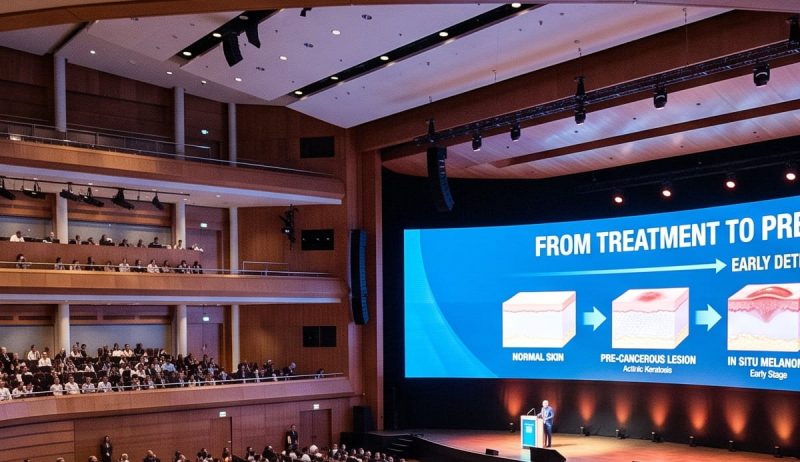
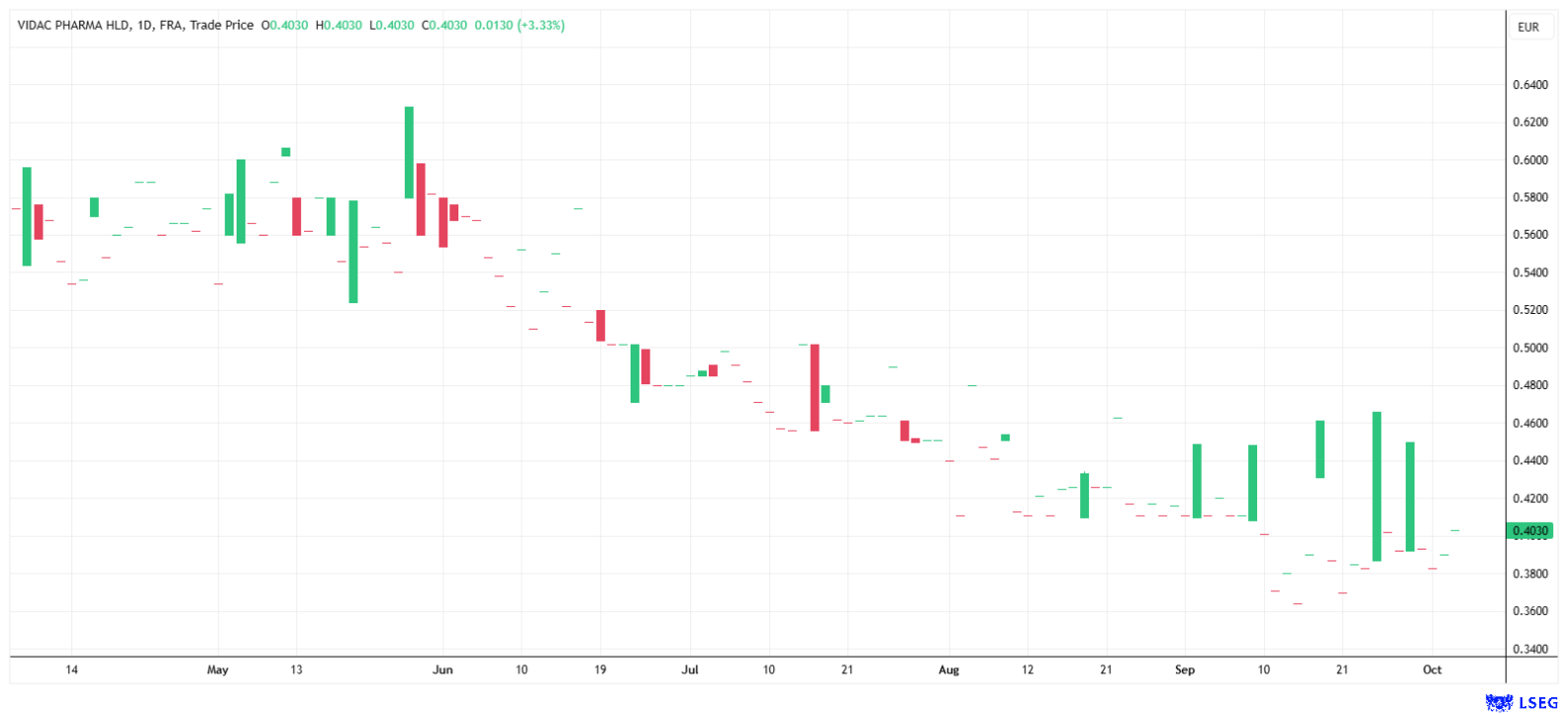
Research is shifting toward targeted prevention, as shown at the dermatology conference in Vienna. This trend confirms that Vidac Pharma is on exactly the right track with its early intervention in cellular metabolism. The decisive catalyst for the company is now the upcoming publication of the Phase 2b results. If the data show that VDA-1102 effectively eliminates diseased cells, Vidac will bridge the gap to invasive cancer therapy. On the risk side, typical clinical development hurdles remain. If the drug fails to meet the primary study endpoints for lesion elimination or if preparations for a crucial Phase 3 trial are delayed, setbacks could loom. In addition, Vidac is currently financing itself in part through stock sales by major shareholders and board members. Further capital measures are therefore possible. The coming weeks and months are likely to be exciting for Vidac Pharma.

Conflict of interest
Pursuant to §85 of the German Securities Trading Act (WpHG), we point out that Apaton Finance GmbH as well as partners, authors or employees of Apaton Finance GmbH (hereinafter referred to as “Relevant Persons”) currently hold or hold shares or other financial instruments of the aforementioned companies and speculate on their price developments. In this respect, they intend to sell or acquire shares or other financial instruments of the companies (hereinafter each referred to as a “Transaction”). Transactions may thereby influence the respective price of the shares or other financial instruments of the Company.
In this respect, there is a concrete conflict of interest in the reporting on the companies.
In addition, Apaton Finance GmbH is active in the context of the preparation and publication of the reporting in paid contractual relationships.
For this reason, there is also a concrete conflict of interest.
The above information on existing conflicts of interest applies to all types and forms of publication used by Apaton Finance GmbH for publications on companies.
Risk notice
Apaton Finance GmbH offers editors, agencies and companies the opportunity to publish commentaries, interviews, summaries, news and the like on news.financial. These contents are exclusively for the information of the readers and do not represent any call to action or recommendations, neither explicitly nor implicitly they are to be understood as an assurance of possible price developments. The contents do not replace individual expert investment advice and do not constitute an offer to sell the discussed share(s) or other financial instruments, nor an invitation to buy or sell such.
The content is expressly not a financial analysis, but a journalistic or advertising text. Readers or users who make investment decisions or carry out transactions on the basis of the information provided here do so entirely at their own risk. No contractual relationship is established between Apaton Finance GmbH and its readers or the users of its offers, as our information only refers to the company and not to the investment decision of the reader or user.
The acquisition of financial instruments involves high risks, which can lead to the total loss of the invested capital. The information published by Apaton Finance GmbH and its authors is based on careful research. Nevertheless, no liability is assumed for financial losses or a content-related guarantee for the topicality, correctness, appropriateness and completeness of the content provided here. Please also note our Terms of use.
Stockhouse does not provide investment advice or recommendations. All investment decisions should be made based on your own research and consultation with a registered investment professional. The issuer is solely responsible for the accuracy of the information contained herein. For full disclaimer information, please click here.