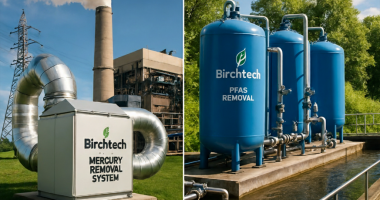



The gold market is currently in a historic supercycle that is driving prices to levels that were considered utopian just a few years ago. But behind the industry’s shiny facade lurks a toxic problem that is increasingly becoming a matter of survival: since the introduction of the MacArthur-Forrest process in 1887, the majority of global gold production has been based on cyanide. This highly toxic salt efficiently extracts gold from rock but poses immense environmental risks. In a world where social acceptance is increasingly determining the fate of billion-dollar investments in mining, this chemical dependency can become a strategic trap. Authorities from the EU to US states such as Montana are tightening regulatory screws. This is the area of tension that technology company RZOLV Technologies is entering. With a validated, pollutant-free alternative, the Canadians are challenging the cyanide monopoly and providing precisely the key that industry needs to ensure that its reserves remain eligible for approval in the future.
This article is disseminated in partnership with Apaton Finance GmbH. It is intended to inform investors and should not be taken as a recommendation or financial advice.
The toxic legacy: Why cyanide is becoming an investment risk
To understand the significance of RZOLV’s innovation, one must first understand how fragile the current cyanide situation actually is. Although cyanide is the industry standard, the chemical is facing increasing headwinds. As recent industry analyses show, the logistics costs for transporting these hazardous materials have recently exploded as insurers recalibrate their risk premiums. Even more serious, however, is the political risk: a single leak, a single dam breach, and entire mining projects are shut down by authorities or not approved in the first place.
Investors need to recognize that the profitability of marginal ores, which would actually be attractive at high gold prices, is dwindling due to the rising costs of environmental regulations and safety measures. The cyanide process is increasingly becoming a stranded asset risk: mines that would work technically are failing due to the veto of residents and regulators.
Orica and Agnico Eagle: Two worlds, one problem
The Australian group Orica dominates the explosives and cyanide business as the market leader. Orica’s balance sheets are robust, driven by the sheer volume of rock that needs to be moved to satisfy the global hunger for raw materials. Orica is effectively betting that there is no alternative to chemical blasting in the short term. But this dominance will be built on shaky ground as soon as a technologically equivalent but ecologically superior solution becomes available.
On the other side is Agnico Eagle, almost the top of the class among mining companies in terms of ESG. The Company deliberately operates in politically stable but extremely challenging regulatory regions such as Finland and Canada. Agnico proves that it is possible to mine gold profitably even under the strictest environmental regulations, but it pays a high price for this in the form of extreme safety precautions and long approval cycles. For Agnico, a technology that eliminates the risk of cyanide would be the holy grail: it would reduce operating costs and shorten approval procedures by years.
RZOLV Technologies: The technological breakthrough
This is precisely where RZOLV Technologies (TSXV:RZL) positions itself as the decisive problem solver. The Company does not act as a traditional mine operator, but as a problem solver that tackles the industry’s toxicity problem at its root. The leaching method developed by RZOLV eliminates the use of cyanide and instead uses a proprietary, low-toxicity reagent mixture.
What initially sounds like a pipe dream of environmentalists has now been backed up by hard facts. Independent tests conducted by the renowned SGS laboratory have recently confirmed the efficiency of RZOLV’s technology impressively: laboratory tests with gravity concentrates achieved recovery rates of 98.7%. This figure is sensational, as it proves that eliminating toxins does not have to come at the expense of yield. RZOLV is thus on par with or even exceeds the standards of cyanide leaching.
De-risking by SGS auditors opens up opportunities
But the technology can do more than just extract gold from rock. It also addresses the problem of so-called “refractory ores,” which are difficult to process using conventional methods. RZOLV is thus opening up access to billions in value for mining companies that were previously considered uneconomical. The business model is cleverly chosen: as a “capital-light model,” RZOLV relies on licensing. Instead of investing billions in its own mines, it supplies the technology to partners and participates in their success through licensing fees.
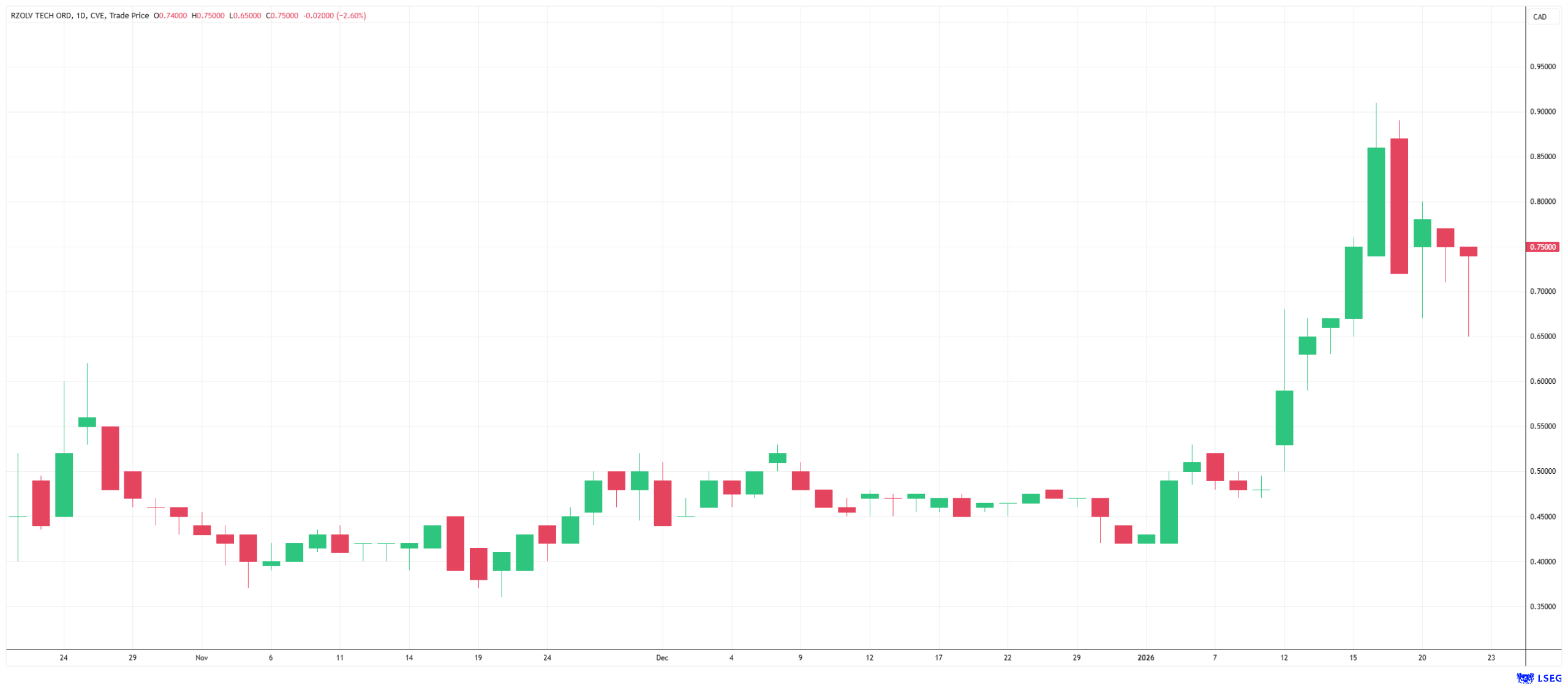
For investors, RZOLV is thus the ultimate “pick-and-shovel play” of the green mining revolution. While Orica has to defend its toxic legacy business and Agnico Eagle is investing billions in safety infrastructure, RZOLV offers a patented solution that eliminates both problems. Against this backdrop, RZOLV’s stock looks promising and has already risen. If RZOLV’s technology becomes the new industry standard – and the regulatory signs are not bad for this – the Company would completely transform gold mining. Although the typical risks of a technology company in its early stages remain, confirmation by the renowned testing laboratory SGS has already reduced the technical risk. RZOLV Technologies could end the cyanide era and provide investors with substantial returns with a clear conscience.
Conflict of interest
Pursuant to §85 of the German Securities Trading Act (WpHG), we point out that Apaton Finance GmbH as well as partners, authors or employees of Apaton Finance GmbH (hereinafter referred to as “Relevant Persons”) may hold shares or other financial instruments of the aforementioned companies in the future or may bet on rising or falling prices and thus a conflict of interest may arise in the future. The Relevant Persons reserve the right to buy or sell shares or other financial instruments of the Company at any time (hereinafter each a “Transaction”). Transactions may, under certain circumstances, influence the respective price of the shares or other financial instruments of the Company.
In addition, Apaton Finance GmbH is active in the context of the preparation and publication of the reporting in paid contractual relationships.
For this reason, there is a concrete conflict of interest.
The above information on existing conflicts of interest applies to all types and forms of publication used by Apaton Finance GmbH for publications on companies.
Risk notice
Apaton Finance GmbH offers editors, agencies and companies the opportunity to publish commentaries, interviews, summaries, news and the like on news.financial. These contents are exclusively for the information of the readers and do not represent any call to action or recommendations, neither explicitly nor implicitly they are to be understood as an assurance of possible price developments. The contents do not replace individual expert investment advice and do not constitute an offer to sell the discussed share(s) or other financial instruments, nor an invitation to buy or sell such.
The content is expressly not a financial analysis, but a journalistic or advertising text. Readers or users who make investment decisions or carry out transactions on the basis of the information provided here do so entirely at their own risk. No contractual relationship is established between Apaton Finance GmbH and its readers or the users of its offers, as our information only refers to the company and not to the investment decision of the reader or user.
The acquisition of financial instruments involves high risks, which can lead to the total loss of the invested capital. The information published by Apaton Finance GmbH and its authors is based on careful research. Nevertheless, no liability is assumed for financial losses or a content-related guarantee for the topicality, correctness, appropriateness and completeness of the content provided here. Please also note our Terms of use.
Stockhouse does not provide investment advice or recommendations. All investment decisions should be made based on your own research and consultation with a registered investment professional. The issuer is solely responsible for the accuracy of the information contained herein.
For full disclaimer information, please click here.