

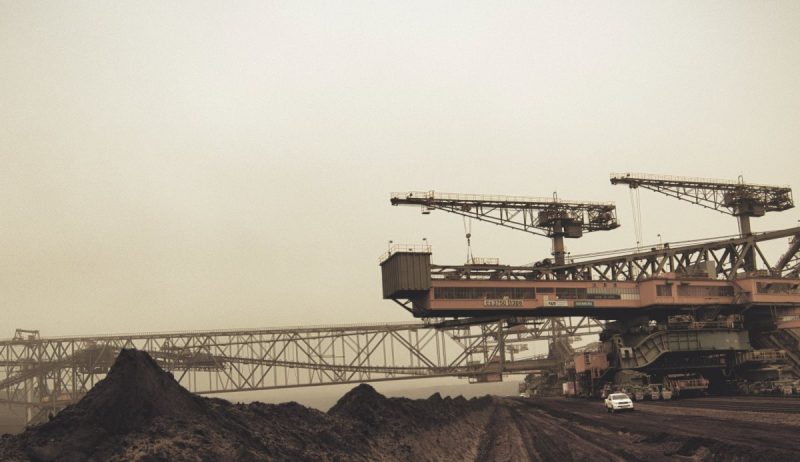
Rio Tinto: Between the AI Boom and Operational Transformation
Rio Tinto delivered a strong first half-year. Revenue rose by 15.5% to USD 31.03 billion, yet still fell short of analyst estimates by just under USD 260 million. The performance in terms of EBITDA and free cash flow was significantly better. Adjusted operating profit rose by 28% to USD 14.8 billion, while free cash flow climbed by 75% to USD 3.8 billion. Overall, the company plans to pay out dividends totaling USD 3.4 billion, an increase of 43%. This operational improvement is attributable to productivity gains. The targeted annual run rate of USD 1.8 billion by year-end appears achievable given the USD 870 million already realized.
Rio Tinto is gradually becoming a beneficiary of digital infrastructure. EBITDA from copper surged by 84% to USD 5.7 billion, while aluminum and lithium contributed USD 3.3 billion. This marks the first time that more than 50% of total EBITDA has come from sources other than iron production. Copper and aluminum prices rose by 39% and 33%, respectively, compared to the previous year, driven by massive demand from newly built AI data centers. JPMorgan now forecasts USD 5.5 trillion in AI-related investments by 2030. With the Oyu-Tolgoi mine, Rio Tinto owns one of the most productive copper deposits in the world and is therefore well-positioned to benefit from this trend.
Despite a price increase of over 30% since November, the share remains below the industry average of 15, with a P/E ratio of around 13. This does not appear justified given expected revenue growth of 6.2%. The recent agreement to secure the Australian Tomago aluminum plant with government support of up to USD 2.5 billion and a 10-year power purchase agreement reduces operational risks. Some investors view the high capital expenditures, up to USD 11 billion annually, with skepticism. A potential dependence on the hyperscalers’ willingness to invest remains a risk.
Globex Mining: The Royalty Generator
In the junior mining sector, where individual discoveries often take center stage, Globex Mining has chosen a very different path. The company operates as a project bank. It acquires mineral claims, systematically explores them, and transfers them to partners in exchange for cash, shares, or options, with a built-in royalty. These partners commit to further developing the project. This model generates long-term recurring revenue without requiring the company to spend its own capital on development. Through this system, the company has acquired more than 270 projects over the past few years and currently holds approximately CAD 40 million in cash, has no debt, and has achieved all of this without diluting shareholders. Ongoing financing rounds are otherwise commonplace among exploration companies.
The company currently holds over 100 royalty projects and 11 active option agreements, with geographic concentration in Canada and the US. In addition to gold and base metals, the portfolio includes critical minerals such as antimony, whose strategic importance has recently increased significantly. Recent drill results underscore this potential. Antimony Resources returned up to 33.4% antimony over 1.1 m at Bald Hill. Emperor Metals reported 21.3 m at 3.0 g/t gold at the Duquesne West project. This partnership work continuously enhances the value of the projects; if a partner fails to meet its obligations, the project reverts to Globex. This creates a self-reinforcing cycle of a growing royalty pipeline and an expanding portfolio.
Globex Mining is evolving from a royalty generator to a recipient of regular cash flows. Projections anticipate significant growth in royalty revenues through 2032. The Mont Sorcier project, for example, where a feasibility study is pending, could generate annual royalty payments of CAD 7 to 10 million once production begins. At the same time, over 300,000 m of drilling is underway at the partner projects, continuously delivering new resource updates. The next 18 months, with upcoming production decisions and feasibility studies, will be pivotal for the company’s revaluation on the capital market and could fundamentally change its profile.

Glencore: Record Profits with a Question Mark
Glencore’s half-year results were strong. Adjusted EBITDA surged by 86% to USD 10.1 billion, clearly exceeding expectations. The main driver was the escalation in the Middle East, which disrupted energy markets and opened up unexpected arbitrage opportunities for the trading business. The marketing division nearly doubled its EBIT to USD 3.3 billion, while the industrial business benefited from sharply rising commodity prices. At the same time, net debt fell to USD 10.2 billion.
Glencore is pushing ahead full steam with its copper expansion. Production in Africa rose by 66%, and the Antamina mine produced 50% more. The restart of Alumbrera is coming sooner than planned. But it is precisely this focus that makes the company vulnerable. The recent declines in zinc and cobalt production are a warning sign. Cobalt, in particular, saw a price drop of nearly 50%. This makes the company more dependent on copper, and that could become a risk. If the US does indeed impose copper tariffs, the subsequent drawdown of previously built-up inventories could put significant pressure on prices.
Thanks to strong cash flow, management plans to increase dividends by USD 1.5 billion. The planned secondary listing in Australia could broaden the shareholder base. However, the question of sustainability remains for investors. Management itself no longer expects the extreme market conditions to persist in the second half of the year. A realistic scenario for marketing EBIT is closer to USD 2.5 billion per year. The current share price already reflects many positive factors, and the risks posed by temporary trading gains and the company’s dependence on copper should not be underestimated.
Commodity shortages present opportunities, but investors must look closely. Rio Tinto is benefiting from the AI boom thanks to skyrocketing copper revenues, but remains undervalued and must shoulder heavy investment burdens. Globex Mining, as a debt-free project bank, generates steady royalty income without dilution and could be revalued based on upcoming production decisions. Glencore posted record profits from trading activities, but its growing dependence on copper and easing market volatility are clouding the outlook.
Conflict of interest
Pursuant to §85 of the German Securities Trading Act (WpHG), we point out that Apaton Finance GmbH as well as partners, authors or employees of Apaton Finance GmbH (hereinafter referred to as “Relevant Persons”) currently hold or hold shares or other financial instruments of the aforementioned companies and speculate on their price developments. In this respect, they intend to sell or acquire shares or other financial instruments of the companies (hereinafter each referred to as a “Transaction”). Transactions may thereby influence the respective price of the shares or other financial instruments of the Company.
In this respect, there is a concrete conflict of interest in the reporting on the companies.
In addition, Apaton Finance GmbH is active in the context of the preparation and publication of the reporting in paid contractual relationships.
For this reason, there is also a concrete conflict of interest.
The above information on existing conflicts of interest applies to all types and forms of publication used by Apaton Finance GmbH for publications on companies.
Risk notice
Apaton Finance GmbH offers editors, agencies and companies the opportunity to publish commentaries, interviews, summaries, news and the like on news.financial. These contents are exclusively for the information of the readers and do not represent any call to action or recommendations, neither explicitly nor implicitly they are to be understood as an assurance of possible price developments. The contents do not replace individual expert investment advice and do not constitute an offer to sell the discussed share(s) or other financial instruments, nor an invitation to buy or sell such.
The content is expressly not a financial analysis, but a journalistic or advertising text. Readers or users who make investment decisions or carry out transactions on the basis of the information provided here do so entirely at their own risk. No contractual relationship is established between Apaton Finance GmbH and its readers or the users of its offers, as our information only refers to the company and not to the investment decision of the reader or user.
The acquisition of financial instruments involves high risks, which can lead to the total loss of the invested capital. The information published by Apaton Finance GmbH and its authors is based on careful research. Nevertheless, no liability is assumed for financial losses or a content-related guarantee for the topicality, correctness, appropriateness and completeness of the content provided here. Please also note our Terms of use.
Stockhouse does not provide investment advice or recommendations. All investment decisions should be made based on your own research and consultation with a registered investment professional. The issuer is solely responsible for the accuracy of the information contained herein. For full disclaimer information, please click here.