

Rheinmetall: Growth and Pressure to Innovate
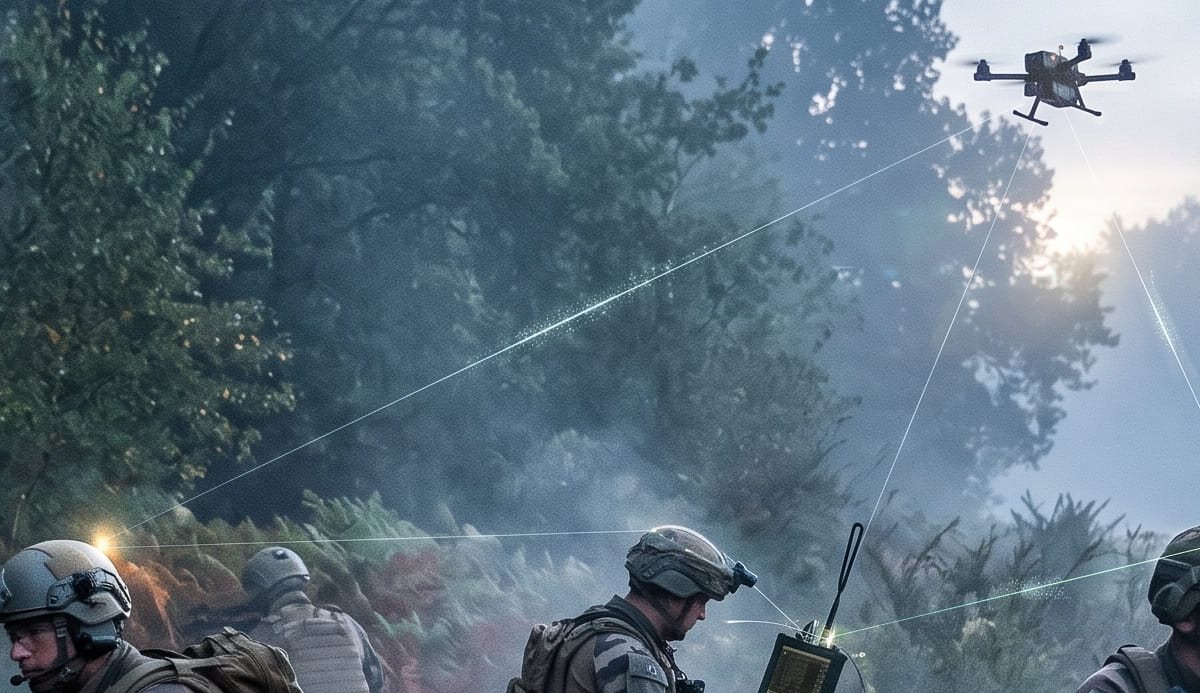
As a leading defence contractor, Rheinmetall is setting the pace for European rearmament. With a market capitalization of around EUR 46 billion as of October 2026 and major contracts such as the EUR 5.7 billion deal from Romania, which includes, among other things, 298 Lynx vehicles, the company is setting standards for the entire industry. Through the Gladius 2.0 soldier system, the group seamlessly integrates individual infantry soldiers into the digital network via the TacNet Soldier battle management system. A Smart HUB manages both data and energy, while central batteries power the connected devices. The more sensors, displays, and radio devices a soldier carries, the more important the capacity of these energy storage devices becomes. More powerful batteries with the same weight would therefore be an obvious lever for system integrators like Rheinmetall.
Wacker Chemie: Raw Material Sovereignty for Europe
The dependence of Western supply chains on battery graphite from Asia is a cause for concern for European industry. The Munich-based chemical company Wacker Chemie is therefore focusing on silicon as an anode material. As early as 2019, Wacker Chemie acquired a 25% stake in the British anode specialist Nexeon. According to Nexeon, the material developed can be integrated directly into existing production lines. The importance of this technology for British industrial policy is underscored by a GBP 100 million financing round, in which the state-owned National Wealth Fund contributed GBP 52.6 million in August 2026. Wacker itself produces silicon metal in locations including Holla, Norway, while Nexeon manufactures anode material in Gunsan, South Korea. This makes the group one of the key players in building a Western silicon-based battery supply chain.
HPQ Silicon Faces a Crucial Test: Double the Energy for the Military
The Canadian technology company HPQ Silicon reported a breakthrough in operational silicon cells. In early October, HPQ Silicon announced that Novacium had delivered a first batch of prototype batteries to the French Army’s Technical Section (STAT) in the third quarter of 2026. The Army had awarded the development contract in late June 2026. The new battery packs double the energy capacity from the previous 72 Wh to 144 Wh. HPQ Silicon holds a 36.8% stake in the French developer Novacium and also owns the exclusive marketing rights for North America.
Novacium switched from the traditional 18650 format to larger 21700 cells and combined them with its proprietary GEN3 silicon anode technology. These packs achieve a gravimetric energy density of 261 Wh/kg, representing a 63% increase over the 160 Wh/kg previously used. The dimensions at 42.6 × 98.63 × 74.35 mm and weight at 551 grams change only slightly. A modified battery management system and a patent-pending casing ensure the battery remains compatible with existing connectors and chargers. Older lab tests also demonstrate the cycle stability of the GEN3 material: 18650 cells achieved over 1,000 charge cycles while retaining approximately 80% of their capacity.
HPQ Silicon: Expansion into the Drone Sector
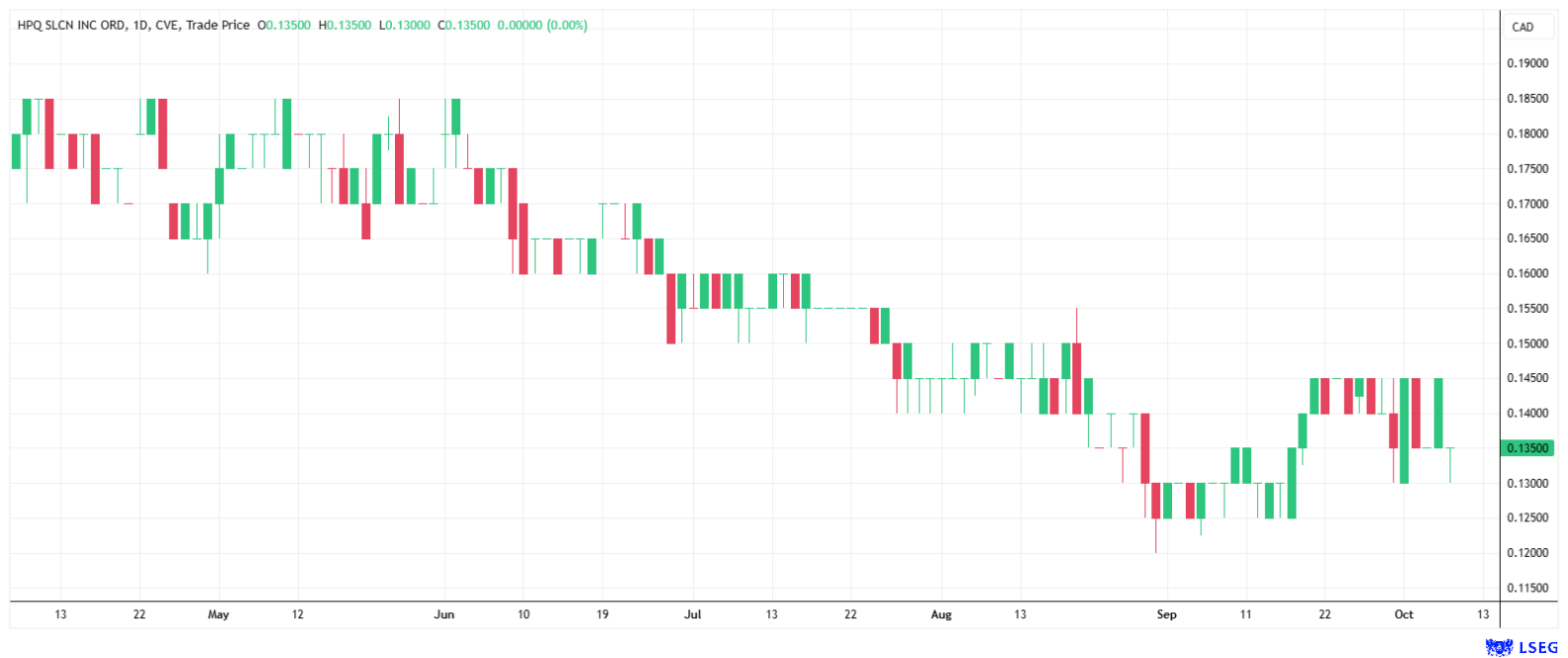
Alongside the Army project, HPQ Silicon is also advancing commercialization in the drone sector. In August 2026, HPQ Silicon and Novacium received their first defence contract through LN Innov: GEN3 battery packs for FPV drones used by a French regiment. By the end of August, they delivered 30 custom-made battery packs to three European drone manufacturers for final evaluation. In September, an order for more than 100 battery packs for the X-Lock interceptor drone from the French manufacturer Alta Ares was added. As early as April 2026, a semi-solid drone battery pack with GEN4 material had achieved 395 Wh/kg in internal tests. Individual GEN4 cells in the 21700 format averaged over 6,600 mAh under standard conditions, with the best cell reaching 6,696 mAh. Under standard conditions, the next-generation GEN5 is expected to reach around 7,000 mAh by 2027. Under extended test conditions, HPQ has already surpassed this mark.
In addition to the battery sector, HPQ Silicon is advancing other initiatives. Together with PyroGenesis, the company is developing the PUREVAP reactor for the low-emission production of high-purity silicon, as well as a reactor for the production of pyrogenic (fumed) silica. Added to this is a technology for autonomous hydrogen production, which HPQ is developing in collaboration with Novacium.
HPQ Silicon: Field Test Will Demonstrate Potential
The key specifications of the new-generation storage systems promise benefits for military users. If troop feedback is positive, the program could, according to HPQ, serve as a basis for offers to other allied armed forces. It remains to be seen how the silicon cells will perform under operational conditions, such as extreme heat, extreme cold, and rapid temperature changes. It is precisely these stresses that take a toll on the silicon in the anode. The lab results are promising. The key factor now will be how the batteries perform in the field.
Conflict of interest
Pursuant to §85 of the German Securities Trading Act (WpHG), we point out that Apaton Finance GmbH as well as partners, authors or employees of Apaton Finance GmbH (hereinafter referred to as “Relevant Persons”) may hold shares or other financial instruments of the aforementioned companies in the future or may bet on rising or falling prices and thus a conflict of interest may arise in the future. The Relevant Persons reserve the right to buy or sell shares or other financial instruments of the Company at any time (hereinafter each a “Transaction”). Transactions may, under certain circumstances, influence the respective price of the shares or other financial instruments of the Company.
In addition, Apaton Finance GmbH is active in the context of the preparation and publication of the reporting in paid contractual relationships.
For this reason, there is a concrete conflict of interest.
The above information on existing conflicts of interest applies to all types and forms of publication used by Apaton Finance GmbH for publications on companies.
Risk notice
Apaton Finance GmbH offers editors, agencies and companies the opportunity to publish commentaries, interviews, summaries, news and the like on news.financial. These contents are exclusively for the information of the readers and do not represent any call to action or recommendations, neither explicitly nor implicitly they are to be understood as an assurance of possible price developments. The contents do not replace individual expert investment advice and do not constitute an offer to sell the discussed share(s) or other financial instruments, nor an invitation to buy or sell such.
The content is expressly not a financial analysis, but a journalistic or advertising text. Readers or users who make investment decisions or carry out transactions on the basis of the information provided here do so entirely at their own risk. No contractual relationship is established between Apaton Finance GmbH and its readers or the users of its offers, as our information only refers to the company and not to the investment decision of the reader or user.
The acquisition of financial instruments involves high risks, which can lead to the total loss of the invested capital. The information published by Apaton Finance GmbH and its authors is based on careful research. Nevertheless, no liability is assumed for financial losses or a content-related guarantee for the topicality, correctness, appropriateness and completeness of the content provided here. Please also note our Terms of use.
Stockhouse does not provide investment advice or recommendations. All investment decisions should be made based on your own research and consultation with a registered investment professional. The issuer is solely responsible for the accuracy of the information contained herein. For full disclaimer information, please click here.