

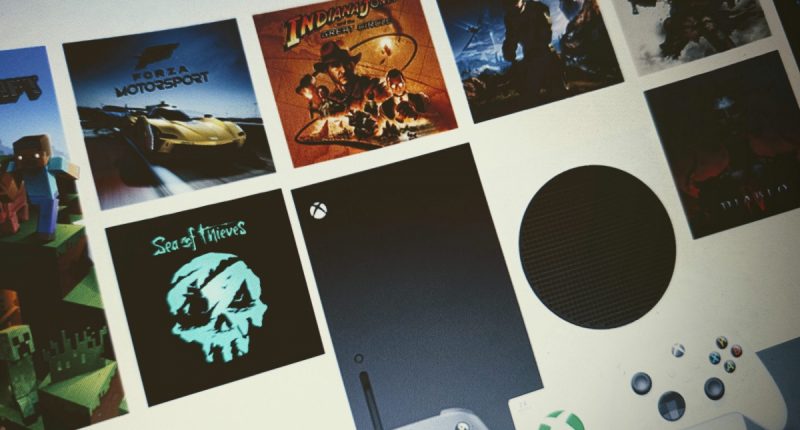
- Microsoft’s (NASDAQ:MSFT) Xbox division is planning major layoffs and budget cuts expected after June 30 as part of a restructuring effort
- Internal leadership says the business is under pressure with a roughly 3 per cent profit margin after billions in spending and declining revenue
- The cuts come despite a strong recent showcase and are tied to a broader “reset” strategy under new CEO Asha Sharma
- Microsoft stock (NASDAQ:MSFT) opened trading at US$391.54
Microsoft’s (NASDAQ:MSFT) Xbox division is preparing for a significant round of job cuts and budget reductions next month, according to multiple reports, casting a shadow over what had otherwise been a high‑profile week for the company following its annual Xbox Games Showcase.
The reported layoffs—first detailed by Bloomberg and echoed by other outlets—are expected to take place shortly after the close of Microsoft’s fiscal year on June 30, a period when the company typically implements restructuring decisions ahead of a new financial cycle.
While the exact number of affected employees has not been disclosed, the cuts are described as “major” and are likely to be accompanied by reductions in marketing and other operational budgets.
This article is a journalistic opinion piece that has been written based on independent research. It is intended to inform investors and should not be taken as a recommendation or financial advice.
A strong public showing, followed by internal reality
The timing of the reports has drawn attention because they follow closely on the heels of Microsoft’s Xbox Games Showcase, where the company highlighted a slate of upcoming titles and reaffirmed its commitment to first‑party exclusives. Between Summer Games Fest, and the showcases from Sony (NYSE:SONY) and Nintendo (OTC Pink:NTDOF), Microsoft looked like it had come out in pole position.
That showcase—and subsequent interviews with Xbox leadership—had suggested a renewed focus under Asha Sharma, who took over as CEO of Microsoft Gaming in February 2026 after the retirement of longtime leader Phil Spencer.
However, the emerging picture behind the scenes reflects a business under mounting pressure. Sharma’s internal memo, later published publicly on Xbox’s website, outlines a division grappling with rising costs, declining revenue, and structural inefficiencies.
A bleak financial snapshot
At the centre of Sharma’s message is a stark financial reality.
Xbox is expected to close its fiscal year with an “accountability margin” of about 3 per cent, Microsoft’s internal metric for profitability—far below what is typically expected of a business at Xbox’s scale.
The memo also highlights a widening gap between spending and returns. Excluding the impact of Activision Blizzard King, Microsoft has invested more than US$20 billion over the past five years in content, platform infrastructure, and hardware subsidies, while annual revenue declined by nearly US$500 million over the same period.
“This cannot continue,” Sharma wrote, describing the current trajectory as unsustainable.
Recent financial results reinforce that concern. Microsoft reported a 7 per cent drop in gaming revenue in its latest quarter, with hardware sales particularly affected—falling by roughly a third amid weaker console demand.
Rising costs and rising pressures
In addition to declining revenue, Xbox is facing escalating production costs, particularly in hardware. Internal communications cited sharp increases in component pricing—especially storage—adding further strain to already thin margins.
These pressures come as Microsoft continues to balance multiple long‑term bets, including subscription services, cloud gaming, and multiplatform distribution. However, those efforts have not fully offset slowing console sales and uneven Game Pass growth, according to analysts and reports.
Sharma’s memo suggests that the company may need to rethink its broader approach, including its studio portfolio and how it allocates resources across hardware, software, and services.
Layoffs likely part of a broader “reset”
Although the memo itself does not explicitly mention layoffs, its tone—and the accompanying Bloomberg report—points unmistakably toward a restructuring effort already in motion.
Xbox leadership has described the situation as an opportunity to “reset” the business over the next 100 days, with a focus on improving efficiency and rebuilding core infrastructure.
Part of that reset may involve reassessing the division’s network of studios. Over the past several years, Microsoft has significantly expanded Xbox’s portfolio through acquisitions and internal growth, but executives now acknowledge the system has become “overextended” and difficult to manage effectively.
Industry observers have suggested that this could lead not only to workforce reductions but also potential project cancellations or even studio closures, though no specific decisions have been confirmed.
Transparency amid uncertainty
In an unusual move for a major corporate restructuring, Sharma elected to publish the internal memo publicly soon after reports of the layoffs surfaced.
The decision has been seen as an effort to maintain transparency with both employees and the gaming community, even as it underscores the seriousness of Xbox’s challenges.
“We won’t succeed by hiding hard truths,” Sharma wrote in the memo, emphasizing the need for candid assessment and decisive action.
Speaking of transparent, or translucent, Microsoft just announced a new green XBOX Series X25 limited edition console to commemorate the system’s 25th anniversary. This has no relevance to the story, I just thought it looked cool.
What comes next
With Microsoft’s fiscal year ending on June 30, attention is now turning to July, when the anticipated layoffs are expected to be formalized.
The restructuring will mark the first major test of Sharma’s leadership and could shape the future direction of Xbox for years to come. At stake is the balance between maintaining a strong pipeline of games—highlighted at the recent showcase—and building a financially sustainable business model in a rapidly evolving industry.
For now, the outlook remains uncertain. The Xbox division has demonstrated creative momentum and a compelling content lineup, but the coming weeks will determine how Microsoft reconciles that promise with the economic realities outlined in its own internal assessment.
Bring back the “blades”
Microsoft Corp. develops and supports software, services, devices, and solutions. The company’s segments include productivity and business processes, intelligent cloud, and more personal computing.
Microsoft stock (NASDAQ:MSFT) opened trading at US$391.54 and has lost 18.50 per cent since this time, last year.
Join the discussion: Find out what the Bullboards are saying about Microsoft and check out Stockhouse’s stock forums and message boards.